
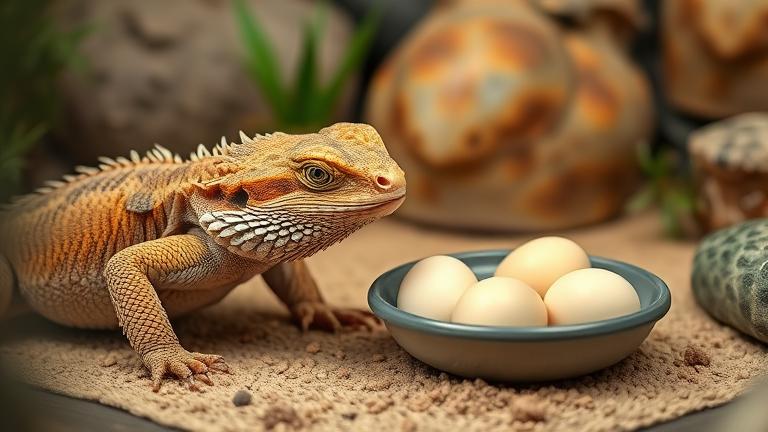
Are Eggs Safe for Bearded Dragons?
Many bearded dragon owners wonder if eggs can be a safe and healthy treat for their pet. Eggs are a good source of protein and nutrients for humans, but when it comes to bearded dragons, it’s important to understand the risks and benefits. Overall, eggs are not a normal part of a bearded dragon’s diet, and they should be fed with caution and moderation.
In the wild, bearded dragons mainly eat insects, leafy greens, and some fruits. Eggs are not something they normally encounter in their natural environment. Feeding eggs to a bearded dragon can cause digestive problems if not prepared or served correctly. Therefore, it’s best to see eggs as an occasional treat, not a regular meal.
Possible Benefits of Feeding Eggs
- Rich in protein, which helps in muscle growth and repair.
- Contain essential vitamins and minerals like B vitamins, selenium, and choline.
- Useful if your bearded dragon is recovering from illness or needs an extra boost of nutrition.
Risks and Potential Problems
- Eggs can be high in fat, which may lead to obesity if fed too often.
- Raw eggs contain avidin, a protein that can interfere with the absorption of biotin, a B vitamin important for skin and feather health.
- Raw eggs also carry a risk of bacterial contamination, such as Salmonella, which can make your pet sick.
- Feeding too many eggs can disrupt your bearded dragon’s nutrient balance, especially if it replaces their regular, more suitable diet.
How to Safely Feed Eggs
- Always cook the eggs thoroughly to kill bacteria. Scrambled or boiled eggs are good choices.
- Serve small portions about one small piece or a teaspoon of egg once a week at most.
- Remove any uneaten egg leftovers after a few hours to prevent spoilage or bacterial growth.
- Offer eggs as an occasional supplement, not a staple food.
- Monitor your bearded dragon’s reaction after feeding eggs. If there are signs of digestive upset or refusing food, stop the treat and consult a vet.
What to Avoid
- Never feed raw eggs or egg whites alone, as they can pose health risks.
- Avoid seasoning or adding any ingredients like salt, pepper, or spices.
- Do not give eggs fried or cooked with oils or butter keep it simple, plain, and cooked thoroughly.
In summary, while eggs can offer some nutritional benefits for your bearded dragon, they are not a necessary part of their diet. When you do decide to give eggs, do so carefully and sparingly. Prioritize their main diet of insects and greens, and always consult a veterinarian if you’re unsure about introducing new foods.
Nutritional Benefits of Eggs for Reptiles
Eggs can be a nutritious treat for bearded dragons and other reptiles when offered properly. They are packed with essential nutrients that support overall health. While eggs should not replace a reptile’s regular diet, they can be a valuable supplement in moderation.
One of the main benefits of eggs is their high protein content. Protein is vital for muscle development, tissue repair, and overall growth. They also contain healthy fats that provide energy and support skin and shell health. In addition, eggs offer a good source of vitamins and minerals that enhance your reptile’s well-being.
For example, eggs are rich in vitamin A, which promotes good eyesight and a strong immune system. They also provide vitamin D3, important for calcium absorption and bone strength. Minerals such as phosphorus and magnesium help maintain healthy bones and metabolic functions. These nutrients work together to keep your reptile active and prevent deficiencies.
Let’s take a closer look at the key nutrients found in eggs:
| Nutrient | Role in Reptile Health |
|---|---|
| Protein | Supports muscle growth, tissue repair, and overall development. |
| Healthy fats | Provide energy and help maintain healthy skin and scales. |
| Vitamin A | Boosts eyesight and immune function. |
| Vitamin D3 | Aids in calcium absorption and bone health. |
| Phosphorus and Magnesium | Essential for strong bones and metabolic reactions. |
Keep in mind that eggs are also a good source of choline, which supports brain health, and biotin, which promotes healthy skin and nails. Since eggs contain a concentrated source of nutrients, it’s best to feed them as an occasional treat rather than a daily staple.
When offering eggs to your bearded dragon, always cook them thoroughly to eliminate bacteria and parasites. A simple method is boiling or scrambling the eggs until fully cooked. Raw eggs may carry Salmonella, which can be harmful to both reptiles and humans.
Additionally, remember that eggs are quite calorie-dense. Overfeeding can lead to obesity and other health issues. Offer small portions, about a slice of cooked egg, once or twice a week. Always balance eggs with other vegetables, insects, and appropriate supplements for a balanced diet.
In summary, eggs can be a nutritious addition to your reptile’s diet, providing vital nutrients that contribute to healthy growth and vitality. Used carefully and sparingly, they help keep your bearded dragon happy and healthy for years to come.
Risks of Feeding Eggs to Your Beardie
Feeding eggs to your bearded dragon might seem like a good idea since eggs are nutritious for humans, but it is important to understand the potential risks involved. While eggs can offer some health benefits if given in moderation, they also carry certain dangers that could impact your beardie’s well-being.
One of the main concerns is the risk of nutritional imbalance. Eggs are rich in protein and fats, but feeding them too often or in large quantities can upset your bearded dragon’s diet. A diet that is too high in protein and fat may lead to obesity, liver problems, or other health issues. Bearded dragons thrive on a balanced mix of insects, greens, and vegetables, so eggs should only be an occasional treat, not a staple.
Another consideration is the risk of bacterial contamination. Raw eggs can carry bacteria such as Salmonella, which can make your beardie sick. Unlike humans, reptiles are often more sensitive to bacterial infections. Feeding raw eggs increases the chance of introducing harmful pathogens into their system, potentially causing infections or diarrhea. To minimize this risk, some owners choose to cook eggs thoroughly before offering them. Cooking eggs destroys harmful bacteria while still providing nutritional value.
Eggs also contain a substance called avidin, which can interfere with the absorption of biotin, a vital B vitamin. If fed excessively, the avidin in eggs could lead to biotin deficiency over time. Symptoms of biotin deficiency include shedding skin, poor growth, and lethargy. Since these problems develop from long-term imbalance, it’s best to keep egg feeding infrequent and limited.
There’s also the potential for choking or digestive issues. Eggs are soft, but feeding chunks or large pieces can be a choking hazard or cause internal blockages. Always chop eggs into small, manageable pieces to reduce this risk. An improperly prepared egg may also cause constipation in your beardie, especially if it’s fed too often or without other fiber-rich foods.
Some bearded dragons may develop an allergic reaction or intolerance to eggs. Symptoms can include swelling, itching, or abnormal stool. If you notice any adverse signs after feeding eggs, it’s best to stop immediately and consult a veterinarian.
Lastly, feeding eggs instead of their usual diet can lead to malnutrition if it replaces their regular calcium and vitamin sources. Bearded dragons require a steady intake of calcium, vitamin D3, and other nutrients found in their insects and greens. Relying too much on eggs can cause nutrient deficiencies, weakening their bones and immune system over time.
To stay safe, consider these tips:
- Only offer eggs as an occasional treat, not daily.
- Cook eggs thoroughly to reduce bacteria risk.
- Chop eggs into small pieces before serving.
- Balance eggs with a variety of insects and greens in their diet.
- Observe your beardie for any negative reactions, and consult a vet if needed.
How to Properly Introduce Eggs into Diet
Adding eggs to your bearded dragon’s diet can be a healthy treat if done correctly. Eggs are a good source of protein and nutrients, but they should be introduced carefully to ensure your pet’s safety. Starting with small amounts and monitoring your bearded dragon’s response is essential. This guide will help you introduce eggs properly and safely into their diet.
When to Start Offering Eggs
Eggs should only be introduced once your bearded dragon is fully grown, typically around 12 months old. Young dragons are more delicate and need a diet primarily based on suitable insects and greens. Once they are adults, you can incorporate eggs occasionally as a treat. Always check that your dragon is healthy and consult your veterinarian if unsure about adding new foods.
How to Prepare Eggs for Your Bearded Dragon
- Cook thoroughly: Always cook eggs before offering them. Raw eggs can carry bacteria like salmonella, which can make your pet sick.
- Boiling, scrambling, or baking: Use methods such as boiling eggs until firm, scrambling without oils or spices, or baking eggs in simple forms. Do not add seasoning or butter, as these are not suitable for bearded dragons.
- Cut into small pieces: Once cooked, cut eggs into small, manageable pieces to prevent choking and make it easier for your bearded dragon to eat.
Introducing Eggs Safely and Gradually
Start by offering a tiny piece of cooked egg, perhaps about the size of a small pea. Observe your bearded dragon for any signs of digestive upset, like diarrhea or lethargy. Wait at least a few days before offering more. This gradual approach helps you monitor their response and prevents overfeeding.
Frequency of Feeding Eggs
Eggs should only be an occasional treat and not a staple part of your bearded dragon’s diet. Offering eggs once every couple of weeks is usually safe for most adults. Remember, their main diet should consist of insects, vegetables, and leafy greens. Too much egg can lead to nutritional imbalances, so moderation is key.
Tips for Success
- Always wash your hands before and after handling eggs or preparing food for your dragon.
- If your bearded dragon shows any signs of discomfort after eating eggs, remove the food and consult your vet.
- Avoid feeding eggs that have been seasoned, fried, or cooked with unhealthy fats or sauces.
- Pair eggs with other healthy foods like collard greens, carrots, or crickets for a balanced meal.
Common Mistakes to Avoid
- Introducing eggs too early or too frequently.
- Feeding raw eggs instead of cooked.
- Adding seasonings or oils that are not suitable for reptiles.
- Overfeeding eggs, which can upset your dragon’s nutritional balance.
By following these simple steps, you’ll ensure that adding eggs to your bearded dragon’s diet is safe and enjoyable. With moderation and care, eggs can be a tasty and nutritious treat for your pet.
Expert Tips for Feeding Bearded Dragons
Feeding bearded dragons a balanced diet that includes eggs and other nutritious foods is key to keeping them healthy and happy. Eggs can be a good occasional treat or supplement because they are rich in protein and vitamins, but it’s important to feed them correctly. Here are some expert tips to help you incorporate eggs and other foods into your bearded dragon’s diet effectively.
Introducing Eggs into Your Bearded Dragon’s Diet
Start by offering small pieces of cooked, plain eggs. Boiled or scrambled eggs without any seasoning or additives work best. Raw eggs are not recommended because raw egg whites contain avidin, which can interfere with biotin absorption and cause health issues over time. Also, avoid eggs that are seasoned or cooked with oils and spices, as these can upset your dragon’s digestion.
Offer eggs as an occasional treat rather than a daily staple. Typically, once or twice a week is sufficient, depending on your dragon’s age and diet balance. When introducing eggs, watch for any signs of upset stomach or changes in behavior. If your bearded dragon seems healthy, you’re on the right track.
Preparing Eggs Safely and Properly
- Cook eggs thoroughly to eliminate bacteria and parasites.
- Cut eggs into small, manageable pieces to prevent choking.
- Serve eggs at room temperature never serve cold or hot eggs directly out of the fridge or microwave.
Maintain hygiene by cleaning utensils and dishes thoroughly after feeding eggs. Always monitor your bearded dragon after trying new foods and remove uneaten food to prevent spoilage or mold growth in the enclosure.
Balancing Your Bearded Dragon’s Diet
Eggs are protein-rich, so they should complement a diet primarily made up of insects, leafy greens, and vegetables. A good rule is to keep the eggs as a small part of the overall diet, not the main protein source. Overfeeding eggs can lead to excess fat or nutrient imbalance, so moderation is key.
Along with eggs, include a variety of healthy foods like collard greens, squash, bell peppers, and insects like crickets or mealworms. This diversity helps ensure your dragon gets all the necessary vitamins and minerals.
Common Mistakes to Avoid
- Feeding raw eggs regularly this can lead to health problems.
- Adding seasoning, oils, or spices to eggs these are not suitable for bearded dragons.
- Overfeeding eggs too much can cause obesity or nutrient imbalances.
- Neglecting proper preparation always cook eggs thoroughly and serve at room temperature.
Additional Tips to Keep in Mind
- Rotate foods regularly to prevent dietary boredom and ensure balanced nutrition.
- Use a calcium supplement on greens and insects to help maintain healthy bones.
- If unsure about a new food, consult a reptile veterinarian for personalized advice.
By following these simple guidelines, you can safely include eggs as a nutritious treat in your bearded dragon’s diet. Remember, a varied and balanced diet is the best way to support their health and happiness over the years.