
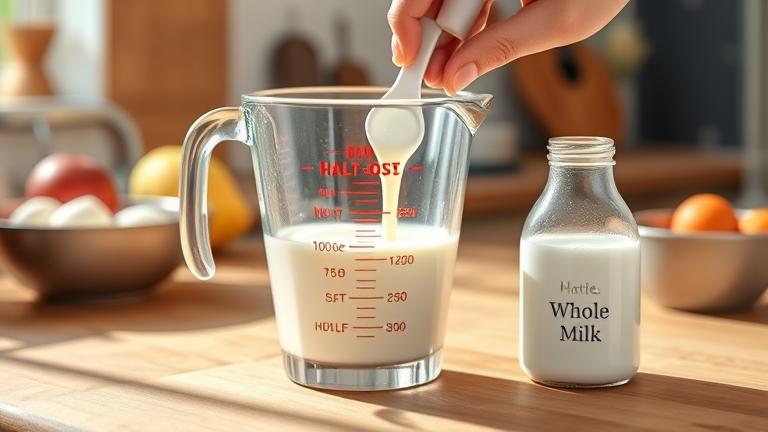
Understanding Half and Half and Whole Milk
If you’ve ever wandered down the dairy aisle, you might have noticed different milk options like half and half and whole milk. Understanding their composition can help you make better choices for your recipes and know how to substitute one for another if needed.
Whole milk is the most common type of milk you’ll find in stores. It contains about 3.25% fat, which means it has all the natural milk fats preserved. This makes it a rich, creamy base that’s perfect for drinking, cooking, or baking. Whole milk also retains most of the natural nutrients like calcium, vitamin D, and protein.
Half and half is a different dairy product mainly used to add creaminess to coffee or to enrich sauces and desserts. It is a mixture of equal parts whole milk and heavy cream. Because it combines both ingredients, it usually has about 10-12% fat content. This makes it thicker and richer than regular milk but lighter than heavy cream.
How Half and Half Differs from Whole Milk
- Fat Content: Whole milk has about 3.25% fat, while half and half contains around 10-12%. This extra fat gives half and half its smooth, velvety texture.
- Uses in Cooking: Whole milk is versatile and can be used in everything from cereals to baking. Half and half is often added to coffee or used in recipes that need added richness without the heaviness of cream.
- Consistency: Half and half is thicker and creamier than whole milk but not as thick as heavy cream. It adds a subtle richness to dishes.
Key Tips for Using and Substituting
If a recipe calls for half and half and you only have whole milk, you can make a simple substitution. Mix equal parts of whole milk and heavy cream to mimic the texture and fat level of half and half. Conversely, if a recipe needs whole milk and you only have half and half, you can dilute the half and half with a little water or more milk to reduce the fat content.
Keep in mind that measurements are important. Using too much or too little of these dairy products can change the texture and flavor of your dish. Always measure carefully, especially in baking, where precise ingredients matter a lot.
Storage Tips
- Both half and half and whole milk should be stored in the refrigerator at or below 40°F (4°C).
- Consume within the dates printed on the container for best quality.
- Once opened, half and half usually stays fresh for about 2 weeks, while whole milk lasts about a week.
Understanding these differences helps unlock more of what your dairy products can do. Whether you’re adding richness to your coffee or baking your favorite cake, knowing the composition of half and half and whole milk ensures better results in your kitchen.
Why Convert Half and Half to Whole Milk?
Converting half and half into whole milk can be a helpful trick in your cooking and baking. Many recipes call for whole milk, but sometimes you only have half and half on hand. Knowing how to make the switch can save you time, money, and keep your dishes tasting just right.
One of the main reasons to convert half and half to whole milk is flavor. Half and half has a richer, creamier taste because it contains more fat than whole milk. When you use it directly, it can make your dish overly rich or creamy, especially if the recipe already includes other dairy products. By diluting half and half with water to make it similar to whole milk, you keep the flavor balanced and avoid overpowering the dish.
Texture is another key reason. When baking bread, muffins, or pancakes, the amount of fat and liquid affects how the dough or batter turns out. Using half and half directly might result in a denser or overly moist product. Converting it to whole milk helps create a more consistent texture, giving your baked goods a lighter, fluffier crumb.
Dietary considerations also matter. Half and half has about 10-12% fat, while whole milk is around 3.25% fat. If you’re trying to reduce your fat intake or follow dietary guidelines, turning half and half into whole milk by diluting it with water is a simple way. It lets you control the richness of your dishes without sacrificing creaminess entirely.
Furthermore, substituting half and half for whole milk in recipes provides versatility. For savory dishes like sauces, soups, or casseroles, you might prefer a lighter milk to balance flavors. On the other hand, if you want a richer taste, you can skip diluting the half and half. Adjusting the fat content helps you customize recipes based on your preferences and dietary needs.
It’s also practical from a cost perspective. Half and half can be pricier than whole milk. If you have some on hand but want to stretch it further, diluting it to replace whole milk can be economical. This way, you can make multiple recipes without running to the store.
Remember, when converting half and half to whole milk, the general rule is to mix equal parts of half and half and water. For example, if a recipe requires one cup of whole milk, you can combine half a cup of half and half with half a cup of water. Stir well before using. This simple step ensures the dairy fat and moisture are balanced properly.
In summary, converting half and half to whole milk is a useful skill that affects flavor, texture, dietary fat, and cost. Whether you’re baking, cooking, or making sauces, this trick helps you adapt ingredients easily. Keep in mind the desired richness of your dish, and don’t be afraid to experiment to find what works best for you.
Step-by-Step Guide to Mixing Milk Bases
Making your own milk base by mixing half and half with other ingredients is simple and flexible. Whether you want to create whole milk or a customized dairy blend, following these easy steps will help you get the perfect result.
Step 1: Gather Your Ingredients and Tools
- Half and half (a mix of equal parts whole milk and cream)
- Additional milk (such as whole milk to dilute)
- Measuring cups and spoons
- A mixing jug or bowl
- A whisk or spoon for stirring
Having everything ready before you start makes the process smoother. Remember, the quality of your ingredients affects the taste, so choose fresh, good-quality dairy if possible.
Step 2: Determine Your Desired Milk Consistency
Think about what you want your final milk to be. For example, if you need regular whole milk, you will mix half and half with more milk to dilute the creaminess. For a richer homemade milk, you might add less or skip the dilution.
It helps to decide the ratio beforehand. A common approach is to start with a simple 1:1 ratio and adjust according to your taste or recipe needs.
Step 3: Measure the Ingredients
For a standard mixture that yields about 1 cup of whole milk, you could try combining:
- Half and half: 1/2 cup
- Whole milk: 1/2 cup
If you prefer a lighter or richer mix, adjust the amounts. For example, more milk makes it lighter, more half and half makes it creamier.
Step 4: Mix the Ingredients
Pour the measured half and half and additional milk into your mixing jug or bowl.
Stir gently with a whisk or spoon until the mixture is smooth and evenly combined. Do not rush thorough mixing ensures consistency.
If you’re making larger quantities, mix slowly to prevent spillage and ensure every part is blended well.
Step 5: Taste and Adjust
Once mixed, taste your homemade milk. If you want it to taste more like regular whole milk, you can add a splash of plain milk and mix again.
Adjust according to your preferences or the needs of your recipe. Remember, it’s easier to dilute than to add concentrated ingredients later, so start with small adjustments.
Step 6: Store or Use Immediately
If you’re not using the mixture right away, store it in a clean container with a lid in the refrigerator.
Shake or stir before using, as slight separation can occur over time. Typically, homemade milk blends should be used within 2-3 days for best freshness and flavor.
By following these simple steps, you can customize your milk base for baking, cooking, or drinks. Experiment with ratios to find your perfect balance, and enjoy the flexibility of homemade dairy blends.
Tips for Perfectly Adjusting Texture and Flavor
Making your own whole milk at home is a rewarding process, but sometimes the texture and flavor need a little fine-tuning to match what you find in the store. Whether you want creamier milk or a milder taste, these simple tips can help you achieve the perfect balance.
First, understand that homemade milk often has a richer, more robust flavor than store-bought versions. This is because it retains more of the natural fats and proteins. If you find the flavor too strong or the texture too thick, don’t worry. You can easily make adjustments.
Adjusting Texture for Your Preference
- Diluting with Water: If your homemade milk feels too thick or creamy, add a small amount of water to lighten it. Start with a tablespoon of water per cup of milk, then taste and adjust as needed. Remember, adding too much water might dilute the flavor too much.
- Using Thin or Thickening Agents: To modify the creaminess, you can blend in small amounts of ingredients like a splash of cream or a skim milk powder. Be careful to add gradually and blend thoroughly to maintain a smooth texture.
- Straining for Smoother Milk: Homemade milk sometimes contains tiny bits of milk solids or fat. Passing it through a fine mesh strainer or cheesecloth can give you a more uniform, silky texture.
Enhancing or Mellowing the Flavor
- Sweetening: If your milk tastes a bit too strong or gamey, adding a small touch of honey or a pinch of sugar can mellow the flavor. Mix in while the milk is warm for best results, then chill before use.
- Balancing with a Pinch of Salt: A tiny bit of salt can enhance the natural flavors of homemade milk. Be cautious start with just a pinch and taste before adding more.
- Flavor Infusions: For a subtle twist, add a drop of vanilla extract or a cinnamon stick while warming the milk. Strain out the solids before storing for a smooth finish.
Practical Tips to Keep in Mind
- Start Small: When making adjustments, do so gradually. It’s easier to add more than to fix once overdone.
- Test in Small Batches: Try your modifications on a small portion first to prevent wasting ingredients.
- Keep Notes: Record what adjustments you make so you can replicate the perfect batch next time.
- Taste Often: Regular tasting throughout the process helps you catch any over-corrections early.
By understanding how to tweak both texture and flavor, you can customize your homemade whole milk to suit your taste perfectly. With a little practice, you’ll be able to create a creamy, delicious milk that rivals store-bought varieties, tailored just for you.
Nutritional Differences Explained
When it comes to dairy options like half and half, whole milk, and homemade milk mixtures, understanding their nutritional differences can help you make better choices for your diet and recipes. Each has its unique profile of fat, calories, and other nutrients. Knowing these can help you match your ingredients to your health goals and taste preferences.
Let’s start by looking at half and half. This creamy liquid is made from combining equal parts whole milk and light cream. As a result, it’s richer and higher in fat than regular milk. Typically, half and half contains about 10-12% fat, which makes it a favorite for coffee drinks and rich sauces. It has more calories than whole milk but less than heavy cream. This balanced fat content provides a smooth texture without being overly heavy.
Whole milk, on the other hand, is exactly what it sounds like milk straight from the cow, with about 3.25% fat. It offers a good mix of protein, calcium, and vitamins like D and B12. Since it has less fat than half and half, it generally has fewer calories. Whole milk is a versatile choice for drinking, cereal, and cooking where you want a natural, balanced dairy flavor.
Now, if you prefer a homemade or customized approach, making a milk mixture can be a fun way to control the nutrition. For example, you can blend skim milk with a bit of cream or butter to get the desired fat content. This “homemade mixture” can be tailored to your diet, whether you need lower fat and fewer calories or a richer, creamier result. Keep in mind, the nutritional qualities depend on the proportions you choose. By adjusting the ratio, you can create a milk alternative suited for your health or recipe needs.
Here’s a simple comparison table to help visualize the differences:
| Type of Milk | Fat Content | Calories (per cup) | Protein | Key Uses |
|---|---|---|---|---|
| Half and Half | 10-12% | about 80-100 | around 3 grams | Coffee, creamy sauces |
| Whole Milk | 3.25% | about 150 | 8 grams | Drinks, baking, cereal |
| Homemade Mixture | Varies (adjustable) | Depends on proportions | Dependent on ingredients used | Custom recipes, dietary needs |
- Tip: When choosing dairy, consider your nutritional goals if you want fewer calories, go for low-fat or skim options.
- Remember that adding cream increases fat and calorie content, so use it in moderation, especially if you’re watching your intake.
- Experiment with different ratios at home to find the perfect balance for your recipes and health preferences.
In summary, half and half provides a richer, creamier option than whole milk but comes with more fat and calories. Whole milk offers a natural, lower-fat choice packed with nutrients. Creating your own milk mixture gives you full control over the fat and calorie levels, making it a great option for customized nutrition. Understanding these differences helps you make smarter choices for your diet and delicious recipes alike.
Troubleshooting Common Conversion Issues
Making whole milk from half and half can seem straightforward, but sometimes unexpected problems pop up. Whether the mixture looks strange or the texture is off, don’t worry. Here are some common issues and simple tips to fix them.
1. The Mixture Looks Too Thick or Clumpy
If your homemade whole milk turns out too thick or has small clumps, it might be because the half and half wasn’t fully blended or the proportions were off. To fix this, stir thoroughly to distribute the fat evenly. Using a whisk or a blender can help create a smooth, uniform mixture.
When measuring, be sure to use the correct ratio: generally, equal parts of half and half and water. If your mixture still feels too thick, add a little more water gradually, mixing well after each addition. This results in a consistency closer to store-bought whole milk.
2. Separation of Fat and Liquid
Sometimes, you’ll notice the cream separating and floating on top, especially if the mixture sits for a while. This happens because dairy fats tend to separate when left static.
To prevent this, give the mixture a good shake or stir before each use. If separation has already occurred, just mix it well again. Storing the homemade milk in an airtight container and shaking it before each use can keep the texture consistent.
3. Off Flavor or Sour Smell
If the milk develops a sour smell or off flavor, it could be due to improper storage or contamination. Always store your homemade milk in the refrigerator and use it within a few days, ideally within 3-4 days.
If you notice spoilage, discard the mixture and prepare a fresh batch. To extend shelf life slightly, keep the mixture in a clean, airtight container and avoid leaving it out at room temperature.
4. The Mixture Tastes Too Watery
If your homemade milk tastes too watery, the ratio of water to half and half might be off. Remember, for a milk-like texture, use equal parts of half and half and water, or slightly adjust based on your preference.
Adding a tiny splash more half and half can help enrich the flavor and create a creamier taste. Conversely, adding too much can make the milk too rich or thick.
Extra Tips for Success
- Always measure carefully to ensure the right consistency.
- Use cold water to mix; warm water can change the dairy’s texture.
- Shake or stir well before each use for the best texture and flavor.
- Label your homemade milk with the date it was made to keep track of freshness.
- If you notice persistent issues, consider trying a different brand of half and half or adjusting the water amount slightly.
With a little attention and these simple fixes, making whole milk from half and half can become a quick and reliable way to enjoy dairy on your terms. Remember, experimenting a bit will help you find the perfect blend that suits your taste and needs.
Creative Uses for Homemade Whole Milk
Making your own whole milk at home opens up a world of delicious possibilities in your kitchen. Whether you have a fresh batch or a surplus, there are many ways to incorporate homemade whole milk into everyday recipes and special treats.
Using homemade whole milk adds a rich, natural flavor to your dishes and allows you to control the ingredients. From breakfast to dessert, here are some practical ideas to get you started.
Breakfast Staples
Start your day with a nutritious boost by adding homemade whole milk to your favorite breakfast foods. Pour it over oatmeal or cold cereal for a creamy texture and wholesome taste. You can also blend it into smoothies or milkshakes for an extra rich and satisfying drink.
If you enjoy baking, try making homemade pancake or waffle batter with your whole milk. The milk’s natural creaminess will make your breakfast treats tender and flavorful. For a quick protein boost, soak your granola or muesli in milk overnight for a no-cook, energy-boosting breakfast.
Sauces, Soups, and Stews
Whole milk is a fantastic base for creamy sauces and dips. Use it to make béchamel, the classic white sauce perfect for pasta or vegetable dishes. Simply melt some butter, whisk in flour, and slowly pour in your homemade milk until smooth and thickened.
It also enhances the richness of soups and stews. Add it to creamy mushroom soup, chowders, or curry recipes for depth of flavor. Be mindful to add milk gradually and simmer gently to prevent curdling or separating.
Baking and Desserts
Many baked goods benefit from whole milk, which keeps them moist and tender. Incorporate it into bread doughs, muffins, and cakes. Whole milk can also be used to make custards, puddings, and creamy fillings.
For a simple dessert, warm your homemade milk with sugar, vanilla, or cinnamon to make a comforting drink or panna cotta. Or, use it for making homemade ice cream or frozen yogurt. The milk’s natural creaminess lends an authentic, rich flavor to frozen treats.
Food Preservation and Dairy
If you have extra homemade whole milk, consider making homemade yogurt or cheese. These dairy products are fun to craft and add a personal touch to your table. Making yogurt is easy: heat the milk gently, add a starter culture, and keep it warm until thickened.
Cheeses like ricotta or paneer are quick to prepare with whole milk. Use a simple acid, such as lemon juice or vinegar, to curdle the milk, then drain and shape your fresh cheese. These homemade dairy delights are perfect spreads, fillings, or snack items.
Cooking Tips and Tricks
- Always cook milk on low heat to prevent scorching and curdling, especially when simmering or boiling.
- If you notice your homemade milk separating, try blending it to reincorporate the solids and liquids smoothly.
- Use fresh, high-quality ingredients to maximize flavor when cooking with homemade milk.
With these ideas, homemade whole milk can become a kitchen secret for richer dishes, more flavorful baked goods, and healthful treats. Get creative and experiment with your favorite recipes to enjoy the full benefits of your homemade dairy.