
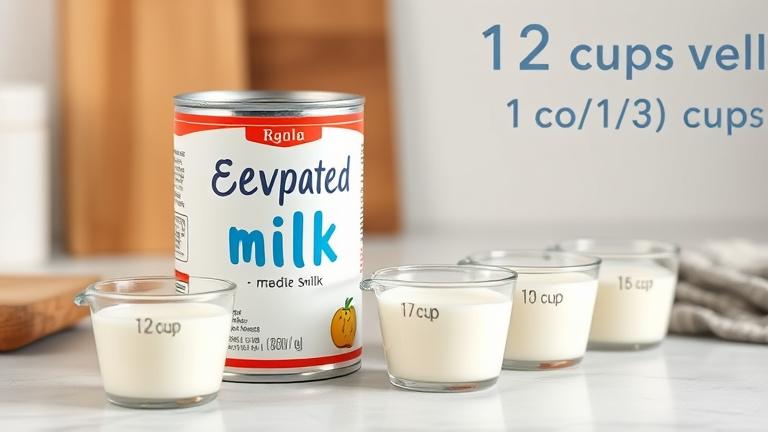
Understanding Evaporated Milk Measurements
When cooking or baking, it’s helpful to know how much evaporated milk you need for your recipes. Evaporated milk is a canned, concentrated form of milk with about 60% of the water removed. This process makes it richer and creamier, perfect for desserts, sauces, and baked goods.
Measuring evaporated milk correctly ensures your recipes turn out just right. Usually, recipes specify amounts in cups, tablespoons, or milliliters, so understanding these measurements is key.
Standard Volumes of Evaporated Milk
The most common size for canned evaporated milk is a 12-ounce can. This equals about 1 1/2 cups or 360 milliliters. Some brands also sell smaller cans, like 5 ounces, which is roughly ⅔ cup or 150 milliliters. Measuring smaller quantities helps with precise recipes like frosting or sauces.
If you’re using a recipe that calls for a specific amount, using the right measurement makes a big difference. For example, substituting one type of milk for another without adjusting for volume can change the final taste or texture.
Measuring Evaporated Milk Accurately
To measure evaporated milk properly, follow these simple steps:
- Pierce the can with a can opener. Pour the evaporated milk into a liquid measuring cup.
- If the can isn’t full, add water to reach the specified amount in your recipe, unless the instructions say not to. Many recipes are flexible if you need to make a substitution.
- Use a spoon or a spatula to level off the milk for an accurate measurement. Avoid adding extra milk or water beyond the needed amount.
If you don’t have a measuring cup, you can also weigh the milk using a kitchen scale. Since 1 cup of evaporated milk weighs about 240 grams, you can convert measurements easily. For example, ½ cup weighs approximately 120 grams.
Common Tips and Tricks
- Always read the recipe carefully. Some recipes might specify “evaporated milk, undiluted,” while others assume you have already added water.
- If a recipe calls for adding water to the evaporated milk, do so slowly and mix well to achieve the right consistency.
- Remember, canned evaporated milk can be stored in the fridge for up to 5 days after opening. Shake or stir before using to ensure it’s well mixed.
Understanding Liquid Measurements
Learning how to measure liquids like evaporated milk helps build your confidence in the kitchen. Whether you’re baking a pie or making a creamy sauce, knowing the right amount guarantees a better outcome.
By using standard measuring tools and paying attention to recipe instructions, you can ensure your dishes turn out delicious every time. Keep these basics in mind, and evaporated milk measurement will become second nature in your cooking routine.
Common Cup and Can Conversions Explained
If you’ve ever looked at a recipe and wondered how many cups of evaporated milk are in a standard can, you’re not alone. Knowing these conversions can make cooking easier and help you adjust recipes smoothly. Evaporated milk is a popular pantry staple used in many desserts, sauces, and baked goods. Understanding its common conversions between cans and cups ensures you get the right amount every time.
Most recipes call for measurements in cups, but cans of evaporated milk come in various sizes. The most typical size you’ll encounter is the standard 12-ounce can. When working with this size, it’s helpful to know how it converts to cups. A standard 12-ounce can of evaporated milk equals approximately 1.5 cups. This means that if your recipe needs 1 cup of evaporated milk, you can measure out about two-thirds of a can.
Here’s a quick lookup for common conversions:
| Can Size | Equivalent in Cups |
|---|---|
| 12 ounces (most common) | 1.5 cups |
| 5-ounce can | about ⅓ cup |
| 14-ounce can (alternative size) | about 1.75 cups |
If a recipe calls for a specific number of cups, you can measure it directly from the can or pour it into a measuring cup. To save time, many home cooks keep a set of measuring cups specifically for liquids, which makes the process quick and accurate.
Keep in mind that sometimes you might have leftovers after measuring. If you don’t need the entire can, store the remaining evaporated milk in an airtight container in the refrigerator. It’s best to use it within a few days to ensure freshness and flavor.
For practical purposes, it can also help to remember that a standard can of evaporated milk provides about 1.5 cups. This makes quick conversions simple and helps in adjusting recipes on the fly, especially when ingredient availability varies.
In summary, understanding the typical conversions allows you to cook more confidently. Whether substituting a can for cups or measuring out exactly what’s needed, these simple equivalencies save time and prevent kitchen surprises. Keep a small chart nearby or memorize these basic conversions for smoother cooking experiences every time.
How to Measure a Can of Evaporated Milk
Measuring evaporated milk from a can might seem simple, but getting an accurate amount is important for your recipes to turn out just right. Whether you’re baking a cake, making a creamy sauce, or preparing a dessert, precise measurement can make all the difference. This guide walks you through the easiest way to measure evaporated milk accurately, using common tools and practical tips.
The key tools you’ll need are a liquid measuring cup, a spoon or spatula, and perhaps a small bowl or container. Liquid measuring cups are designed specifically for liquids, with clear markings on the side, making it easier to see the exact amount. Using the right tools helps prevent mistakes that could affect your dish.
Steps for Measuring Evaporated Milk
- Start by shaking the can gently. Even though evaporated milk is thick, the liquid can settle, so a quick shake helps blend it evenly.
- Open the can carefully with a can opener. Be cautious not to spill or cut yourself.
- Pour the evaporated milk into a liquid measuring cup. Place the cup on a flat surface at eye level so you can see the measurement clearly.
- Look at the markings on the side of the cup. Pour slowly until you reach the amount your recipe calls for. For example, if you need ½ cup, pour until the milk reaches that line.
- If you accidentally pour too much, use a spoon or spatula to transfer the excess back into the can or a small container.
- For best accuracy, read the measurement at eye level and wait a moment for the milk to settle before reading again.
- If your recipe requires a specific weight of evaporated milk, use a kitchen scale. Pour the milk into a small bowl and weigh it, converting volume to weight if needed (about 245 grams per cup of evaporated milk).
Extra Tips for Accurate Measurement
- Always use a liquid measuring cup for liquids, not a dry measuring cup.
- Be consistent in how you pour and read measurements to avoid errors.
- If a recipe calls for evaporated milk in a specific measurement, double-check with the measuring cup to ensure accuracy.
- Store leftover evaporated milk in an airtight container in the fridge and label it, so it stays fresh for future use.
- Remember that evaporated milk can thicken as it stands. If your recipe needs a thinner consistency, gently stir or warm it before measuring.
Measuring evaporated milk correctly sets the foundation for a delicious result. With these simple steps, you’ll quickly get precise amounts every time, helping your cooking and baking turn out just perfect!
Useful Tips for Liquid Ingredient Measurement
Measuring liquid ingredients accurately, such as evaporated milk, is key to successful cooking and baking. Precise measurements ensure that your recipes turn out just right, whether you’re making a creamy sauce or a fluffy cake. Here are some friendly, practical tips to help you improve your measurement skills and get perfect results every time.
First, always use the right tools. A clear liquid measuring cup is your best choice for liquids. These cups usually have measurement markings on the side, often in both cups and milliliters. Place the cup on a flat surface and eye level when measuring. This way, you get an accurate reading without guesswork.
Next, pour the liquid slowly into the measuring cup. If you’re measuring evaporated milk or any other liquid, do not just pour it directly from the container into the cup. Instead, pour gradually, stopping periodically to check the level. This prevents over-pouring and helps you reach the exact measurement needed for your recipe.
To improve precision, it’s helpful to wipe the outside of the measuring cup with a paper towel after pouring. This removes any drips and keeps the reading clear. Always double-check your measurement at eye level to avoid errors caused by looking from above or below.
If your recipe calls for a specific volume of evaporated milk, such as 1 cup, it might be tempting to estimate or fill it quickly. Instead, use a liquid measuring cup, which is designed for accuracy. Dry measuring cups are not suitable, as they are meant for powders and solids. Using a liquid measuring cup ensures you’re getting a true measurement.
Additional Tips for Better Accuracy
- Warm the evaporated milk slightly if it’s very cold. Warm liquids settle more easily and may pour more smoothly, reducing spillage or bubbles that can obscure measurement.
- If you only need a portion of the can, pour the leftover into a small, airtight container and refrigerate. When measuring again, gently stir the milk to ensure even consistency before pouring.
- Avoid measuring liquids directly from cans if possible. Pour the amount you need into a measuring cup for the most accurate reading. Cans can be uneven or bulky, making it hard to gauge volume directly from them.
One common mistake is measuring liquids in a tilted or uneven bowl, which can cause inaccuracies. Always place your measuring cup on a flat surface and check the level carefully. Additionally, do not pour liquids into the measuring cup too quickly. Pour slowly, especially near the desired measurement, for the best accuracy.
Finally, remember that practice makes perfect. With a little patience and the right tools, you’ll find measuring liquids like evaporated milk becomes quick and easy. This small step can make a big difference in your cooking and baking success.
Recipes Using Evaporated Milk and Their Quantities
Evaporated milk is a versatile ingredient that can add creaminess and richness to many dishes. When used correctly, it enhances flavors without adding too much fat. In this section, you’ll find some popular recipes that incorporate evaporated milk along with the exact quantities needed. This will help you try new dishes and make the most of this pantry staple.
Creamy Macaroni and Cheese
This classic comfort food gets a rich boost from evaporated milk. For a serving of four, you’ll need:
- 2 cups of cooked macaroni
- 1 cup of evaporated milk
- 1 ½ cups of shredded cheddar cheese
- ¼ teaspoon of salt
- ¼ teaspoon of black pepper
Combine cooked macaroni with evaporated milk and cheese in a saucepan. Stir over medium heat until the cheese melts and the mixture thickens. It’s a simple, creamy dish that’s perfect for weeknights.
Homemade Banana Pudding
For a delicious, no-fail dessert, this banana pudding recipe uses evaporated milk to achieve a smooth, rich texture. You’ll need:
- 3 ripe bananas, sliced
- 1 can (12 ounces) of evaporated milk
- 1 cup of sugar
- 3 tablespoons of cornstarch
- 1 teaspoon of vanilla extract
- 1 box of vanilla wafers
Mix evaporated milk, sugar, and cornstarch in a saucepan over medium heat. Keep stirring until the mixture thickens. Remove from heat, then stir in vanilla. Layer banana slices, wafers, and the pudding mixture in a dish. Chill before serving for a refreshing treat.
Cheesy Cornbread
This savory bread gets extra moist and flavorful with evaporated milk. For a standard 9-inch baking dish, you’ll want:
- 1 ½ cups of cornmeal
- 1 can (12 ounces) of evaporated milk
- 2 large eggs
- ½ cup of melted butter
- 1 cup of shredded cheddar cheese
- 1 teaspoon of baking powder
- ½ teaspoon of salt
Mix all ingredients in a bowl until smooth. Pour into a greased baking dish and bake at 375°F (190°C) for about 25–30 minutes, until golden brown. Serve warm as a side dish or snack.
Tips for Using Evaporated Milk in Recipes
- Always shake or stir the can before opening to mix any settled cream.
- If a recipe calls for regular milk but you only have evaporated milk, dilute it with an equal amount of water.
- Use evaporated milk in coffee, smoothies, or creamy soups to boost flavor and texture.
- Keep a few cans on hand for quick, creamy sauces or desserts.
Adding evaporated milk to your recipes is an easy way to create richer, creamier dishes. Experiment with these quantities and discover what works best for your taste buds. With just a can of evaporated milk, you can elevate many of your favorite home-cooked meals and desserts.
Substitutes for Evaporated Milk in Recipes
If you’re out of evaporated milk or need a dairy-free option, don’t worry there are plenty of simple substitutes that work well in most recipes. Whether you’re handling a dietary restriction or just made a pantry run, knowing your alternatives helps keep your cooking on track. Below, you’ll find effective substitutes and how to measure them just like the real thing.
Before choosing a substitute, think about the recipe. For creamy dishes like casseroles or sauces, you want options that provide richness and smooth texture. For baked goods, consider the impact on flavor and moisture. Most substitutes can be easily prepared at home and measured just like evaporated milk, which is typically about 1 cup or 240 ml.
Common Substitutes for Evaporated Milk
- Regular Milk + Dairy or Non-Dairy Cream: Mix 1 cup of regular milk with 1 tablespoon of heavy cream or coconut cream. This combination mimics the richness of evaporated milk.
- Condensed Milk (Sweetened): Use in smaller amounts, about ¾ cup, and reduce sugar elsewhere in the recipe since condensed milk is sweet. Keep in mind, it adds sweetness and a thicker consistency.
- Non-Dairy Milks: Almond, soy, oat, or coconut milk are all good options. For extra creaminess, blend in a tablespoon of neutral oil or coconut milk.
Homemade Evaporated Milk
If you want a close match that’s homemade, here’s how to make it:
- Pour 2 cups of regular milk into a saucepan.
- Simmer over low heat, stirring often, until the volume reduces by about half. This takes approximately 25–30 minutes.
- Allow it to cool before adding to your recipe. Use it as a 1:1 substitute for canned evaporated milk.
This method concentrates the milk’s flavor and thickness, closely resembling store-bought evaporated milk.
Other Tips and Considerations
- Check the sweetness: If your substitute is sweetened (like condensed milk), cut back on sugar elsewhere in your recipe to balance flavors.
- Thickening agents: For very thin plant-based milks, mix in a small amount of cornstarch or flour dissolved in cold water to thicken before adding to recipes.
- Flavor adjustments: Coconut or almond milks add their distinct flavors. If unwanted, choose plain or unflavored varieties or dilute with water.
Storage and Shelf Life
| Substitute | Storage Tips | Best Used By |
|---|---|---|
| Homemade evaporated milk | Store in an airtight container in the fridge | Use within 3-4 days |
| Milk + cream mixture | Refrigerate and use within 2-3 days | Best for immediate use, not freezing |
| Condensed milk | Keep unopened in pantry; once opened, refrigerate and use within 1 week | Check for spoilage before using |
With these options in hand, you can easily adapt recipes that call for evaporated milk. Experiment to see which substitute gives you the best flavor and texture. Remember, small adjustments can make a big difference in the final dish!
Nutritional Facts and Benefits of Evaporated Milk
Evaporated milk is a popular ingredient in many recipes and an easy way to add rich flavor and nutrients to your diet. It is made by removing about 60% of the water from regular milk, resulting in a thicker, creamier product. This process concentrates the nutrients found naturally in milk, making evaporated milk a nutritious addition to your meals.
One of the reasons people choose evaporated milk is because it provides essential vitamins and minerals. It is a good source of calcium, which is vital for healthy bones and teeth. It also contains vitamin D, which helps the body absorb calcium effectively. Other important nutrients in evaporated milk include vitamin A, vitamin B12, potassium, and magnesium.
In terms of nutritional content, a typical ¼ cup (about 62 ml) serving of evaporated milk contains approximately:
| Nutrient | Amount per ¼ cup |
|---|---|
| Calories | 40-60 kcal |
| Protein | 3-4 grams |
| Total Fat | 2-3 grams |
| Carbohydrates | 3-4 grams |
| Calcium | 150-200 mg |
| Vitamin D | about 25 IU |
Because of its concentrated nutrients, evaporated milk can help support bone health and boost your immune system. It is particularly beneficial for people who need extra calcium, such as growing children, teenagers, or seniors. Additionally, the vitamin D present in evaporated milk enhances calcium absorption and supports overall mood and energy levels.
Using evaporated milk can be a practical way to enhance the nutritional profile of various dishes, from creamy soups to desserts. Its rich texture and mild flavor blend well with both sweet and savory foods. For example, adding evaporated milk to your coffee or tea offers a smooth, creamy taste without the heaviness of cream.
However, it is important to check labels, as some brands may contain added sugars or preservatives. If you are monitoring your calorie or fat intake, opt for reduced-fat versions. Also, consider dietary restrictions such as lactose intolerance evaporated milk contains lactose, so those affected should choose lactose-free options or limit consumption.
In summary, evaporated milk is a nutrient-dense product that supports overall health. Its rich supply of calcium, vitamin D, and other vital nutrients makes it a versatile ingredient for a balanced diet. Incorporate it responsibly, and enjoy its many health benefits alongside your favorite recipes.