
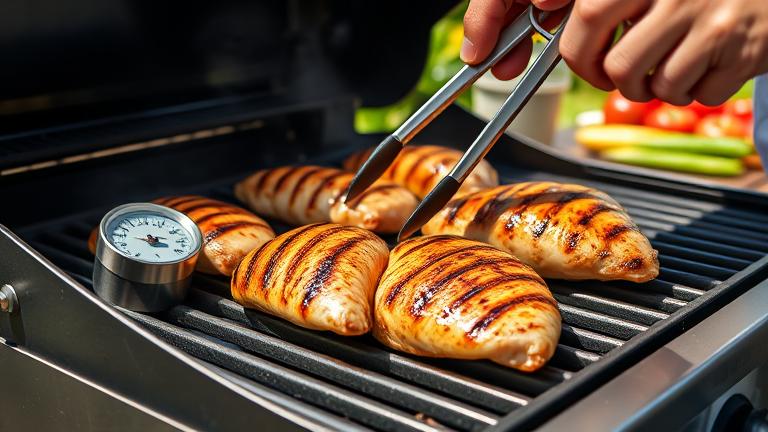
Mastering Grill Temperature Control
Controlling the grill temperature is key to cooking chicken evenly and preventing overcooking. Whether you’re using a charcoal or gas grill, maintaining a steady heat ensures your chicken turns out juicy and flavorful. Don’t worry if you’re new to grilling; with a few simple tips, you’ll become confident in managing your grill’s temperature in no time.
First, know your grill’s temperature zones. Most grills have a hot side for searing and a cooler side for indirect cooking. For chicken, aim for a temperature of around 350°F to 400°F, which allows the meat to cook evenly without burning the outside. You’ll want to use a reliable meat or grill thermometer to monitor the temperature accurately.
Controlling a Gas Grill
- Start by preheating your grill for about 10-15 minutes. Turn all burners to high initially, then adjust as needed.
- Once heated, reduce the burners to create a medium heat zone. Most gas grills have control knobs that let you fine-tune the heat. For chicken, set the burners to medium or medium-low.
- Keep the lid closed as much as possible. This traps heat and maintains a consistent temperature inside the grill.
- Use the built-in thermometer, if available, to check the lid temperature. For more accuracy, place a separate grill thermometer on the grill grate.
Controlling a Charcoal Grill
- Arrange the coals on one side of the grill for indirect heat, leaving the other side empty. Light the coals and let them burn until covered with ash, about 20 minutes.
- Adjust the airflow vents. Opening vents increases temperature; closing them lowers it.
- To lower the heat, spread out the coals or remove some using tongs. For more heat, pile the coals higher or add more charcoal.
- Place the chicken on the cooler side of the grill to cook gently and avoid charring.
Tips for Consistent Temperatures
- Resist the urge to open the lid frequently. Every time you do, heat escapes, making it harder to control the temperature.
- Use dual thermometers, one on the lid and one on the grate, to monitor heat levels accurately.
- Adjust the heat periodically based on how the chicken is cooking and the internal temperature you want to reach.
- If your grill tends to fluctuate, consider using a separate grill thermometer with a probe. Insert it into the thickest part of the chicken to track cooking progress.
Common Mistakes and How to Avoid Them
- Overly high heat can char the outside before the inside is cooked. Always aim for a moderate temperature.
- Constantly opening the lid causes temperature drops. Keep the lid closed as much as possible.
- Using inaccurate thermometers can lead to under- or overcooked chicken. Invest in a good quality, calibrated thermometer.
Practicing these heat management tips will help you achieve tender, evenly cooked chicken every time. Remember, patience and attention to temperature make all the difference in successful grilling.
Timing Tips for Juicy Chicken
Grilling chicken so it remains juicy and tender is all about getting the timing just right. Whether you’re working with chicken breasts, thighs, or drumsticks, understanding how long to cook each type and thickness can make a huge difference in the final result. Proper timing ensures your chicken is cooked through without drying out, giving you perfect bites every time.
Different cuts of chicken cook at different speeds, so adjust your timing accordingly. Thicker pieces, like bone-in thighs or chicken breasts over an inch thick, need more time on the grill. Thin fillets and boneless breasts cook faster, so they require careful attention to avoid overcooking. The key is to develop a feel for the grill and use timing as a helpful guide rather than a strict rule.
Understanding Chicken Cut Types and Thickness
- Boneless, skinless chicken breasts: Typically ½ to 1 inch thick, these cook quickly—usually within 6 to 8 minutes total, flipping halfway.
- Bone-in chicken thighs and drumsticks: Usually thicker and take longer—about 20 to 30 minutes depending on size. They need to be cooked through but not dried out.
- Chicken wings: Thin, so about 8 to 12 minutes, turning often to prevent burning.
Timing Strategies to Keep Chicken Juicy
Consistency is key when grilling chicken. Use these tactics to get the timing right:
- Preheat your grill: Make sure your grill is hot before adding chicken. A temperature of around 375 to 450 degrees Fahrenheit is ideal for most cuts. This helps sear the chicken and lock in juices.
- Follow general timing guides: Thinner pieces might reach the perfect doneness quickly, so keep a close eye. Thick pieces require more time and patience.
- Use a meat thermometer: The most reliable way to prevent overcooking is to check the internal temperature. For juicy chicken, aim for 165°F (75°C). Insert the thermometer into the thickest part, avoiding bones when applicable.
- Adjust for thickness: Thicker pieces need extra minutes or a two-zone grill setup—hot on one side, cooler on the other—so you can finish cooking without risking burning the outside.
Timing Tips for Different Chicken Cuts
| Chicken Cut | Grilling Time | Tips |
|---|---|---|
| Boneless, skinless breasts | 6-8 minutes total | Flip halfway; check internal temp early to avoid overcooking |
| Bone-in thighs and drumsticks | 20-30 minutes | Use indirect heat for even cooking; baste as needed |
| Wings | 8-12 minutes | Turn frequently; watch for crispy skin |
Common Mistakes and How to Avoid Them
- Overcooking causes dry, tough chicken. Always use a thermometer to catch the perfect moment.
- Under-cooking can lead to unsafe chicken. Make sure the internal temp hits 165°F before serving.
- Not preheating the grill results in uneven cooking and potential sticking. Preheat for a few minutes before adding chicken.
With these timing tips, your grilled chicken will come out juicy, tender, and full of flavor. Practice makes perfect—keep an eye on the clock, your grill’s heat, and the internal temperature. Soon, grilling chicken to perfection will become second nature!
Choosing the Right Chicken Cuts
When it comes to grilling chicken, choosing the right cut can make all the difference. Some cuts are more forgiving and stay juicy even if slightly overcooked, making them perfect for beginners or busy days. Understanding which chicken cuts work best on the grill helps ensure your meal turns out delicious every time.
The most common chicken cuts for grilling are chicken breasts, thighs, drumsticks, and wings. Each has its own qualities, so knowing what to look for will help you pick the best piece for your meal. Let’s explore these options and see which ones are more suited for grilling.
Chicken Breasts
Chicken breasts are popular because they are lean and quick to cook. They have a mild flavor and a firm texture. However, they can dry out easily if overcooked, so it’s important to watch carefully. For grilling, choose boneless, skinless breasts with a good amount of thickness. Thinner breasts tend to dry out faster, so thicker ones are a better bet for a juicier result.
Look for breasts that feel firm and plump, with a pinkish color and no dark spots. If buying pre-packaged, check the expiration date and avoid any that look slimy or discolored. Marinating chicken breasts before grilling can add flavor and help keep them moist.
Chicken Thighs
Chicken thighs are known for being more forgiving on the grill. They contain more fat and connective tissue, which helps keep the meat moist and tender even if slightly overcooked. They have a richer flavor and can handle higher heat better than breasts.
Whether bone-in or boneless, thighs are a great choice for grilling. Bone-in thighs tend to be juicier and more flavorful but require a little more cooking time. When selecting thighs, choose pieces that are red, firm, and well-trimmed. Avoid any with excessive moisture or discoloration, which can indicate spoilage.
Chicken Drumsticks and Wings
Drumsticks and wings are usually quite forgiving for grilling. They are small, with a good amount of fat and skin, which help keep the meat moist. Drumsticks need a bit more time to cook through, but they are hard to dry out. Wings are best cooked quickly at high heat for crispy skin and tender meat.
- Tip: Marinating these cuts adds flavor and helps prevent drying out.
- Tip: Use a meat thermometer to make sure they reach an internal temperature of 165°F (74°C) for safety.
Tips for Selecting the Best Chicken for Grilling
- Pick cuts with a firm texture and a fresh smell. Avoid any chicken with a sour or slimy surface.
- If possible, buy whole chicken and cut it yourself. It’s often fresher and more customizable for your grill.
- For more flavor, choose bone-in cuts like thighs or drumsticks. They stay juicy longer and develop better taste during grilling.
- Consider buying organic or free-range if you want higher quality and better flavor.
Remember, proper selection is just the first step. Marinating, careful grilling, and monitoring the internal temperature will ensure your chicken turns out juicy, flavorful, and safe to eat. Happy grilling!
Using a Meat Thermometer Correctly
Using a meat thermometer is one of the best ways to make sure your chicken is cooked safely and stays juicy. It might seem simple, but knowing how to use it properly can make a big difference in your cooking results. Whether you’re grilling, roasting, or frying, a good thermometer is your trusted tool for perfect chicken every time.
First, choose the right thermometer. There are digital probe thermometers, dial instant-read models, and even oven-safe probes. For quick checks and convenience, an instant-read thermometer works well. For more precise control while cooking, especially when roasting or grilling, an oven-safe probe might be more helpful.
Before you start cooking, make sure your thermometer is clean. Wipe it with hot, soapy water or alcohol to remove any bacteria or residue. This step is essential for food safety and accurate readings.
During cooking, insert the thermometer into the thickest part of the chicken piece. Avoid touching bone, as it can give a falsely high reading. The ideal spot is usually the center of the breast or the thickest part of the thigh. Wait a few seconds for the thermometer to stabilize before reading the temperature. Many instant-read models give a quick indication, but some digital types might need a few seconds longer.
When you get a reading, check if it has reached the safe internal temperature for chicken, which is 165°F (74°C). If it’s below, put the chicken back into the heat source and check again after a few minutes. For perfectly juicy chicken, try to remove it from heat just as it hits 165°F. If you cook it too long, it can dry out and become tough, even if it’s safe to eat.
Remember, the temperature can rise slightly after removing the chicken from heat, called carryover cooking. To avoid overcooking, take the chicken off a little before it hits 165°F if you plan to let it rest for a few minutes. Resting the chicken allows the juices to redistribute, making it more tender and flavorful.
Tips for better results include:
- Always calibrate your thermometer regularly to keep it accurate.
- Insert the probe deeply into thick parts and avoid touching bones or fat.
- Clean your thermometer after each use to prevent cross-contamination.
- If cooking a large piece of chicken, check in multiple spots to ensure even cooking.
Be patient and take your time when checking the temperature. Rushing can lead to undercooked chicken or overdone, dry meat. Using a meat thermometer correctly is a simple step that boosts confidence and guarantees safe, juicy chicken every time you cook.
Preventing Dry, Overcooked Chicken
Cooking chicken on the grill can be tricky, especially when you want it to stay juicy and tender. Overcooked chicken often turns dry and flavorless, but with some simple tips, you can keep your chicken moist and delicious every time.
One of the best ways to prevent dry chicken is to focus on keeping it moist during cooking. This involves using marinades, controlling the temperature, and giving the meat time to rest. Let’s explore these techniques so you can enjoy juicy grilled chicken without the fuss.
Use Marinades to Add Moisture and Flavor
Marinating chicken before grilling is a great way to infuse flavor and keep it tender. A good marinade contains an acid (like lemon juice or vinegar), oil, and flavorful aromatics. The acid helps to break down muscle fibers, making the chicken more tender, while the oil keeps moisture locked inside.
- Marinate for at least 30 minutes, but no longer than 4 hours for best results.
- Avoid overly acidic marinades for long periods, as they can make the chicken mushy.
- For a simple marinade, mix olive oil, lemon juice, garlic, and herbs like thyme or rosemary.
Control Your Grill’s Temperature
One common mistake is cooking the chicken on a grill that’s too hot. High heat can cause the outside to burn while the inside remains undercooked or, worse, overcooked quickly, drying out the meat.
Use medium heat for grilling chicken. If you are using charcoal, wait until the coals are glowing and have a gray ash layer. For gas grills, preheat to around 350°F (175°C).
Consider using a two-zone setup: one side of the grill with direct heat for searing, and the other with indirect heat to finish cooking gently. This way, you can achieve a nice sear without risking dryness.
Monitor Internal Temperature
The key to juicy chicken is not overcooking it. Use a meat thermometer to check the internal temperature—chicken is safe to eat at 165°F (74°C). Once it reaches that, remove it from the grill.
Removing the chicken promptly prevents it from drying out as it continues to cook from residual heat. Remember, the temperature can rise a few degrees after taking it off the grill, known as carryover cooking.
Rest the Chicken After Grilling
Resting is an often-overlooked step that helps retain moisture. After removing the chicken from the grill, let it sit covered loosely with foil for about 5 to 10 minutes.
This allows the juices to redistribute throughout the meat instead of spilling out when cut. Cutting into hot chicken right away can cause all the flavorful juices to escape, resulting in dry slices.
Additional Tips to Keep Chicken Juicy
- Use bone-in, skin-on chicken when possible—these tend to stay moister during cooking.
- Avoid piercing the meat with a fork or skewer, which can release juices.
- Apply a light brush of marinade or oil during grilling to enhance moisture and flavor.
By paying attention to these techniques, you can grill chicken that stays juicy and tender, impressing everyone at the barbecue. A little patience, proper temperature, and smart preparation go a long way to prevent that dry, overcooked result many fear.
Flavor Tips and Marinating Tricks
If you want your grilled chicken to be juicy, flavorful, and tender, marinating is your best friend. It’s a simple way to boost taste without the risk of dry meat or overcooking. Here are some practical tips and tricks to help you get the most out of your marinade and seasonings.
Start with a Good Base
Most marinades combine acid, oil, and seasonings. The acid, like vinegar or citrus juice, helps tenderize the meat by breaking down protein fibers. The oil keeps the chicken moist and helps lock in flavor. Add herbs, spices, garlic, or onion for an extra punch.
Select the Right Marinade
- For a tangy flavor, try lemon juice with garlic and herbs.
- If you want a smoky taste, add smoked paprika or cumin.
- Soy sauce or tamari can provide a savory umami flavor, perfect for Asian-inspired dishes.
Marinating Time
Don’t marinate chicken too long, especially if your marinade is high in acid. Typically, 30 minutes to 2 hours is enough for thin cuts like breasts. If you’re using bone-in pieces or thighs, marinate for 4-6 hours for maximum flavor and tenderness. Over-marinating can make the chicken mushy and overly acidic.
Marinating Tips
- Use a resealable plastic bag or a shallow dish to evenly coat the chicken.
- Always marinate in the refrigerator to prevent bacteria growth.
- Turn or stir the chicken halfway through to ensure even flavor absorption.
- If you want to use the leftover marinade for basting or sauce, boil it first to kill any bacteria from raw chicken.
Flavor Boosting Techniques
In addition to marinating, you can enhance flavor by seasoning your chicken just before grilling. Use salt, pepper, and dried herbs. For extra flavor, try a quick spice rub blended with paprika, garlic powder, onion powder, and a pinch of cayenne for heat.
Prevent Overcooking
Even if your chicken is seasoned and marinated perfectly, overcooking can dry it out. Use a meat thermometer; chicken should reach 165°F (75°C). Remove it from the grill as soon as it hits this temperature to keep it tender and juicy.
Additional Tips
- Pat the chicken dry before grilling to get a nice sear and improve browning.
- If your chicken sticks to the grill, give it a minute and then try again; it will release when ready.
- Rest the grilled chicken for a few minutes after cooking. This helps the juices redistribute, keeping the meat moist.
With these tips for flavor enhancement and marinating techniques, your grilled chicken will be full of delicious taste and perfect tenderness. Experiment with different flavor combinations and find what your family loves best!
Best Practices for Perfectly Grilled Chicken
Grilling chicken is a favorite way to prepare this versatile meat, but getting it just right can be tricky. To achieve moist, flavorful, and evenly cooked results, it helps to follow some simple best practices. Whether you’re a beginner or want to improve your grilling skills, these tips will make your chicken turn out delicious every time.
Choose the Right Chicken Cuts
Start with the best type of chicken for grilling. Popular cuts include chicken breasts, thighs, drumsticks, and wings. Each has different cooking times and moisture levels. Thighs and drumsticks are more forgiving because they stay moist and tender, even if slightly overcooked. Chicken breasts can dry out easily, so they need special care.
Prepare and Marinate
Before grilling, marinate your chicken or season it well. Marinating helps tenderize the meat and adds flavor. Use a mixture of oil, acid (like lemon juice or vinegar), herbs, and spices for a tasty result. Let the chicken sit in the marinade for at least 30 minutes or up to a few hours in the fridge.
If you’re short on time, a dry rub with spices and salt also works great. Just remember, seasoning is key to flavor, so don’t skimp.
Preheat Your Grill Properly
Always preheat your grill to the right temperature before placing the chicken on it. For a balanced cook, aim for a medium-high heat, around 375°F to 450°F. This ensures the chicken cooks evenly and develops a good sear without burning.
If using a charcoal grill, wait until the coals are covered in gray ash. For gas grills, turn the burners on and close the lid for about 10 minutes to heat thoroughly.
Oil the Grill Grates
Prevent sticking by oiling your grill grates lightly before cooking. Use a high-heat oil like vegetable or grapeseed. Dip a paper towel in oil, hold it with tongs, and brush the grates quickly. This step helps create those perfect grill marks and makes cleanup easier.
Arrange Chicken on the Grill
Place the chicken pieces on the grill with enough space around each for even heat circulation. For pieces with skin, start with the skin side down to crisp it up. If using bone-in cuts, remember they take longer to cook.
Use tongs to handle the chicken and avoid piercing it, which can let juices escape and dry out the meat.
Control the Heat and Cook Time
Cooking times vary based on the cut and size of the chicken. A good rule of thumb is about 6-8 minutes per side for breasts and 10-15 minutes for thighs or drumsticks. Use a meat thermometer to check doneness—chicken should reach an internal temperature of 165°F.
Adjust the heat if the chicken is browning too fast or not cooking through. If it starts to burn, move it to a cooler part of the grill to finish cooking more slowly.
Rest and Serve
Once cooked, let the chicken rest for a few minutes. Resting helps juices redistribute, making the meat moist and tender. Cover it loosely with foil to keep warm.
Then, slice or serve whole, and enjoy your perfectly grilled chicken with your favorite sides or sauces.
- Tip: For extra flavor, baste the chicken with a marinade or barbecue sauce during the last few minutes of grilling.
- Common mistake: Overcooking chicken, which dries it out. Always use a thermometer for best results.
- Safety note: Never leave raw chicken at room temperature for more than two hours to prevent bacteria growth.