
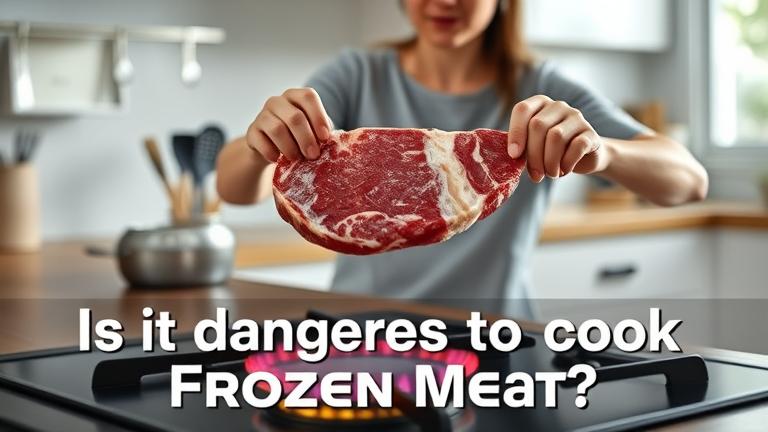
Is Cooking Frozen Meat Safe?
Cooking frozen meat directly is a common practice, especially when you forget to thaw it in advance. Many home cooks wonder if it’s safe to skip the thawing process and go straight to cooking frozen meat. The short answer is yes, it can be safe if you follow some important guidelines.
However, it’s important to understand the potential risks involved. When you cook meat from frozen, it might take longer to reach the proper internal temperature needed to kill harmful bacteria. If the meat stays too long in the “danger zone,” which is between 40°F and 140°F, bacteria can multiply quickly, increasing the risk of foodborne illness.
Best Practices for Cooking Frozen Meat Safely
- Use the right cooking method: Methods like baking, roasting, or simmering work well for frozen meat. Avoid quick-cooking techniques like pan-frying or grilling, which may not heat the meat evenly and thoroughly.
- Adjust cooking times: Expect to add roughly 50% more time compared to cooking thawed meat. Use a reliable meat thermometer to ensure it reaches a safe internal temperature.
- Check internal temperatures: Different meats require specific temperatures to be safe. For example, poultry should reach 165°F, ground beef 160°F, and whole cuts like steak or roasts 145°F, followed by a rest period.
- Cover and simmer: Keep the meat covered during cooking to help it heat evenly. Low and slow cooking methods can help ensure the interior reaches a safe temperature.
Potential Risks to Watch Out For
While it’s generally safe to cook frozen meat directly, certain mistakes can lead to health hazards. These include not cooking the meat long enough or not using a thermometer. If the meat isn’t heated properly, bacteria like Salmonella or Listeria might survive.
Another risk is uneven cooking. If the outside looks cooked but the inside remains frozen or cool, harmful bacteria may still be present. That’s why checking the internal temperature is key to safety and quality.
Tips to Minimize Health Hazards
- Plan ahead: If possible, thaw meat safely in the refrigerator overnight. This helps it cook more evenly and reduces any doubts about safety.
- Follow recipes carefully: Look for recipes specifically designed for cooking frozen meat to ensure proper steps and times.
- Never defrost at room temperature: Thawing meat on the counter increases the risk of bacterial growth. Use the fridge, cold water, or microwave if you need a quick thaw before cooking.
- Clean your tools and surfaces: Always wash your hands, cutting boards, and utensils after handling raw meat to avoid cross-contamination.
In summary, cooking frozen meat can be safe, but it requires careful attention to cooking times, internal temperatures, and hygiene. By following these tips, you can enjoy your meals without risking your health. When in doubt, always use a meat thermometer for peace of mind and to keep your family safe.
Proper Ways to Thaw Frozen Meat
Thawing frozen meat safely is important to keep your meals delicious and prevent foodborne illness. Proper thawing helps the meat cook evenly and stay fresh. There are several recommended methods for thawing meat, each with its advantages. Choosing the right one depends on how much time you have and the type of meat you’re preparing.
Refrigerator Thawing
The safest and most recommended way to thaw meat is in the refrigerator. This method keeps the meat at a safe, consistent temperature, which helps prevent bacteria growth. To do this, plan ahead because it takes time. For a typical cut of meat, like steaks or chicken breasts, allow about 24 hours for every 1 to 2 pounds.
Place your meat in a leak-proof container or on a plate to catch any drips. Then, put it on the bottom shelf of your refrigerator. Once thawed, most meats can stay in the fridge for another 1 to 2 days before cooking. Remember, never thaw meat at room temperature, such as on the countertop. This can cause bacteria to grow rapidly and increase food safety risks.
Cold Water Thawing
If you’re short on time, cold water thawing is a quick and safe method. Keep the meat in a sealed, leak-proof plastic bag to prevent water from touching it. Submerge the bag in cold water, changing the water every 30 minutes to keep it cold. This process typically thaws smaller cuts of meat in an hour or less.
Once the meat is thawed, cook it immediately. Do not refreeze meat thawed by this method unless you cook it first. Cold water thawing is faster than refrigerator thawing but requires more attention. It’s a great option when you need meat ready in just a few hours.
Microwave Thawing
Microwave thawing works best when you need to cook the meat right away. Use your microwave’s defrost function, which usually has a timer and weight setting. Check the meat frequently to ensure it doesn’t start cooking unevenly. If parts of the meat begin to cook, stop the microwave and cook those portions immediately.
Once thawed in the microwave, cook the meat immediately. Microwave thawing can sometimes lead to uneven thawing, but it’s quick and convenient for last-minute meals.
Important Tips for Safe Thawing
- Always plan ahead for refrigerator thawing. It’s the safest method, but it requires time.
- Use leak-proof containers or bags to avoid cross-contamination during water thawing.
- Never thaw meat at room temperature. Bacteria multiply rapidly at warm temperatures.
- Cook meat immediately after thawing in the microwave or cold water for the best safety and freshness.
- If you’re in doubt, it’s safer to cook the meat from frozen than to thaw it improperly.
Risks of Cooking Meat Directly from Frozen
Cooking meat directly from frozen might seem convenient, especially when you’re in a hurry. However, it can come with some health risks if not done carefully. The main concern is that the meat may not cook evenly, which can allow harmful bacteria to survive and pose a health threat.
When meat is frozen, its outer layers can thaw and cook faster than the interior. If you don’t properly heat the meat all the way through, bacteria like Salmonella or E. coli may remain alive. Consuming undercooked meat contaminated with these bacteria can cause food poisoning, leading to symptoms like nausea, vomiting, diarrhea, and in severe cases, hospitalization.
Another risk is the growth of bacteria. If the meat starts to thaw unevenly during cooking, parts of it could stay in the “danger zone,” which is between 40°F and 140°F (4°C to 60°C). In this range, bacteria multiply quickly. The longer meat spends in this zone while cooking, the higher the chance of harmful bacteria proliferating.
Cooking meat from frozen can also be challenging for maintaining proper food safety. It’s hard to tell if the meat has reached a safe internal temperature without a reliable meat thermometer. For example, ground beef should reach at least 160°F (71°C) to kill bacteria, while chicken should be cooked to 165°F (74°C). If you’re rushing, you might overlook measuring these temperatures, increasing health risks.
Additionally, improper cooking methods can lead to dryness or tough meat. For instance, trying to cook frozen steaks quickly on high heat might burn the outside while leaving the inside undercooked. This not only affects texture but also increases the chance of unsafe, undercooked sections.
It’s also worth noting that some cooking appliances, like microwave ovens, are less effective at evenly cooking frozen meat. Microwaves tend to heat unevenly, creating “hot spots” where bacteria may survive. If you choose to cook meat from frozen in a microwave, always check that the meat is cooked evenly and reaches a safe internal temperature.
To stay safe when cooking meat from frozen, consider these tips:
- Always use a meat thermometer to verify the right internal temperature.
- Follow guidelines for cooking times, which are usually longer when starting from frozen.
- Prefer thawing meat in the refrigerator or under cold running water to ensure even cooking.
- Cook smaller portions or thinner cuts to help ensure they cook through properly.
- Be cautious when using appliances like microwaves, and always check for hot spots or uneven cooking.
By understanding these risks and taking proper precautions, you can enjoy your meals safely without the worry of foodborne illnesses. Remember, safe food practices are key to healthy and delicious cooking.
How to Cook Frozen Meat Safely
Cooking frozen meat can be convenient, but it’s important to do it safely to prevent foodborne illnesses. When meat is frozen, bacteria might still be present on the surface, and thorough cooking is key to killing any germs. The good news is, you can cook frozen meat directly from the freezer without defrosting first, as long as you follow proper safety steps.
One of the most important things to remember is that frozen meat should be cooked to a safe internal temperature. This temperature varies depending on the type of meat but generally needs to be at least 145°F (63°C) for beef, veal, and lamb steaks, 160°F (71°C) for ground meats like beef or turkey, and 165°F (74°C) for poultry. Using a food thermometer is the best way to check if your meat has reached the right temperature.
Methods for Cooking Frozen Meat Safely
Several cooking methods work well for frozen meat, but some are better than others when it comes to safety and even cooking. Here are a few options to consider:
- Oven Roasting or Baking: This method is straightforward. Set your oven to the recommended temperature for the meat, usually 350°F or 375°F. Because you’re starting with frozen meat, it may take about 50% longer to cook. Use a meat thermometer to check that the internal temperature has reached the safe level.
- Cooking in a Slow Cooker: Be cautious here. The USDA advises against cooking frozen meat directly in a slow cooker because the meat may stay in a temperature danger zone, between 40°F and 140°F, too long. If you do use a slow cooker, it’s best to thaw the meat first.
- Stovetop Cooking: You can cook frozen meat in a covered skillet or saucepan. It’s useful for ground meats or smaller cuts. Brown the meat on the outside, then reduce the heat and cook until the inside is thoroughly cooked and the temperature is safe.
- Instant Pot or Pressure Cooker: These appliances are excellent for cooking frozen meat. They trap steam and heat rapidly, helping cook the meat evenly and thoroughly. Just remember to add a few extra minutes to the cooking time and check internal temperatures afterward.
Tips for Safe and Effective Cooking
Here are some practical tips to ensure your frozen meat is cooked safely and tastes great:
- Always check internal temperature: Never guess if the meat is done. Use a reliable food thermometer.
- Cook from frozen or thaw first: While some methods like roasting can handle frozen meat, others like grilling or frying tend to work better if the meat is partially thawed.
- Avoid partially cooking and cooling: Do not partially cook meat and then store it to finish later. It can promote bacterial growth.
- Adjust cooking time: Expect to add about half of the regular cooking time when starting from frozen.
- Let meat rest after cooking: Allow cooked meat to rest for a few minutes. This helps juices redistribute and ensures the meat reaches a uniform temperature.
Common Mistakes to Avoid
Be on the lookout for these common mistakes that can compromise safety:
- Not using a meat thermometer to check doneness
- Cooking frozen meat in a slow cooker without pre-thawing
- Overcrowding the pan, which can cause uneven cooking
- Skipping the resting period after cooking
By following these safe cooking methods and tips, you can enjoy delicious, thoroughly cooked frozen meat every time. Remember, patience and proper temperature checks are your best friends in the kitchen!
Common Mistakes When Cooking Frozen Meat
Cooking frozen meat can be convenient, but it’s easy to make some common mistakes that affect the taste, safety, and texture of your meal. Knowing what to watch out for can help you avoid problems and ensure your meat turns out delicious and safe to eat.
One frequent mistake is trying to cook frozen meat directly without thawing it first. While some methods like slow cooking can handle frozen meat, it often results in uneven cooking. The outside may become overdone or dry, while the inside remains undercooked. To prevent this, it’s best to plan ahead and thaw meat in the refrigerator, which allows it to defrost evenly and safely.
Another mistake is improperly thawing meat. Leaving it out on the counter at room temperature can be dangerous because it allows bacteria to grow quickly. Instead, thaw meat in the fridge, in cold water, or in the microwave if you plan to cook it immediately. Remember, quick-thaw methods require careful handling to avoid contamination.
Forgetting to season or season unevenly is also common. Frozen meat can be more difficult to season because moisture on the surface may prevent flavors from sticking well. To fix this, thaw the meat fully and pat it dry before applying your seasonings. This helps your spices and marinades adhere better, giving your dish more flavor.
Cooking at the wrong temperature can cause problems too. Many home cooks set their oven or stovetop too high or too low when cooking frozen meat. Too high, and you risk burning the outside while the inside remains raw. Too low, and the meat takes longer to cook, increasing the chance of bacteria growth. Using a meat thermometer can help you ensure the meat reaches a safe internal temperature without overcooking.
Another common error is overcrowding the pan or oven. If too many pieces of frozen meat are cooked together in a crowded pan, they won’t brown properly. This can make the meat soggy and less flavorful. Allow space between pieces for proper searing and heat circulation.
Lastly, neglecting to rest the meat after cooking is a small mistake that can affect texture and juiciness. Resting allows the juices to redistribute throughout the meat, making it more tender. For cooked frozen meat, aim to rest it for a few minutes before slicing or serving.
- Always plan to thaw meat safely before cooking, unless the recipe specifically supports cooking from frozen.
- Use a meat thermometer to check for the safe internal temperature.
- Pat the meat dry to help seasonings stick better.
- Cook at appropriate temperatures and avoid overcrowding the pan.
- Let the meat rest after cooking for better flavor and texture.
Tips for Ensuring Meat is Fully Cooked
When preparing meat, one of the most important steps is making sure it is fully cooked. Proper cooking not only makes the meat safe to eat but also ensures it tastes delicious and has the right texture. Verifying that your meat has reached the correct internal temperature is the best way to guarantee safety and quality.
The most reliable tool for this task is a meat thermometer. There are different types, including digital, dial, and instant-read thermometers. Each one is easy to use once you get the hang of it, and they give accurate readings in just seconds. Keep your thermometer clean and calibrated regularly for the best results.
Before cooking, check the specific safe temperatures for various types of meat. For example, poultry like chicken and turkey should reach an internal temperature of 165°F (74°C). Beef, pork, veal, and lamb can vary depending on your preferred level of doneness, but ground meats generally need to be cooked to 160°F (71°C). Use this as a quick reference:
| Meat Type | Safe Internal Temperature | Favorite Doneness Level |
|---|---|---|
| Chicken or Turkey (whole or pieces) | 165°F (74°C) | – |
| Beef (steaks, roasts) | 145°F (63°C) and rest for 3 minutes | Medium rare (135°F), Medium (145°F), Well done (160°F) |
| Pork (chops, tenderloin) | 145°F (63°C) and rest for 3 minutes | – |
| Ground meats (beef, pork, chicken) | 160°F (71°C) | – |
When checking the temperature, insert the thermometer into the thickest part of the meat, avoiding bones, fat, or gristle. Bones can give false readings, so always aim for the center of the meat. Wait until the thermometer display shows the correct temperature before removing the meat from heat.
Remember, meat can continue cooking a little after being removed from heat, which is called carryover cooking. To prevent overdone meat, consider removing it when it’s a few degrees below the target temperature and let it rest for about 3 to 5 minutes. During this resting period, the temperature rises gradually, and juices are redistributed, making the meat tender and flavorful.
Here are some practical tips to get accurate readings:
- Use a reliable digital instant-read thermometer for quick checks.
- Insert the thermometer into the thickest part of the meat, avoiding bones and fat.
- Check the temperature in multiple spots if the meat is large or uneven in shape.
- Clean your thermometer after each use with hot, soapy water to prevent cross-contamination.
Avoid guessing whether your meat is done. Relying solely on timing isn’t enough because meat size and oven heat vary. Using a thermometer correctly and knowing the right temperatures ensures your meat is both safe and delicious every time.
Benefits of Proper Meat Preparation
Preparing and cooking meat correctly is essential for both safety and flavor. When done properly, it can make your meals healthier, tastier, and more enjoyable. Many home cooks overlook the importance of proper meat preparation, but taking the extra time to do it right offers several key benefits.
One of the main advantages of proper meat preparation is safety. Raw meat can harbor harmful bacteria like Salmonella and E. coli that can cause foodborne illnesses. Correct handling, such as cleaning surfaces and washing hands, helps prevent cross-contamination. Cooking meat to the right temperature kills these bacteria, making it safe to eat. Using a food thermometer is a simple way to ensure your meat reaches the safe internal temperature recommended for each type.
Another benefit is improved taste and texture. When you season meat well and allow it to rest after cooking, flavors develop and become more balanced. Proper preparation techniques, such as marinating or brining, can also enhance juiciness and tenderness. For example, marinating beef in a mixture of oil, vinegar, and herbs can break down muscle fibers, resulting in a more tender bite. Resting meat after cooking helps juices redistribute, so your meal stays moist and flavorful when sliced.
Proper meat prep also helps retain nutritional quality. Overcooking or improper handling can reduce the vitamins and minerals in meat. Cooking meat at the right temperature preserves these nutrients while still eliminating harmful bacteria. Additionally, trimming excess fat before cooking can make your meal healthier without sacrificing flavor. For example, removing visible fat from ground beef can decrease saturated fat intake, making your dish more heart-friendly.
Consistent, proper preparation can also prevent common mistakes that spoil a meal. These include undercooking, which risks health issues, and overcooking, which makes meat dry and tough. Using the right equipment, like sharp knives and reliable thermometers, supports better results every time. Plus, practicing good hygiene by sanitizing utensils and surfaces reduces the risk of contamination.
- Use a meat thermometer to check internal temperature.
- Marinate or season meat ahead of cooking for enhanced flavor.
- Let cooked meat rest for at least 5 minutes before slicing.
- Wash hands, utensils, and surfaces thoroughly after handling raw meat.
- Trim excess fat to make your dish healthier.
Overall, proper meat preparation is a simple step that brings big rewards. It keeps your meals safe, flavorful, and nutritious, making your home cooking experience more enjoyable and less risky. With just a little extra care and attention, you can turn a basic cut into a delicious, wholesome meal everyone will love.