
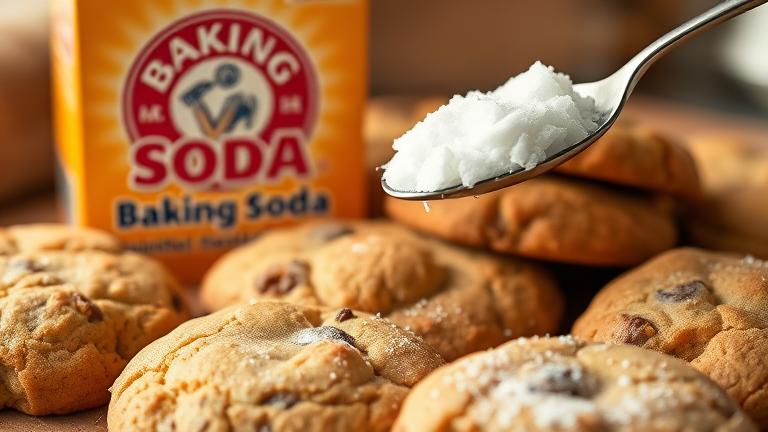
The Role of Baking Soda in Cookies
Baking soda is a common ingredient in cookie recipes primarily because of its role as a leavening agent. When baking soda reacts with acidic components in the dough, it produces carbon dioxide gas, which helps the dough rise and creates a light, airy texture in the finished cookies.
This chemical reaction not only contributes to the texture but also influences the spread and browning of cookies during baking. As a result, baking soda is an essential component for achieving the desired cookie structure and flavor.
How Baking Soda Works Chemically in Cookies
Baking soda, or sodium bicarbonate, plays a crucial role in cookie baking through its chemical reactions. When combined with an acid such as brown sugar, lemon juice, or cream of tartar and moisture in the dough, it starts to break down and release carbon dioxide gas. These gas bubbles form and expand during baking, creating the characteristic rise and light texture in cookies.
The reaction occurs as baking soda interacts with acidic compounds to form carbon dioxide and water. These bubbles become trapped in the dough’s matrix, causing it to expand and become airy. This leavening effect helps cookies lighten up and spread properly.
Besides leavening, baking soda also influences the pH of the dough. By raising the pH level, it encourages the Maillard reaction, responsible for the golden-brown color and rich flavor development in cookies. This not only makes cookies rise but also enhances their taste and appearance.
Impact of Baking Soda on Cookie Texture
Baking soda significantly affects the texture, softness, chewiness, and crispiness of cookies by influencing their rise and internal structure. It reacts with acidic components in the dough to produce carbon dioxide gas. This gas forms bubbles that help the dough expand and rise, creating a lighter texture and contributing to the chewiness by loosening the dough’s structure.
The rise caused by baking soda results in cookies that spread more and have a tender crumb. It can also create a slightly crisp edge while keeping the center soft and chewy, achieving a perfect balance of textures. Without baking soda, cookies tend to be denser and can lack this desirable softness and chewiness.
Baking Soda’s Influence on Flavor and Appearance
Baking soda also plays a significant role in shaping both the flavor profile and the appearance of cookies. As a leavening agent, it releases carbon dioxide when combined with acidic components in the dough, causing the cookies to rise and affecting their texture and taste.
In terms of flavor, baking soda can impart a slightly alkaline taste if used in excess. Its alkalinity enhances browning through the Maillard reaction, a chemical process between amino acids and reducing sugars that creates complex flavor compounds and a desirable golden-brown crust. This browning contributes to the cookie’s appealing color and deepens its overall flavor, giving cookies a warm, toasty note.
Baking soda also influences the spread of cookies during baking, often resulting in thinner, crisper edges and softer centers. These characteristics enhance the eating experience by balancing chewiness with crunch.
Proper Measurement and Mixing of Baking Soda
Measuring and mixing baking soda correctly is crucial for achieving the perfect cookie texture and rise. It is important to use a proper measuring spoon and never scoop baking soda directly from the container, as this can lead to packing and inaccurate amounts. Instead, lightly spoon the baking soda into the measuring spoon and level it off with a straight edge for precision.
When adding baking soda to cookie dough, mix it thoroughly with the dry ingredients before combining with wet ingredients. This helps distribute the leavening agent evenly, ensuring consistent results and preventing uneven rising or taste problems.
For optimal results, add baking soda at the right stage of mixing and avoid letting the batter sit too long before baking, since its leavening power activates upon contact with moisture and heat. Following these practical tips will help produce better cookies every time.