
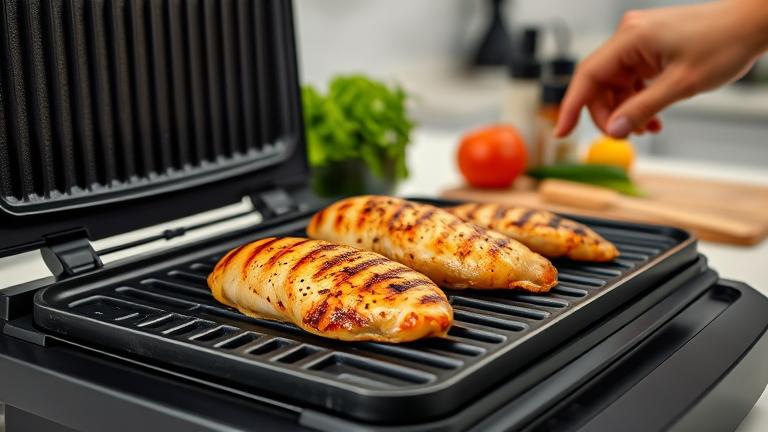
Can You Cook Chicken on a George Foreman?
Yes, you can definitely cook chicken on a George Foreman Grill. It’s a popular choice for quick, healthy, and easy meals. The grill’s design makes it perfect for cooking chicken evenly and quickly. Whether you’re making chicken breasts, tenders, or even sliders, the Foreman grill can handle it.
Many home cooks favor this method because it simplifies the grilling process. Plus, it doesn’t require much oil, making for a lower-fat meal. But, there are some important tips to keep in mind to make sure your chicken turns out juicy, flavorful, and safe to eat.
Why Use a George Foreman Grill for Chicken?
- It heats up fast, so you save time.
- It cooks both sides at once, ensuring even cooking and reducing cooking time.
- It’s compact and easy to clean, great for quick meals or small kitchens.
- Less need for oil or marinade, as the grill’s surface helps prevent sticking.
Considerations Before Grilling Chicken
While grilling chicken on a George Foreman is convenient, there are some important points to consider. First, always ensure the chicken is cooked thoroughly to prevent foodborne illnesses.
Raw chicken should reach an internal temperature of 165°F (75°C). Use a meat thermometer to check this. Also, avoid overcrowding the grill. Give each piece enough space to cook evenly.
Tips for Perfect Chicken on Your Foreman Grill
- Preheat the grill for about 5 minutes before placing the chicken. This helps prevent sticking and ensures even cooking.
- Marinate or season the chicken beforehand for extra flavor. Simple salt, pepper, and herbs work great, or try a marinade with lemon and garlic.
- Use uniform pieces for even cooking. If some parts are thicker, pound them slightly to even thickness.
- Flip the chicken halfway through cooking if needed, especially if your grill doesn’t have a floating hinge that automatically cooks both sides simultaneously.
- Check for doneness with a meat thermometer. The chicken is ready when the juices run clear and the internal temperature reaches 165°F (74°C).
Common Mistakes to Avoid
- Cooking chicken straight from the fridge. Let it sit at room temperature for a few minutes first for more even cooking.
- Overcrowding the grill, which can cause uneven temperatures and soggy results.
- Using too much marinade or oil, leading to flare-ups or overly greasy chicken.
- Not checking the internal temperature. Visual checks alone can be misleading.
With these tips, grilling chicken on a George Foreman becomes straightforward and fun. It’s a versatile way to whip up tender chicken for salads, wraps, or main dishes in less time than traditional methods. Just remember to stay safe, cook thoroughly, and enjoy your delicious, homemade grilled chicken.
Best Chicken Cuts for the Grill
Grilling chicken on a George Foreman or any indoor grill is quick, easy, and tasty. Choosing the right chicken cuts can make all the difference in flavor, texture, and juiciness. Some cuts are better suited for grilling because they stay tender and cook evenly. Let’s explore which chicken cuts work best and how to prepare them for the best results.
Ideal Chicken Cuts for Grilling
- Chicken Breasts: Juicy and lean, chicken breasts are a popular choice for grilling. They cook quickly and can be seasoned in many ways. To prevent drying out, opt for boneless, skinless breasts and avoid overcooking. Use a meat thermometer to ensure they reach an internal temperature of 165°F (74°C).
- Chicken Thighs: Darker and more flavorful, chicken thighs stay moist longer on the grill. Boneless thighs are easy to handle and cook evenly, making them ideal for indoor grilling. They can be grilled with the bone in for extra flavor, but it may take a bit longer to cook through.
- Chicken Drumsticks: These are great for grilling if you enjoy a bit of smoky, tender meat. Because they have bones, they take a little longer to cook, but they remain juicy. For best results, remove the skin if you want less fat, but leaving it on can help keep the meat moist.
- Chicken Wings: Perfect for a flavorful treat. Wings are small, cook quickly, and are often marinated or seasoned before grilling. Make sure they are cooked thoroughly, reaching at least 165°F internally, to avoid any food safety issues.
Tips for Selecting and Preparing Chicken for Grilling
When shopping, look for chicken that has a pinkish hue and firm texture. Avoid packages with excessive liquid or a foul odor. For even cooking, try to select cuts that are similar in size so they cook uniformly on your George Foreman grill.
Before grilling, pat the chicken dry with paper towels. Moisture on the surface can cause steaming instead of searing, which affects flavor. Marinate the chicken for at least 30 minutes to add flavor and moisture, but remember that acidic marinades can soften the meat if left too long.
Season the chicken with salt, pepper, and your favorite spices or sauces. For healthier options, use herbs and lemon juice. To prevent sticking, lightly oil the grill plates or brush the chicken with some oil before placing it on the grill.
Cooking Tips
- Heat your George Foreman grill properly before adding the chicken. A hot grill ensures nice grill marks and even cooking.
- Don’t overcrowd the grill. Allow space between pieces for heat circulation.
- Use a meat thermometer to check that the internal temperature reaches 165°F (74°C).
- Let grilled chicken rest for a few minutes after cooking to keep juices sealed inside.
With these tips and the right cuts, your grilled chicken will turn out tender, flavorful, and perfectly cooked—whether you love juicy breasts or smoky thighs. Enjoy experimenting with different seasonings and marinades to create your favorite grilled chicken dishes!
Tips for Perfectly Grilled Chicken
Grilled chicken is a favorite for many because of its juicy interior and smoky flavor. To get that perfect balance, it’s important to pay attention to a few key tips and techniques. Whether you’re new to grilling or want to improve your results, these simple steps can help you achieve delicious, evenly cooked chicken every time.
First, start with good-quality chicken. Whether you choose chicken breasts, thighs, or drumsticks, fresh or properly thawed chicken works best. If you use chicken breasts, consider pounding them to an even thickness. This helps them cook more uniformly and prevents the thinner parts from drying out before the thicker parts are done.
Marinate or Brine for Flavor and Juiciness
One way to boost flavor and keep chicken moist is by marinating or brining before grilling. A simple marinade might include olive oil, lemon juice, garlic, and herbs, mixed for at least 30 minutes. Brining involves soaking the chicken in a saltwater solution for a few hours, which enhances juiciness. Be careful not to over-marinate, especially with acidic ingredients, as it can affect texture.
Preheat Your Grill Properly
Preheating is key for a good sear and even cooking. Aim to heat your grill to medium-high heat, around 375-450°F (190-230°C). Use a grill thermometer if available to check the accurate temperature. Place your hand above the grill grate; if you can hold it for about 4 seconds comfortably, the temperature is just right. This initial heat helps create those desirable grill marks and locks in flavor.
Control Cooking Temperature and Time
Cooking chicken on too high heat can burn the outside while leaving the inside undercooked. Too low, and it might dry out. For most cuts, cook over medium heat with the lid closed. For chicken breasts, start with direct heat to sear, then move to indirect heat to finish cooking through without drying out.
Use a meat thermometer to check that the internal temperature reaches 165°F (74°C). Insert the thermometer into the thickest part of the meat, avoiding bones. Once it reaches the target temperature, remove the chicken from the grill and let it rest for a few minutes. Resting helps juices redistribute, resulting in moister bites.
Cook Different Cuts Properly
- Chicken breasts: cook about 6-8 minutes per side on medium heat, then rest.
- Thighs and drumsticks: cook about 10-15 minutes per side, depending on size, until reaching 165°F.
- Whole spatchcocked chicken: grill over indirect heat for about 45 minutes to an hour, checking temperature regularly.
Watch Out for Common Mistakes
- Not preheating the grill, which causes sticking and uneven cooking.
- Overcooking or undercooking, leading to dry chicken or food safety issues.
- Using high heat the whole time, which can burn the outside while raw inside.
- Forgetting to let chicken rest after grilling—this keeps it juicy.
With these tips, you’ll be well on your way to mastering the art of grilling chicken. Remember, practice makes perfect. Keep an eye on temperature and timing, and you’ll enjoy tender, flavorful grilled chicken every time!
How to Know When Chicken is Done
Cooking chicken to the right temperature is key to making sure it’s safe and delicious. Under-cooked chicken can be unsafe, while overcooked chicken can be dry and tough. Knowing the signs that your chicken is fully cooked helps you serve it perfectly every time. There are several practical ways to tell when chicken is done, whether you’re grilling, baking, or pan-frying.
1. Check the Internal Temperature
The most reliable method to know when chicken is cooked is with a meat thermometer. Insert the thermometer into the thickest part of the chicken, avoiding bones. For all types of chicken, the safe internal temperature is 165°F (75°C). When you reach this, your chicken is fully cooked and safe to eat.
Remember, even if the chicken looks cooked on the outside, it’s essential to check the temperature inside. For example, a grilled chicken breast might look golden on the outside but could still be undercooked inside.
2. Observe the Juices
Another simple sign is the color of the juices when you cut into the chicken. If the juices run clear, it’s a good indication that the chicken is cooked through. If the juices are pink or reddish, it’s best to keep cooking a little longer.
Be cautious, though, as sometimes juices can appear clear before the chicken reaches 165°F. Always use the thermometer for confirmation.
3. Check the Texture
Cooked chicken should feel firm and spring back when pressed lightly with a finger or utensil. It shouldn’t be jiggly or soft like raw meat. For example, a grilled chicken breast will be white all the way through and feel solid but not tough.
If you notice any pinkness or softness, give it more time on the heat. This is especially important for thicker cuts or whole chickens.
4. Use Visual Cues
Here are some visual clues to look for:
- The meat has turned a uniform white or tan color, with no translucent parts remaining.
- The edges may start to slightly caramelize or brown if grilled or roasted.
- For whole chickens, the legs will move loosely at the joints when fully cooked.
But remember, color isn’t always reliable, especially with different marinades or cooking methods. It’s best to combine visual cues with the internal temperature check.
5. Tips & Tricks for Perfectly Cooked Chicken
- Use a good meat thermometer for peace of mind.
- Rest your chicken for a few minutes after cooking. This allows the juices to settle and makes the meat juicier.
- Don’t cut into the chicken too early; cutting releases juices and may give a false idea that it’s undercooked.
- Follow recipe guidelines for cooking times, but always rely on the thermometer for safety.
Practicing these tips will help you become more confident in knowing exactly when your chicken is done. Remember, safety is the top priority, so take the extra minute to check the temperature and ensure your chicken is perfectly cooked for your next meal.
Marinating Ideas for Juicy Chicken
Marinating chicken is a fantastic way to add flavor and keep the meat tender and juicy after grilling. A good marinade not only makes your chicken tastier but also helps it stay moist during cooking. Whether you prefer something tangy, spicy, or herbaceous, there are plenty of marinade ideas to suit your taste buds.
A basic marinade often includes three main ingredients: an acid like lemon juice or vinegar, oil for moisture, and herbs or spices for flavor. The acid helps tenderize the meat, while the oil keeps it moist and adds richness. Herbs and spices bring in depth and character to your chicken.
One simple and popular marinade is a lemon garlic blend. Mix freshly squeezed lemon juice, olive oil, minced garlic, salt, and pepper. For extra flavor, add chopped parsley or oregano. Let the chicken soak in this mixture for at least 30 minutes, but for the best results, marinate for up to 2 hours in the fridge. This combination gives the chicken a bright, fresh taste that pairs well with grilled vegetables or rice.
If you love a touch of sweetness with some spice, try a honey sriracha marinade. Combine honey, sriracha sauce, soy sauce, and a splash of rice vinegar. Add minced garlic and ginger for an extra zing. Marinate the chicken for about 1–2 hours. This sweet and spicy mix caramelizes beautifully on the grill, creating a delightful glaze.
For a more herb-forward flavor, try a yogurt-based marinade. Mix plain yogurt with chopped cilantro, cumin, lemon juice, and a pinch of salt. The yogurt helps tenderize the chicken, making it incredibly juicy. Marinate for at least 2 hours, or overnight if possible. This is perfect for making grilled chicken kebabs or wraps.
A smoky chipotle marinade also adds a bold flavor. Blend chipotle peppers in adobo sauce with lime juice, olive oil, garlic, and cumin. Marinate the chicken for 2–4 hours to allow the smoky heat to penetrate the meat. It’s excellent for tacos, sandwiches, or serving with grilled corn.
Don’t forget simple marinades can be customized to suit your preference. Here are some tips to keep in mind:
- Always marinate chicken in the fridge to prevent bacteria growth.
- Use a resealable plastic bag or a covered container for easy mixing and cleanup.
- Avoid over-marinating, especially with acidic ingredients, as it can make the chicken mushy.
- Discard any leftover marinade that has been in contact with raw chicken, or bring it to a boil before using as a sauce.
Experimenting with different ingredients can lead to delicious discoveries. Keep notes on what flavors work best for you and have fun creating your own signature marinades. With these ideas, your chicken will come out juicy, flavorful, and perfect for any grilling occasion.
Common Mistakes to Avoid
Grilling chicken on a George Foreman grill can be quick and easy, but it’s easy to make some common mistakes that can affect the taste, texture, and safety of your meal. Knowing what to watch out for can help you achieve juicy, well-cooked chicken every time.
One of the most frequent errors is overcooking the chicken. Because the George Foreman grill cooks both sides at once, it might seem like the chicken is done quickly. However, leaving it on too long can make the meat dry and tough. To prevent this, always check the internal temperature with a meat thermometer. Chicken should reach 165°F (74°C) for optimal safety and juiciness.
Another mistake is not preheating the grill properly. If the grill isn’t hot enough when you place the chicken on it, the meat may stick or cook unevenly. Remember to turn it on and let it heat up for about 5 minutes before adding the chicken. A hot grill helps create those nice grill marks and seals in the juices.
Ceasing to use a marinade or seasoning can also be a missed opportunity. Chicken tastes better and stays moist when seasoned well. However, avoid using too much oil or thick sauces that can cause flare-ups or smoke. Instead, lightly brush the chicken with oil and season with herbs or spices. Marinating for at least 30 minutes can add flavor and moisture, but be careful not to leave the chicken in acidic marinades for too long, which can make the meat mushy.
Another common mistake is not properly preparing the chicken. If the pieces are uneven in size, some parts may overcook while others are underdone. To get a uniform cook, flatten thicker parts with a meat mallet or cut larger pieces into smaller, similar-sized portions.
Additionally, not cleaning the grill after each use can cause sticking and ruin the flavor of your next batch. Always clean the grill plates once they’ve cooled down, using a damp cloth or a brush. Avoid abrasive scouring pads that might scratch the non-stick coating. Proper cleaning also ensures safe, hygienic cooking.
Be cautious about flipping the chicken too many times. The George Foreman grill is designed to cook both sides simultaneously, so once you place the meat on, resist the temptation to flip it frequently. This can cause juices to escape and lead to dry chicken. Let the grill do its job, and only check for doneness near the end of cooking.
- Use a meat thermometer for perfect doneness.
- Preheat the grill fully before placing chicken on it.
- Marinate or season the chicken well, but avoid excess oil or sugary sauces.
- Flatten thicker pieces for even cooking.
- Clean the grill plates after each use to prevent sticking and maintain flavor.
- Avoid flipping the chicken multiple times during cooking.
By avoiding these common mistakes, you’ll find your grilled chicken on a George Foreman grill to be flavorful, moist, and perfectly cooked every time. Happy grilling!
Healthy Chicken Recipes on the George Foreman
If you’re looking for tasty and healthy chicken recipes to make on your George Foreman Grill, you’re in the right place. This handy appliance is perfect for cooking juicy chicken breasts quickly and with less fat. Plus, it’s easy to clean and convenient for busy weeknights.
Cooking healthy chicken on the George Foreman is simple. You can prepare a variety of flavorful dishes that keep the calories in check while still satisfying your taste buds. Whether you like marinades, spices, or veggie toppings, there are plenty of options to keep your meals exciting and nutritious.
Basics of Cooking Chicken on the George Foreman
Before diving into recipes, a few tips help ensure your chicken turns out perfectly every time. First, always preheat your grill for a few minutes. This helps create a nice sear and prevents sticking.
Next, if you want moist chicken, consider pounding the breasts to an even thickness. This step helps the meat cook uniformly, avoiding dry edges. For added flavor, marinate the chicken for at least 30 minutes before grilling. Simple marinades with lemon juice, herbs, garlic, and olive oil work beautifully.
When placing the chicken on the grill, don’t overcrowd it. Leave space so the heat circulates evenly. Cook chicken for about 6-8 minutes for boneless breasts, flipping halfway through. Use a meat thermometer to ensure it reaches 165°F (75°C) for safety and tenderness.
Healthy Chicken Recipes to Try
- Lemon Herb Chicken Breast: Marinate chicken breasts in lemon juice, olive oil, garlic, and herbs like thyme or rosemary. Grill until cooked through. This bright, fresh flavor is perfect for light dinners or lunch salads.
- Spicy Cajun Chicken: Rub chicken with a mix of paprika, cayenne, garlic powder, and pepper. Grill for a flavorful, spicy kick. Serve with steamed veggies or over brown rice for a complete meal.
- Teriyaki Chicken: Brush chicken with a homemade or store-bought low-sugar teriyaki sauce. Grill until golden, then serve with stir-fried vegetables or in a wrap. It’s a sweet and savory option loved by many.
- Italian Chicken Pitas: Season chicken with Italian herbs, garlic, and pepper. Grill and slice thin. Stuff into whole-wheat pitas with lettuce, tomato, and a dollop of yogurt or hummus for a quick, healthy lunch.
- BBQ Chicken Skewers: Cut chicken into cubes, marinate in a healthy BBQ sauce, and thread onto skewers. Grill until charred and cooked through. Pair with grilled vegetables or a fresh salad.
Extra Tips for Healthy Grilling
- Use marinades with lemon, vinegar, or low-sodium soy sauce instead of sugary sauces.
- Trim excess fat from chicken breasts for fewer calories.
- Opt for whole grains and vegetables to accompany your grilled chicken.
- Always check the internal temperature to prevent under or overcooking.
Cooking healthy chicken on the George Foreman is a great way to enjoy flavorful, protein-rich meals without extra fat. With a little prep and creativity, your meals will be both delicious and good for you. Happy grilling!