
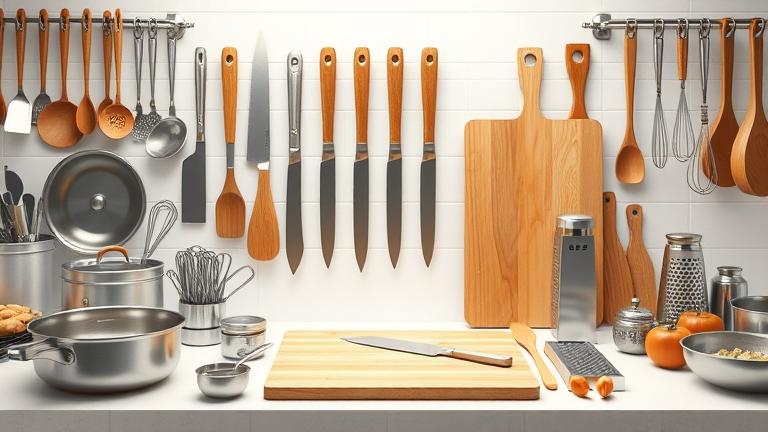
Essential Kitchen Tools for Chefs
Every chef, whether a professional or a home cooking enthusiast, needs a set of reliable tools to create delicious dishes. Having the right equipment makes cooking easier, safer, and more fun. In this section, we’ll go over the fundamental tools that form the backbone of any good culinary workspace. With these essentials, you’ll be well on your way to kitchen mastery.
Knives
The most important tool in any chef’s arsenal is a good set of knives. At minimum, you should have a chef’s knife, a paring knife, and a serrated bread knife. The chef’s knife, usually 8-10 inches long, is versatile for chopping, slicing, and dicing vegetables and meats. The paring knife, smaller in size, is perfect for peeling fruits and small-detail work. The serrated bread knife helps cut through crusty loaves without squashing the soft inside.
When choosing knives, look for high-quality stainless steel blades that hold their edge and are comfortable to hold. Keep your knives sharp and store them in a knife block or on a magnetic strip to prevent damage and accidents. Avoid dishwashers, which can dull blades faster.
Cutting Boards
Next, you’ll need sturdy cutting boards. It’s best to have at least two: one for raw meats and another for vegetables and fruits. This helps prevent cross-contamination and keeps your food safer. Materials vary from wood and bamboo to plastic. Wooden boards are gentle on knives and have natural antimicrobial properties, but require regular oiling. Plastic boards are easy to sanitize, especially in the dishwasher.
Choose boards with non-slip grips or rubber feet for stability during chopping. Keep your cutting boards clean and replace them when they become deeply scored or stained, which can harbor bacteria.
Mixing Bowls
Versatile mixing bowls are essential for preparing ingredients, marinating, or tossing salads. Look for a set that includes multiple sizes—small, medium, and large—to handle different tasks. Stainless steel bowls are durable and easy to clean, but glass bowls are also popular and microwave safe.
Having a good set of mixing bowls keeps your workspace organized. Use smaller bowls for spices or pre-measured ingredients, and larger bowls for tossing salads or mixing dough.
Additional Essential Tools
- Measuring Cups and Spoons: Precise measurements are key to consistent results. A set of both liquid and dry measuring tools is useful.
- Whisk and Tongs: For mixing, flipping, or serving, these tools come in handy.
- Can Opener and Grater: Basic gadgets that save time and effort during prep.
- Cookware: A few essential pots and pans, like a sauté pan, stockpot, and frying pan, round out your kit.
Investing in quality tools may cost a bit more upfront, but it pays off in durability and performance. Remember, the key is to keep your tools clean, sharpen your knives regularly, and store everything in an organized manner. With these essentials, your kitchen will be ready to handle any recipe with confidence and ease.
Top Utensils Used in Professional Kitchens
In professional kitchens, the right utensils make a big difference in how efficiently and smoothly food is prepared. Chefs rely on a variety of tools, each designed for specific tasks to ensure the best results. Understanding these essential utensils can help home cooks improve their cooking and achieve restaurant-quality presentation. Let’s explore some of the most commonly used utensils in professional kitchens.
Spatulas
Spatulas are versatile tools that are used for flipping, turning, and serving food. Chefs often use different types, such as rubber spatulas for stirring and silicone spatulas for cooking at high temperatures. They help scrape bowls clean, fold ingredients, and lift delicate items like pancakes or eggs without breaking them. A sturdy, heat-resistant spatula is a must-have in any kitchen.
Tongs
Tongs are essential for gripping and lifting hot foods safely. They are perfect for flipping meats on the grill, turning vegetables in the pan, or even tossing salads. Chefs prefer stainless steel or silicone-tipped tongs that provide a firm grip and heat resistance. Using tongs instead of forks helps prevent puncturing foods and losing juices or toppings.
Ladles
Ladles are deep, bowl-shaped utensils used for serving soups, stews, and sauces. They come in various sizes, allowing chefs to serve portion-controlled servings or generous helpings. A good ladle has a long handle to keep hands away from hot liquids and a sturdy bowl to scoop smoothly. They are also useful for transferring liquids from pots to bowls or plates.
Chef’s Knives
Though not technically a utensil, a sharp chef’s knife is arguably the most important tool in a professional kitchen. It’s used for chopping, slicing, dicing, and mincing ingredients. Professionals often have different knives for different tasks, such as paring knives for small cuts and bread knives for slicing bread.
Other Common Utensils
- Whisks: Perfect for mixing eggs, batters, and dressings.
- Slotted spoons: Used to lift foods out of liquids while draining excess moisture.
- Kitchen scissors: Handy for cutting herbs, packaging, or breaking down poultry.
- Silicone brushes: Ideal for basting and spreading sauces or glazes evenly.
Choosing high-quality, durable utensils improves cooking efficiency and results. Chefs tend to prefer tools made from stainless steel, silicone, and hardwood because they last longer and handle heat better. Keep your utensils clean and organized for quick access during busy cooking sessions.
Must-Have Cookware for Chefs
If you love cooking, having the right cookware can make all the difference. Essential pieces like skillets, stockpots, and roasting pans are the foundation of many delicious dishes. They help you prepare everything from quick breakfast eggs to hearty stews and holiday roasts.
Start with a good skillet or frying pan. It is versatile and essential for sautéing vegetables, frying foods, or making simple pancakes. A cast iron skillet is popular because it heats evenly and can go from stovetop to oven. Non-stick skillets are also handy for easy cleanup, especially when cooking delicate foods like eggs or pancakes.
Next up is a sturdy stockpot. This large, deep pot is perfect for making soups, stews, pasta, and broths. Look for a well-made stockpot with thick sides to prevent burning and to ensure even heat distribution. A lid is important to trap moisture and heat, speeding up your cooking process. Sizes vary, but a 6-8 quart pot covers most everyday cooking needs.
Roasting pans are another must-have. They are used in the oven to cook meats, vegetables, and even large casseroles. A good roasting pan should be heavy enough to resist warping and have sturdy handles for easy lifting. Some pans come with a rack, which is great for elevating meats allowing heat to circulate evenly and juices to collect for gravy.
In addition to these core pieces, consider investing in a few more tools:
- Saucepan: Perfect for heating liquids, making sauces or boiling eggs.
- Baking sheet: Essential for baking cookies, roasting vegetables, or toasting nuts.
- Cast iron skillet or griddle: Excellent for breakfast foods, grilling sandwiches, or searing meats.
When choosing cookware, think about durability and your cooking style. High-quality materials such as stainless steel, cast iron, or hard-anodized aluminum last longer and perform better. Also, consider ease of cleaning — some pans are dishwasher safe, while others require hand washing.
Practical tips to keep in mind:
- Match the size of your cookware to your stove. Larger pots need bigger burners for even heating.
- Season cast iron pans regularly to prevent rust and maintain non-stick properties.
- Use oven mitts or pot holders when handling hot pans to stay safe.
With these key cookware pieces in your kitchen, you’ll be ready to cook a wide variety of dishes with confidence. Building a collection gradually ensures you get tools that suit your cooking needs and budget. Remember, investing in quality cookware makes cooking easier, more enjoyable, and results in better meals every time.
Everyday Tools for Home Cooks
Every home cook needs a few reliable tools to help turn everyday ingredients into delicious meals. When you have the right utensils and gadgets, cooking becomes easier and more enjoyable. Don’t worry if you’re just starting out — many of these tools are simple to use and affordable.
One essential tool is a good set of measuring devices. Accurate measurements are key to successful cooking and baking. Invest in a set of measuring spoons and cups. Measuring spoons are perfect for small quantities like spices or vanilla, while measuring cups are best for liquids and larger ingredients. When measuring dry ingredients, like flour or sugar, use a spoon to fill the cup and then level it off with a knife for precision.
An often-overlooked tool is a peeler. A good peeling gadget helps remove the skin from fruits and vegetables quickly and safely. Look for a peeler with a comfortable handle and a sharp blade. Some peelers are designed to peel in multiple directions or even julienne vegetables for salads and stir-fries. Always peel away from your body and keep your fingers clear of the blade for safety.
For chopping and slicing, a sharp chef’s knife is a must. A regular, high-quality knife makes cutting safer and faster. Pair it with a sturdy cutting board made of wood or plastic. To protect your knives, use a knife sharpener regularly or have a professional sharpen them every few months. Dull knives can slip and cause injuries.
Another handy gadget is a silicone spatula. This tool is great for scraping batter from bowls, folding ingredients, or spreading spreads evenly. Silicone spatulas resist heat, so they’re safe for use in hot mixtures or on non-stick cookware. Non-slip handles make stirring more comfortable during long cooking sessions.
Measuring devices can also include a kitchen scale, especially useful for baking where precise ingredient weights matter. Digital scales are easy to read and accurate. Simply place your bowl or plate on the scale, hit tare to reset to zero, and add your ingredients. This ensures your recipes turn out just right every time.
Cooking tools like tongs are helpful for turning and serving hot foods without burning your fingers. Look for tongs with a locking mechanism for easy storage. Meanwhile, a colander or strainer makes washing fruits and vegetables simple, and draining pasta quick and mess-free.
When choosing tools, consider your cooking habits and space. Stick with versatile pieces that can handle multiple tasks. Maintaining your tools by cleaning them properly and storing them safely extends their lifespan and keeps cooking safe and fun.
- Start with basic measuring tools and upgrade as you go.
- Choose tools with comfortable grips and easy-to-clean surfaces.
- Wholesale tools aren’t necessary — focus on quality and practicality.
Specialized Utensils for Cooking Precision
When it comes to cooking, especially recipes that require a high level of accuracy, having the right tools can make a big difference. Specialized utensils like laser-measuring spoons, precision thermometers, and piping bags help home cooks and chefs achieve consistent and professional results.
These tools are designed to improve accuracy, save time, and make complex tasks easier. Let’s explore some of the most useful utensils that can elevate your cooking game and help you master precision in the kitchen.
Laser-Measuring Spoons
Traditional measuring spoons are great, but laser-measuring spoons take accuracy to the next level. These high-tech tools use laser guidance to measure ingredients with incredible precision. They are especially helpful when you need very exact measurements for baking or seasoning.
For example, if a recipe calls for exactly 1.25 teaspoons of a spice, laser-measuring spoons ensure you get it right every time. They are easy to use — simply point the laser at the ingredient, and the device calculates the volume or weight for you.
While these spoons might seem fancy, they are becoming more affordable and are a fun addition for serious cooks. Keep in mind that they are best used for dry ingredients where precision impacts the final flavor or texture.
Precision Thermometers
Temperature control is crucial in many cooking and baking processes. Precision thermometers, like digital instant-read thermometers or probe thermometers, help you check temperatures quickly and accurately. This is key for cooking meats to safe temperatures or ensuring baked goods are perfectly done.
For instance, with a quick glance at your digital thermometer, you can confirm that a roast chicken is cooked through or that your bread dough has reached the right temperature for proper rising. Some thermometers come with features like programmable alarms or multiple sensors, making them even more useful.
To get the most accurate readings, insert the thermometer into the thickest part of the meat or the center of baked goods. Always clean the probe after each use to avoid cross-contamination.
Piping Bags
Piping bags are essential for decorating desserts, filling pastries, or creating intricate designs. They help you pipe consistent shapes and sizes, which is especially important for professional-looking treats. Piping bags come in various sizes and materials, including reusable silicone and disposable plastic options.
Using a piping bag is simple: fit it with the desired tip, fill with icing or batter, and squeeze gently. For precise designs, hold the bag at a consistent angle and apply steady pressure. Practice makes perfect, so try out different tips and techniques to improve your piping skills.
Tips for best results include chilling your piping bags before use to prevent icing from sliding out too quickly and stacking different colors or flavors for creative effects.
Practical Tips for Using Specialized Utensils
- Read the instructions carefully before using high-tech tools to understand their features and maintenance needs.
- Always calibrate your thermometers regularly for accurate readings.
- Practice with piping bags on parchment paper before decorating your main dessert.
- Store your precision tools properly to keep them in top condition and prolong their lifespan.
- Invest in quality utensils — they often pay off with better accuracy and durability.
By integrating these specialized utensils into your cooking routine, you gain better control over your ingredients and techniques. This leads to more consistent results, whether you’re baking the perfect loaf, seasoning to taste, or creating beautiful dessert decorations. With a bit of practice, these tools become invaluable allies in your culinary adventures.
How Chefs Choose Their Utensils
Choosing the right utensils is a key part of a chef’s toolkit. Whether you’re cooking at home or dreaming of becoming a professional, understanding how chefs select their utensils can help you make smarter choices in your own kitchen. They look for tools that combine quality, durability, and practicality to make every task easier and more enjoyable.
First, chefs consider the quality of materials used in the utensils. High-quality utensils are often made from stainless steel, silicone, or wood. Stainless steel is favored because it resists rust and corrosion, making it perfect for everyday use and easy to clean. Silicone utensils are popular for non-stick cookware since they won’t scratch delicate surfaces. Wooden tools are gentle and sturdy, especially good for stirring and serving.
Durability is another big factor. Chefs want utensils that can withstand the rigors of busy kitchens. This means choosing items made from tough materials that won’t bend, break, or wear out quickly. For instance, a chef might choose a heavy-duty spatula with a reinforced handle or a knife with a high-quality blade that stays sharp longer. Investing in durable utensils saves money in the long run because you won’t need to replace them often.
Functionality, or how well a utensil performs its specific task, is crucial. Chefs look for tools that fit well in their hands, feel comfortable, and do what they are supposed to do. For example, a good chef’s knife has a balanced weight, a comfortable grip, and a sharp edge suited to slicing after honing. Tongs should open and close smoothly, and a whisk should be sturdy enough to beat egg whites without bending. Kitchen tools need to be versatile, making multiple tasks easier and faster.
Size and storage are also important considerations. Chefs choose utensils that are the right size for their needs, not too bulky or too tiny. They also think about storage—are the utensils easy to keep organized? Sometimes, a set of smaller utensils can save space, while larger tools are necessary for bigger jobs like mixing large batches of dough.
Many professional chefs prefer multitasking tools that combine functions. For example, a slotted spoon can drain excess liquids while serving, cutting down on the number of utensils needed. They often keep a well-curated set of essential tools that are reliable and easy to clean.
Price is another consideration. Chefs balance quality and cost, often choosing durable, high-performance utensils that will last longer, even if they cost a little more upfront. The idea is to avoid cheap, disposable tools that might break or wear out fast. Investing in good utensils pays off over time.
In summary, when chefs select utensils, they weigh material quality, durability, functionality, size, storage options, and price. Their goal is to find tools that perform well, last long, and feel right in their hands. By understanding these criteria, home cooks can choose utensils that help them cook better, faster, and with less frustration.
Caring for and Maintaining Your Utensils
Taking good care of your utensils is key to keeping them looking nice and working well for years to come. Whether you have wooden spoons, metal spatulas, or silicone brushes, proper cleaning and storage can extend their lifespan and ensure they perform at their best.
Start by understanding what each utensil needs. For example, wooden utensils should be washed by hand, avoiding harsh detergents that can damage the wood. Metal utensils are often dishwasher safe, but check the label first. Silicone tools are durable and usually easy to clean, making maintenance simple.
Cleaning Your Utensils
- Hand washing: Use warm, soapy water to clean most utensils. For wooden items, avoid soaking in water for too long, as this can cause cracking or warping.
- Dishwasher safety: Check if your utensils are dishwasher safe. If they are, place them on the top rack to avoid unnecessary heat exposure. Hand wash if you notice any warping or damage.
- Removing stains and odors: For stubborn stains or smells, soak your utensils in a mixture of baking soda and water, or lemon and water. Rinse thoroughly afterward.
- Cleaning silicone tools: These are usually dishwasher safe, but can also be cleaned with a sponge and warm, soapy water. For sticky spots, use a little baking soda paste.
Storing Your Utensils
Proper storage prevents damage and keeps your kitchen organized. Keep utensils in a utensil holder on the counter or in a drawer. To protect delicate wooden or silicone items, store them upright or lying flat.
If you have a lot of utensils, consider using a rack with compartments. This makes it easier to find what you need and reduces clutter. Avoid stacking heavy utensils on top of each other, which can cause warping or breakage.
Maintaining Your Utensils
- Regular inspection: Check for cracks, splinters, or worn edges. Replace damaged utensils to avoid food contamination or injury.
- Oiling wooden utensils: Every few months, rub a light coat of mineral oil or food-safe oil onto wooden spoons and cutting boards. This prevents drying out and cracking.
- Sharpening: Keep knives and other cutting tools sharp. Dull blades can damage your utensils and make food prep less safe.
Common Mistakes to Avoid
- Soaking wooden utensils for long periods — can cause warping or cracking.
- Putting wooden or silicone utensils in the dishwasher unless labeled safe — high heat can weaken material.
- Using abrasive scrubbers on non-stick or delicate surfaces — may scratch or damage the finish.
By taking a few simple steps, you can keep your utensils in top condition. Clean them properly, store them wisely, and do regular maintenance. This way, your favorite tools will stay safe and functional, making your cooking easier and more enjoyable every day.