
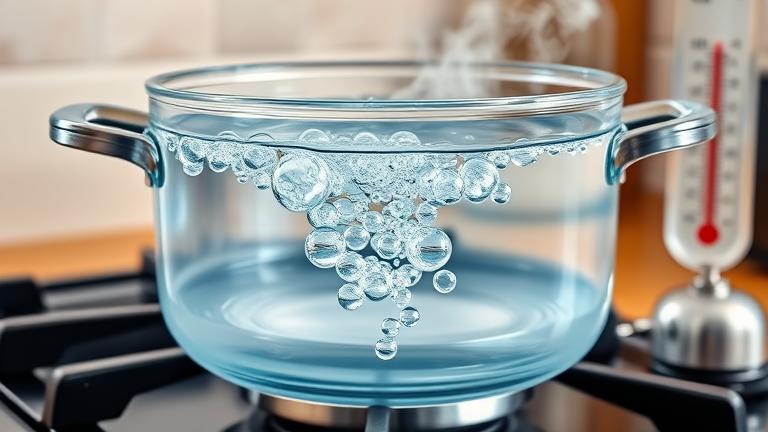
Understanding Boiling Point of Water
The boiling point of water is the temperature at which it changes from a liquid into a gas or vapor. Normally, water boils at 212°F (100°C) at sea level, but this can vary depending on a few important factors. Knowing how the boiling point works helps you cook better and understand what’s happening in your kitchen.
When you heat water, its temperature rises gradually. Once it hits the boiling point, the water begins to produce bubbles and turn into steam. This is the point where liquid becomes gas, allowing the water to vaporize. Boiling is an important part of many cooking processes, like boiling pasta, steaming vegetables, or making stocks.
However, the boiling point isn’t the same everywhere. It depends on the atmospheric pressure, which is the weight of the air pushing down on the water. At higher altitudes, such as in the mountains, the air pressure is lower. Because of this, water boils at a lower temperature, often below 212°F (100°C). For example, at 5,000 feet above sea level, water might boil around 203°F (95°C). This means that food may cook more slowly at high altitudes unless you adjust your cooking times or temperature.
On the flip side, in a pressure cooker, the sealed environment increases the pressure around the water. This raises the boiling point above 212°F (100°C). As a result, foods cook faster because the water is hotter at the higher pressure. Understanding this helps explain why pressure cookers are so effective for certain recipes, like tough meats or beans.
It’s also helpful to know that adding things like salt or sugar to water can slightly change the boiling point. Salt, for instance, raises the boiling point a bit, which can be useful in specific recipes. But usually, these changes are small enough that you don’t need to worry about them during everyday cooking.
When you’re boiling water, keep in mind that the temperature stays steady at the boiling point once the water is boiling. Any extra heat goes into turning water into steam, not raising the temperature. That’s why a simple thermometer isn’t always necessary when boiling, but it can help if you’re experimenting or working at high altitudes.
In summary, understanding the boiling point of water means knowing that it’s affected by altitude, pressure, and added ingredients. Recognizing these factors can help you control your cooking process better, avoid mistakes, and even save time. Whether you’re boiling eggs, making soup, or canning, keeping this foundation in mind makes your cooking experience smoother and more successful.
Does Water Get Hotter After Boiling?
Many people wonder if water can get hotter after it starts boiling. The simple answer is no, water does not get hotter once it reaches its boiling point. When water boils, it stays at a steady temperature of 212°F (100°C) at sea level. But that doesn’t mean the water stops changing or that the process is over.
Understanding what happens during boiling can clear up common misconceptions. When water heats up, its temperature rises until it hits the boiling point. At this stage, the heat energy doesn’t increase the temperature further. Instead, it is used to convert the water from a liquid into steam, a process called vaporization.
Think of boiling like a car engine. When you turn the engine on, it heats up to a certain point. Once it reaches its ideal temperature, it stabilizes there. Adding more fuel or turning the dial won’t raise its temperature but helps it run better or longer. Similarly, heating water past boiling doesn’t make it hotter. It just keeps converting into steam or causes more vigorous bubbling.
What Happens During Boiling?
- As heat is applied, water temperature climbs steadily.
- When it hits 212°F (100°C), bubbles start forming. This is boiling.
- During boiling, the temperature stays constant even as heat continues to be added. This is because the energy goes into changing the water from liquid to gas.
Does Water Actually Get Hotter Than 212°F?
In most cases, at standard atmospheric pressure, water cannot get hotter than 212°F. But under special conditions, like in a pressure cooker, the boiling point can be higher. This allows water to reach higher temperatures without turning to vapor. For example, in a pressure cooker, water can get as hot as 250°F or more, making cooking faster.
Common Misconceptions
- “Boiling water hot enough to burn me.” Actually, once it’s boiling, the temperature is stable, though the steam it gives off is hot enough to cause burns.
- “Boiling makes water hotter and more dangerous.” Not exactly. It makes the water vaporize, but the temperature stays the same unless pressure changes.
- “If I keep heating water after boiling, it will get hotter.” Only in a sealed environment like a pressure cooker, otherwise no.
Practical Tips
- If you need hot water for cooking or tea, setting the heat to high will quickly bring it to a boil, but the temperature won’t get hotter than 212°F at sea level.
- In special cooking methods, like pressure cooking, higher temperatures are possible and can speed up recipes.
- Always be careful when handling boiling water or steam to prevent burns.
How Temperature Changes During Boiling
When you bring water to a boil, you might notice the temperature seems to stay steady once it reaches a certain point. This is because of the unique way water behaves during boiling. Understanding these temperature changes can help you become a better cook and get perfect results every time.
Initially, as you heat water, its temperature rises quickly. This is called sensible heat, which warms the water molecules, making them move faster. For example, if you start heating cold water on the stove, it might go from 50°F to 212°F in a few minutes.
But once the water reaches its boiling point, something special happens. Instead of continuing to get hotter, the temperature stays around 212°F (or 100°C at sea level). This is because the energy being supplied is used to change the water from a liquid into a vapor through boiling. This process is called a phase change.
During this phase change, the temperature remains constant even though you keep heating the water. The heat energy is used to break the bonds between water molecules. This energy is called latent heat of vaporization. It’s like the water is using all the extra heat to turn into steam, so the temperature doesn’t go up until all the water has boiled away.
This temperature stability is important in cooking. For example, when making a perfect hard-boiled egg, knowing that boiling water stays at 212°F helps you time your cooking. The consistent temperature ensures eggs cook evenly and thoroughly.
It’s also useful to know that the boiling point can change depending on altitude. At higher elevations, the atmospheric pressure is lower, so water boils at a lower temperature. For instance, at 5,000 feet above sea level, water might boil around 203°F. This means foods might take longer to cook if you don’t adjust your process.
Overview of Factors Affecting Boiling Temperature
| Factor | Effect on Boiling Temperature |
|---|---|
| Sea Level | Boils at 212°F (100°C) |
| Higher Altitude | Boils at lower temperatures (e.g., 203°F at 5,000 ft) |
Remember, once the water reaches its boiling point, the temperature will stay steady until all the water turns into steam. This is a key concept in cooking, helping you understand why certain recipes call for a boil for a set amount of time.
Some tips to keep in mind:
- Use a lid to speed up boiling, but remember that the temperature stays the same once boiling begins.
- When cooking at high altitudes, you might need more time since water boils at a lower temperature.
- For recipes that need a specific temperature, using a thermometer can help, especially in altitude adjustments.
Factors Affecting Water Temperature
Understanding what influences the temperature of water is helpful for many cooking and baking tasks. Two main factors that can change how hot water gets are pressure and altitude. Knowing how these work can help you get your recipes just right and avoid common mistakes.
Pressure and Water Temperature
Pressure plays a big role in boiling water. At sea level, where atmospheric pressure is standard (about 101.3 kPa or 1 atmosphere), water boils at 212°F (100°C). This is the temperature most recipes assume. But if you are in a high-pressure environment, like a pressure cooker, the boiling point actually increases.
In a pressure cooker, the pressure can go up to 15 pounds per square inch (psi) or more. This extra pressure pushes the water molecules closer together, raising the boiling point to about 250°F (121°C). This means foods cook faster since the water is hotter than usual. However, it’s important to remember to adjust cooking times and follow specific pressure cooker guidelines for safety and best results.
Altitude and Its Effect on Water Temperature
Altitude has a notable impact on water temperature. As you go higher above sea level, the atmospheric pressure drops. This causes water to boil at lower temperatures. For example, at 5,000 feet (around 1,500 meters), water boils at approximately 203°F (95°C). At 10,000 feet (about 3,000 meters), it drops to around 194°F (90°C).
This lower boiling temperature means that boiling foods may take longer to cook properly at higher altitudes. When boiling or steaming, the water isn’t as hot as at sea level. So, recipes designed for low-altitude cooking may need adjustments. For instance, when cooking pasta or rice at high elevation, you might need to cook them a bit longer or increase the heat slightly.
How These Factors Influence Temperature Readings
Knowing about pressure and altitude helps you interpret temperature readings correctly. For example, a home thermometer might read 212°F during boiling at sea level, but the same temperature at higher altitudes doesn’t necessarily mean the water is as hot as at sea level. It’s actually cooler in energy terms. So, if you’re following a recipe that depends on water temperature, be aware that physical location matters.
Some advanced cooks use a special tool called a refractometer or a cooking thermometer that measures the internal temperature of liquids. But for most home cooks, understanding that boiling point varies with altitude and pressure will help you make smarter adjustments during cooking.
Quick Tips to Consider:
- If you’re at high elevation, expect to boil water at a lower temperature and plan extra cooking time.
- Using a pressure cooker can raise the boiling point and speed up cooking.
- Follow altitude-specific recipes when available, especially for baking and canning.
- Check your local elevation if following detailed recipes, to make appropriate adjustments.
Common FAQs About Water Boiling
One of the simplest but most essential parts of cooking is boiling water. Whether you’re making pasta, preparing hard-boiled eggs, or just sterilizing utensils, understanding how water boiling works can save time and improve your results. Here are some common questions and handy tips to help you become more confident in handling this basic kitchen task.
Why does water boil at a specific temperature?
Water boils at 212°F (100°C) at sea level. This temperature is called the boiling point, and it occurs because the water molecules have enough energy to turn into vapor and escape into the air. However, this boiling point can change based on altitude. For example, at higher elevations, water boils at a lower temperature because the air pressure is lower. That means it might take longer for food to cook or need adjustments in recipes when you’re in the mountains.
How do I know when water is boiling?
You’ll see large bubbles rising steadily to the surface and breaking. A gentle simmer has smaller bubbles just breaking the surface, but boiling is vigorous. If you’re making tea or delicate foods, you might prefer a gentle boil or simmer, but for pasta or sterilizing water, a rolling boil is best. Keep an eye on the bubbles, and once they are rapid and continuous, your water is boiling.
Can I boil water in the microwave?
Yes, you can, but it’s a bit tricky. Microwave boiling can cause superheating, where water gets hotter than boiling point without actually boiling over. When you disturb the container, the water might suddenly bubble up, which can be dangerous. To boil water safely in a microwave, use a microwave-safe container, and place a non-metallic object like a wooden stir stick in it to prevent superheating. Heat in short intervals and carefully watch the water.
What’s the fastest way to bring water to a boil?
The simplest method is to use a pot with a tight-fitting lid. Covering the pot traps heat and accelerates boiling. Use medium-high to high heat, and avoid overcrowding the pot. If you’re in a hurry, starting with hot tap water can save a few minutes, but make sure it’s safe to use. Using a kettle is also an efficient way to boil water quickly because they’re designed to heat water fast.
Are there safety tips I should keep in mind?
Absolutely. Always handle boiling water carefully to avoid burns. Use oven mitts when lifting hot lids or pouring. Be cautious when removing a lid from boiling water, as hot steam can scald your skin. Never leave boiling water unattended on the stove. If water boils over, turn off the heat immediately and clean the stove once cooled down.
What happens if I overboil water?
Overboiling can lead to water evaporating completely, which might cause your pot to burn or get damaged. It can also create a mess on your stove. To prevent this, keep an eye on the pot and lower the heat when it reaches a rolling boil. If water evaporates completely, add more calmly heated water instead of trying to restart the boiling process suddenly, especially if the pot is empty and hot.
- Use a lid to speed up boiling time.
- Watch water carefully to prevent overboiling or spilling.
- Be safe when handling boiling water and steam.
- Adjust cooking times based on altitude or recipe needs.
Tips for Cooking with Boiling Water
Boiling water is a fundamental part of many cooking techniques. Whether you’re boiling pasta, blanching vegetables, or preparing eggs, understanding how to use boiling water safely and effectively is key. With a few simple tips, you can improve your results and stay safe in the kitchen.
Safety First
Always handle boiling water with care. Use pot holders or oven mitts when moving hot pots. Be cautious to avoid splashes, which can cause burns. Keep children and pets away from the stove when boiling water is involved. Never leave boiling water unattended on the stove, especially if it’s boiling vigorously.
Choose the Right Pot and Lid
Select a sturdy pot that is wide enough to prevent boiling over. A pot with higher sides helps contain the water and minimizes splashes. Using a lid can speed up boiling time, but be careful when removing it to avoid steam burns. When boiling pasta or vegetables, use enough water to give them room to cook evenly.
Tips for Boiling Water Effectively
- Start with cold water, especially if boiling for eggs or grains. This helps ensure even heating and prevents the pot from cracking due to sudden temperature change.
- Use a high heat setting to bring water to a boil quickly, then reduce to a gentle boil depending on what you’re cooking. For delicate items like poached eggs, a gentle simmer is better.
- Don’t overcrowd the pot. Adding too much food can lower the water’s temperature and lengthen cooking time. It also risks overflowing if there’s too much foam or starchy residue.
Best Practices During Cooking
Maintain a steady boil or simmer suitable for the food you’re preparing. For pasta, a rolling boil prevents sticking and ensures even cooking. Stir items like grains or vegetables during cooking to prevent sticking to the bottom.
If you’re boiling eggs, gently lower them into boiling water to prevent cracking. Adding a teaspoon of salt or vinegar can help prevent cracking and make peeling easier.
After Cooking
Once your food is cooked, turn off the heat before removing it from the water. Use a slotted spoon or strainer to lift items out carefully. If you’re draining pasta or other foods, pour the contents into a colander in the sink to avoid splashes.
Storage and Leftovers
If you have leftover boiling water, let it cool completely before pouring it down the sink. Never pour boiling water directly onto a cold surface or into a plastic container that isn’t heat-resistant, to prevent cracking or breaking.
Following these tips for cooking with boiling water will help you achieve perfect results and keep your kitchen safe. Remember, patience and careful handling are the keys to mastering any boiling water technique.
The Science Behind Water Boiling Chemistry
Boiling water might seem simple—just heat it until bubbles rise and turn into steam. But beneath this common activity lies a fascinating world of science and chemistry. Understanding what happens when water boils can help you cook more effectively and avoid common mistakes in the kitchen.
At its core, boiling occurs when water reaches its boiling point, which is 100°C (212°F) at sea level. This temperature is where water molecules gain enough energy to break free from each other and turn into vapor. Because boiling is a physical change, the molecules don’t change their chemical structure but instead change their state from liquid to gas.
The boiling point isn’t the same everywhere. It depends largely on atmospheric pressure. At higher altitudes, the air pressure is lower, so water boils at a lower temperature. For example, on a mountain top, water might boil around 95°C or even less. This can affect cooking times, so you might need to simmer longer or increase your heat slightly.
Let’s take a closer look at what’s happening at the molecular level. Water molecules are always moving, but as you heat the water, their movement speeds up. When enough energy is supplied, a significant number of molecules have enough power to escape into the air as vapor. This point, where vapor bubbles form throughout the liquid, is what we see as boiling. It’s different from evaporation, which only occurs at the surface and at lower temperatures.
When water reaches its boiling point, bubbles of vapor form inside the liquid. These bubbles are made of water vapor, and they grow until they rise to the surface and burst. As long as heat is supplied—say, from your stove—the water remains at its boiling temperature. If you continue to heat it, the water turns into steam, which is often used in cooking processes like steaming vegetables or boiling pasta.
Another important factor is the presence of impurities like salt or minerals. These substances raise the boiling point slightly—a phenomenon called boiling point elevation. For example, adding salt to water might increase its boiling point by a fraction of a degree. This means the water needs to be a tiny bit hotter before boiling, which can impact cooking times. But in everyday cooking, this effect is usually small enough to be negligible.
Understanding the science of boiling helps you troubleshoot issues like water not boiling or boiling over. For example, if your water is boiling vigorously and spilling over, it’s because the bubbles are forming rapidly and escaping quickly. Reducing the heat slightly can control this. Conversely, if your water isn’t boiling at the expected temperature—perhaps because you’re at high altitude—you may need to adjust your cooking time.
In summary, boiling water involves a complex interplay of temperature, pressure, and molecular activity. Knowing how these factors work together can make you a smarter cook and help you achieve better results in your kitchen experiments. That little bubbling pot is really a science experiment in action.