
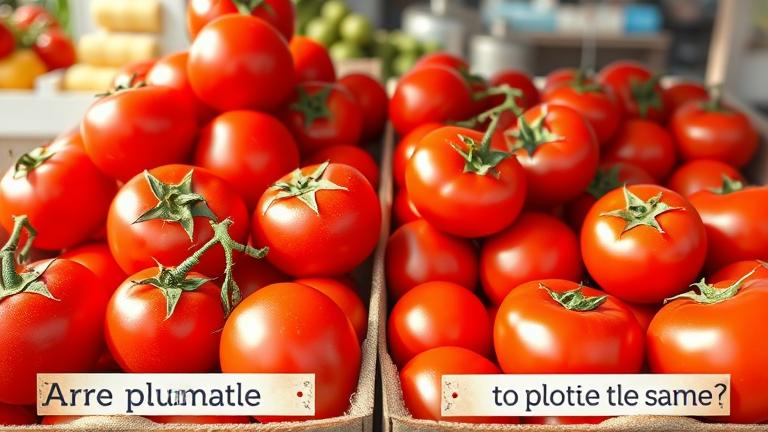
Differences Between Plum and Roma Tomatoes
When cooking or shopping for tomatoes, you may have noticed that plum and Roma tomatoes are often mentioned together. While they are closely related, there are some key differences that can affect your dishes. Understanding these differences helps you pick the perfect tomato for your recipes, whether you’re making sauce, salads, or snacking.
First, let’s look at their size and shape. Plum tomatoes are generally small to medium-sized and have an elongated, oval shape. Roma tomatoes are a specific variety of plum tomatoes, and they are usually more uniform in shape and size. Romas tend to be slightly larger and more oval than other types of plum tomatoes. In most grocery stores, you’ll find Romas easily labeled and readily available.
Flavor is another important factor. Plum tomatoes, including Romas, tend to have a dense flesh with fewer seeds. This makes them ideal for cooking, as they break down easily and produce rich, thick sauces. The flavor profile of Romas is sweet and slightly tangy, with a lower water content than other tomatoes. They pack a punch of tomato flavor without becoming watery, which is why chefs love them for sauces and pastes.
In contrast, other types of plum tomatoes may have a more balanced or milder flavor, making them suitable for salads or fresh eating. Roma tomatoes are known for their thick, meaty texture—perfect for stews, sauces, and canning. They are less juicy than round, slicer tomatoes, which are often used in sandwiches or eating raw.
Size-wise, Romas measure about 2–3 inches in length. Their firm flesh and few seeds mean they hold up well when cooked or roasted. They do not break down as quickly as other tomatoes, giving your sauces a hearty consistency. Some home cooks prefer Romas because they produce less waste—fewer seeds and less watery pulp.
Now, let’s touch on their culinary uses. If you’re making a quick tomato sauce or paste, Romas are an excellent choice. Their dense flesh thickens sauces without clumping or becoming too watery. For fresh salads, you might prefer larger, rounder tomatoes that are juicier and have a milder flavor. Still, Romas can work in salads if sliced thinly, offering a good burst of tomato flavor.
Lastly, storage is important. Both plum and Roma tomatoes should be stored at room temperature for the best flavor but can be refrigerated to extend freshness. Keep in mind, refrigeration can dull their flavor and texture, especially if left for too long.
- Choose Romas for thick sauces, purees, and pastes.
- Pick other plum varieties for salads or raw eating if you prefer a milder flavor.
- Store tomatoes in a cool, dry place, and only refrigerate if necessary.
Knowing these differences makes shopping and cooking much easier. Whether you’re making a rich marinara or just slicing for a fresh salad, choosing the right tomato ensures your dish turns out just right.
Common Confusions About These Tomatoes
If you’re new to cooking or shopping for tomatoes, you might notice some mix-up between different types like plum tomatoes and Roma tomatoes. They look quite similar and are often used in similar recipes, which can cause confusion. To help you choose the right tomato for your dish and understand their differences, let’s clear up some common misconceptions.
First, many people assume that plum and Roma tomatoes are completely different vegetables. In reality, Roma tomatoes are a type of plum tomato. The term “plum tomato” refers to a category that includes various varieties with a shape similar to a small plum. Roma is probably the most popular and widely available of these types.
One common mistake is thinking that all plum tomatoes are small or round. Actually, plum tomatoes come in different shapes and sizes, but they tend to be oval, elongated, or shaped like a little egg. Roma tomatoes are a specific variety of plum tomato that is elongated and slightly flattened. This shape makes them perfect for sauces and pastes because they have less water content and more flesh.
Misconception 1: All tomatoes labeled as “Roma” are the same.
Reality: There are different brands and variations of Roma tomatoes. Some may be larger or have a slightly different flavor. When shopping, look for firm, smooth tomatoes with a deep color for the best quality.
Another confusion involves the taste. Some people think that plum or Roma tomatoes are less sweet or less flavorful than other varieties. In fact, they are known for their rich, concentrated flavor, making them ideal for cooking. Their lower water content means they produce thicker sauces with a more intense tomato flavor.
People also wonder if they can substitute other tomatoes in recipes that call for Roma or plum tomatoes. The answer is yes, but keep in mind that tomatoes with higher water content — like cherry or beefsteak tomatoes — might yield a runnier sauce. If you use them, consider removing some of the seeds and excess liquid to get a good consistency.
It’s helpful to think about how you plan to use the tomatoes. If you want to make a thick sauce or paste, choose Roma or other plum tomatoes. For fresh salads or garnishes, round slicing tomatoes or heirlooms are a better choice. They tend to have a juicier texture and a more balanced flavor profile.
Tips for Choosing and Using Roma or Plum Tomatoes
- Pick firm, smooth tomatoes without wrinkles or blemishes.
- Look for deep, vibrant color, which indicates ripeness and flavor.
- Store tomatoes at room temperature if you plan to use them soon; refrigerating can lessen their flavor.
- If making sauce, consider roasting or sautéing the tomatoes first to deepen the flavor.
Overall, understanding that Roma tomatoes are a specific type of plum tomato helps avoid confusion and ensures you select the best tomato for your cooking needs. These tomatoes are versatile, especially in sauces and pastes, and knowing how to identify and use them will elevate your dishes.
Taste and Texture Comparison
When choosing ingredients for your recipes, understanding the taste and texture of plum and Roma tomatoes can make a big difference. Both tomatoes are popular in cooking, but they each bring distinct qualities to the table that can influence how your dishes turn out.
Starting with flavor, plum tomatoes tend to have a sweeter and more intense tomato taste. They are often described as rich and slightly fruity, which makes them great for sauces and fresh eating. Roma tomatoes, on the other hand, have a milder flavor with a subtle tang. They are less sweet but still full-bodied, offering a more balanced tomato taste that works well in salads and cooked dishes.
Juiciness is another important factor. Plum tomatoes are known for having less water inside compared to other varieties, which means they produce thicker sauces and pastes without too much liquid. This makes them ideal if you’re aiming for a rich, compact sauce. Roma tomatoes also have relatively low water content, but they tend to be slightly juicier than plum tomatoes. If you prefer a sauce that is slightly lighter or more pourable, Romas can be a better choice.
Texture plays a key role in how these tomatoes feel in your mouth and how they behave when cooked. Plum tomatoes are firm yet tender, with a dense flesh that holds up well during cooking. Their flesh is smooth, and they are less likely to break down quickly, making them perfect for roasting or slow cooking. Romas are also firm but tend to be a bit more meaty, with a dense, chewy flesh. They hold their shape well when chopped or sliced, which is why they’re often used in salads or for stuffing.
Both types of tomatoes have a similar skin that is smooth and thin, but Romas may sometimes have a slightly thicker skin, which can add a bit of texture depending on how you prepare them. If you want tomatoes that break down easily when cooked, plum tomatoes are a reliable choice, especially for sauces and purees. Romas are versatile enough to be enjoyed raw, but they also cook down nicely without losing their shape.
To sum up:
- Plum tomatoes = sweeter, less juicy, denser flesh, ideal for thick sauces and purees.
- Roma tomatoes = milder, slightly juicier, firm, excellent for salads and cooking that requires shape retention.
Tips for cooking with these tomatoes:
- If you’re making a quick sauce, choose plum tomatoes for a richer flavor and thicker consistency.
- Use Romas if you need a more balanced flavor or want a tomato that holds up well in salads or when roasting.
- Remember that both types will release some juice when cooked, so plan your recipes accordingly to avoid a watery dish.
Recipes Using Plum and Roma Tomatoes
Plum and Roma tomatoes are favorite ingredients for many home cooks because of their rich flavor and versatile use. Their firm texture and concentrated sweetness make them perfect for a variety of dishes. Whether you want a quick snack, a hearty sauce, or a flavorful salad, these tomatoes can do it all.
In this section, you’ll find simple, practical recipes that highlight the best ways to incorporate plum and Roma tomatoes into your cooking. These recipes are easy to follow and perfect for beginners and experienced cooks alike. Let’s explore some delicious ideas that turn everyday ingredients into impressive meals.
1. Classic Tomato Basil Pasta
This recipe showcases how ripe Roma tomatoes can shine in a simple pasta dish. Start by boiling your favorite type of pasta until al dente, following package instructions. While the pasta cooks, prepare a fresh tomato sauce.
Warm some olive oil in a large skillet over medium heat. Add minced garlic and cook until fragrant, about one minute. Chop your Roma tomatoes into small pieces and add them to the skillet. Cook for 10 to 15 minutes, stirring occasionally, until the tomatoes soften and release their juices.
Add freshly chopped basil, salt, and pepper to taste. Drain the pasta and toss it with the tomato sauce. For a finishing touch, sprinkle with grated Parmesan cheese. This dish is quick, flavorful, and makes excellent use of Roma tomatoes’ natural sweetness.
2. Roasted Plum Tomato Soup
Roasting enhances the natural sweetness of plum tomatoes, making for a delicious, rich soup. Start by preheating your oven to 400°F (200°C). Cut the plum tomatoes in half and place them on a baking sheet.
Drizzle with olive oil, then sprinkle with salt, pepper, and minced garlic. Roast for about 25-30 minutes until the tomatoes are blistered and caramelized. Meanwhile, sauté chopped onions and celery in a large pot until soft.
Add the roasted tomatoes to the pot along with vegetable broth. Bring to a simmer and cook for another 10 minutes. Use an immersion blender or regular blender to puree the soup until smooth. Adjust seasoning with salt and pepper. Serve with crusty bread for a warm, comforting meal.
3. Fresh Tomato and Basil Salad
This simple salad celebrates the fresh flavors of both plum and Roma tomatoes. Use a mix of chopped or sliced tomatoes for varied texture. Arrange them on a platter or mix in a bowl.
Drizzle with good quality olive oil, then add a splash of balsamic vinegar or lemon juice for brightness. Finish with fresh basil leaves, salt, and freshly cracked black pepper. For added richness, sprinkle crumbled feta or mozzarella cheese on top.
This salad is perfect as a side dish for grilled meats or as a light lunch on its own. It’s a no-cook recipe that highlights the natural sweetness and juiciness of the tomatoes.
4. Stuffed Roma Tomatoes
This is a great way to use Roma tomatoes as a tasty main or side dish. Cut the tops off the tomatoes and scoop out the insides, leaving a sturdy shell.
Prepare a filling with cooked quinoa or rice, chopped vegetables, herbs, and grated cheese. Mix everything together and stuff it into the hollowed tomatoes. Place the stuffed tomatoes in a baking dish and bake at 375°F (190°C) for about 20 minutes, until bubbly and golden on top.
This dish is customizable; add cooked ground meat, beans, or other vegetables based on your preference. It’s a colorful, satisfying way to enjoy the rich, concentrated flavors of Roma tomatoes.
Tips for Cooking with Plum and Roma Tomatoes
- Both types of tomatoes are best when ripe and firm. Look for vibrant color and a slight give when pressed.
- For quick sauces, blanch and peel tomatoes first to remove skins if desired, but it’s not necessary for most recipes.
- Store ripe tomatoes at room temperature away from sunlight to preserve flavor. Refrigerate only if fully ripe and not used within a day or two.
- Balance acidity with a touch of sugar if your sauce or soup tastes too tangy.
Experimenting with these tomatoes can bring a fresh, delicious twist to everyday meals. Their versatility makes them a staple in many beautiful and simple dishes.
How to Identify Each Tomato
When shopping for tomatoes, especially varieties like plum and Roma, knowing how to identify them can help you pick the best quality produce. Both types are popular for sauces, pastes, and salads because of their rich flavor and firm texture. But they do have some distinct visual and tactile features that set them apart.
First, take a good look at the shape. Plum tomatoes are generally more oval or elongated, with a slightly pointed end. Roma tomatoes are a specific type of plum tomato, and they tend to be a bit plumper and more uniform in shape. Roma tomatoes also have a more rounded, almost egg-like shape, while other plum varieties might appear more tapered.
Next, consider the size. Roma tomatoes are usually medium-sized, about 2–3 inches long, making them easy to handle and perfect for slicing. Plum tomatoes can be similar in size but may sometimes be smaller or more narrow, especially the types like cherry plums. Use the size as a guide along with the shape to identify them accurately.
Color is another important clue. Both plum and Roma tomatoes should be a deep, vibrant red when ripe. However, some Roma tomatoes might have a slightly darker hue or a shiny, smooth surface that indicates freshness. Avoid any tomatoes with dull color, surface blemishes, or wrinkles, as these can be signs of age or poor storage.
The texture of the skin can help too. Both varieties should feel smooth and firm to the touch. When gently squeezed, they should give slightly but not feel soft or mushy. A soft touch might mean they are overripe or starting to spoil. Roma tomatoes are known for their dense, meaty flesh with fewer seeds, so they tend to be quite firm and heavy for their size.
Another tip is to look at the cap or stem end. Ripe tomatoes often have a green, leafy crown that is fresh-looking. Avoid tomatoes with brown or dried-out stems, as these are signs they have been sitting too long or were not stored properly.
Finally, check for blemishes, cracks, or any signs of mold. High-quality produce should be free from cuts, scars, or soft spots. Sometimes, a slight indentation near the stem end is normal, but deep cracks or wrinkles can indicate overripe or damaged fruit.
- Shop in person when possible to inspect for firmness and appearance.
- Choose tomatoes that are bright, firm, and have smooth skin.
- Avoid any with blemishes, wrinkles, or dull color.
- Handle gently — firm but not hard or soft.
By paying attention to these visual and tactile details, you can confidently select the best plum and Roma tomatoes for your recipes. Remember, fresh, high-quality tomatoes will enhance the flavor of your sauces, salads, and dishes. Happy shopping!
Are They Interchangeable in Cooking?
When it comes to cooking and baking, understanding whether ingredients like honey and maple syrup can be swapped is helpful. Both add sweetness and moisture, but they also have unique flavors and textures. Knowing the differences can help you decide if an ingredient substitution will work well in your recipe without affecting the final taste or texture.
In general, honey and maple syrup are somewhat interchangeable as sweeteners, especially in recipes like pancakes, oatmeal, or baking. However, there are some key points to keep in mind. Honey tends to be thicker and has a richer, more floral or fruity flavor. Maple syrup is thinner and offers a distinctive, caramel-like flavor. Replacing one with the other can change the flavor profile slightly, but usually not drastically.
Flavor Differences
Honey has a more intense and sweet flavor with floral, fruity, or earthy notes depending on the type of honey. It pairs well with flavors like lemon, ginger, or cinnamon. Maple syrup has a warm, caramel taste that complements breakfast foods, baked goods, and even savory dishes like glazes or marinades. Think about the flavor profile you want. For example, swapping honey for maple in a muffin recipe will increase sweetness and add a different aroma.
Texture and Consistency
Honey is thicker and more viscous than maple syrup. If you substitute honey for maple syrup in a recipe, you might want to thin the honey slightly with warm water to match the consistency. Conversely, substituting maple syrup in place of honey usually works well since maple syrup is runny. If a recipe calls for a specific texture, adjusting the liquid content can help maintain balance.
Impact on Cooking and Baking
Both honey and maple syrup contribute moisture to baked goods, which helps keep them tender. Honey is more hygroscopic, meaning it attracts and retains more moisture. This can make baked items softer and more moist. Replacing honey with maple syrup might result in a slightly drier texture, so consider adding a little extra liquid if needed.
In recipes like glazes or sauces, you can usually swap these sweeteners directly. Just remember that the flavor will change slightly. For example, honey provides a deep sweetness suitable for marinades, while maple syrup offers a warm, rich taste perfect for breakfast pancakes or roasted vegetables.
Practical Tips for Substituting
- If you’re substituting honey for maple syrup, reduce the amount slightly to prevent overly sweet results.
- If using maple syrup instead of honey, consider heating it slightly if a recipe involves baking, to help it incorporate better.
- Remember to adjust for consistency — thin thick honey with warm water if needed, or add a splash of liquid if maple syrup makes your mixture too dry.
- Keep in mind that the nutritional profile will also change slightly, particularly if you are watching calorie intake or sugar content.
Common Mistakes to Avoid
One mistake is substituting without considering flavor and moisture changes. Honey’s stronger flavor can overpower delicate recipes, while maple syrup’s distinct taste can also alter the intended flavor. Additionally, not adjusting for consistency can lead to uneven baking. Lastly, using too much honey can make baked goods overly dense or sticky, so small adjustments go a long way.
In many cases, experimenting with small substitutions first can help you find the perfect balance. With a little practice, you’ll confidently know when and how to swap honey and maple syrup in your favorite recipes without sacrificing flavor or texture.
Tips for Buying and Storing Tomatoes
Buying fresh, ripe tomatoes is the first step to enjoying their vibrant flavor in your dishes. When shopping, look for tomatoes that feel firm but slightly give to gentle pressure. They should have a bright color appropriate to their variety, whether red, yellow, orange, or even purple. Avoid tomatoes that are soft, bruised, or have blemishes, as these may be overripe or starting to spoil.
Smell is also a good indicator of freshness. A ripe tomato will often have a sweet, earthy aroma. If it has no scent, it might not be fully ripe yet. For cooking purposes, slightly underripe tomatoes can be used, but for salads and eating raw, choose the most fragrant and colorful ones.
When selecting heirloom or specialty tomatoes, look for vibrant color and a healthy skin without cracks or wrinkles. These varieties tend to be more delicate, so handle them gently. If buying in bulk, check each tomato, as one bad apple can quickly spoil the rest.
Once home, proper storage helps keep tomatoes fresh and flavorful. The key rule is to store unripe tomatoes at room temperature, away from direct sunlight. This allows them to ripen evenly and develop full flavor. Place them stem-side down on a plate or a supermarket paper bag, which promotes even ripening.
When tomatoes are fully ripe, you can store them in the fridge if you don’t plan to eat them right away. However, refrigeration can sometimes dull their flavor and alter texture. If refrigerated, let tomatoes come back to room temperature before eating to revive some of their fresh taste.
For longer storage, you can also keep ripe tomatoes in a sealed container or plastic bag in the fridge for up to a week. Be sure to remove any spoiled or overripe tomatoes promptly to prevent mold or spoilage from spreading.
Here are some quick tips to remember:
- Choose firm, colorful, and fragrant tomatoes when shopping.
- Avoid damaged or overripe-looking ones.
- Store unripe tomatoes at room temperature to ripen naturally.
- Move fully ripe tomatoes to the fridge to extend their shelf life, but only if needed.
- Let refrigerated tomatoes warm to room temperature before use for the best flavor.
By paying attention to how you select and store your tomatoes, you’ll enjoy their best taste and texture in all your favorite recipes. Simple tips like these help keep tomatoes fresh, flavorful, and ready to enhance any meal.