
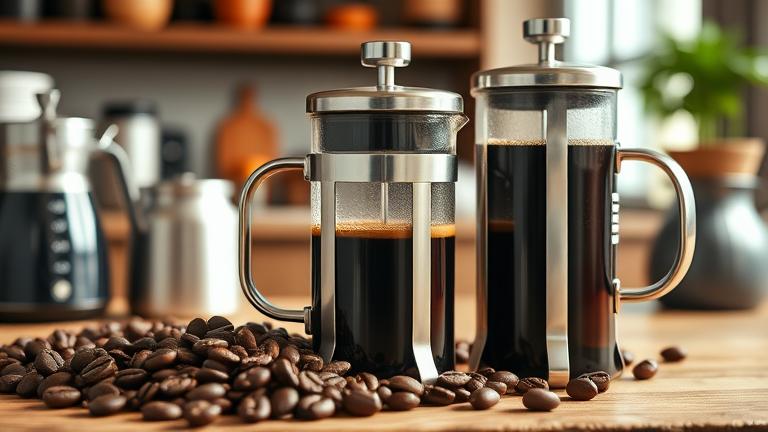
The French Press Brewing Process: Unlocking Rich, Full-Bodied Coffee
The journey to a perfect cup of French press coffee begins with selecting quality beans and preparing them correctly. Use about 1 to 2 tablespoons of coffee per 4 ounces of water, and grind the beans to a coarse texture. This coarse grind, similar to sea salt, is crucial because it prevents over-extraction during brewing, which can cause bitterness and a muddy texture.
Next, heat your water until it reaches just below boiling point, around 200°F (93°C). This temperature ensures optimal extraction without scalding the grounds. Afterward, pour the hot water into the French press, using roughly twice the amount of water compared to the coffee grounds.
Gently stir the mixture with a spoon or stirrer to evenly distribute the grounds in the water. Place the plunger on top without pressing down and let the coffee steep for about four minutes. This steeping duration is vital for developing maximum richness and body in the final cup. Once time is up, press the plunger down slowly and steadily to extract the oils and soluble compounds, which gives the coffee its full-bodied character.
Finally, pour the brewed coffee into your cup to enjoy its robust flavor and smooth texture. This process highlights the importance of contact time and proper technique in producing a richly flavored coffee. For a visual demonstration of this process, watch the detailed tutorial below:
Why French Press Coffee Outshines Other Methods: Key Benefits Explained
The French press offers several distinct advantages over other brewing methods, primarily due to its superior flavor extraction capabilities. Unlike drip coffee makers or single-serve machines, the French press allows coffee grounds to steep directly in hot water.
This immersion technique enables the full spectrum of coffee oils and soluble compounds to be released, resulting in a richer, more robust flavor profile. According to expert baristas, this method captures more nuanced flavors that often get lost with paper filters or percolation systems, making the coffee more aromatic and full-bodied.
One of the main benefits of the French press is its simplicity and ease of use. The process involves adding coarse coffee grounds, pouring hot water, letting it steep, and then pressing the plunger to separate grounds from the liquid. There are no complicated machinery or technical skills required, making it accessible for both beginners and experienced coffee lovers.
Additionally, since it doesn’t rely on electricity, it is ideal for camping, traveling, or minimalist setups at home. The French press’s fewer parts and absence of electronic components mean it is often more durable and easier to maintain than other brewing devices.
Decoding the Flavor: What Makes French Press Coffee Unique?
The unique flavor of French press coffee arises from its exclusive brewing process, which allows coffee grounds to steep fully in hot water. This immersion extracts a broad range of oils and soluble compounds, leading to a bold and complex taste with aromatic richness.
Elements such as grind size, water temperature, and steeping time heavily influence the final flavor profile. Unlike other methods, the metal mesh filter in a French press retains much of the natural oils and fine particles, enhancing the coffee’s texture and depth.
Research indicates that because the oils are preserved during steeping, the resulting brew has more body and a nuanced flavor profile compared to drip coffee, which filters out many of these oils. The high oil content contributes not only to a richer mouthfeel but also to more complex aroma and taste sensations. This makes French press coffee highly favored among connoisseurs seeking a sensory experience that emphasizes depth, richness, and aromatic complexity.
French Press vs. Other Brewing Techniques: A Comparative Analysis
The strength of the French press lies in its ability to produce a full-bodied, richly flavored cup. Typically, French press brewing involves steeping coarsely ground coffee in hot water for about four minutes.
This allows the oils and fine particles to stay in the brew, resulting in a thicker texture and more intense flavor. Contrastingly, drip brewing with paper filters traps many of these oils, leading to a cleaner and lighter taste.
Espresso, by comparison, uses high pressure and finely ground coffee to brew within seconds, creating a concentrated shot with a creamy layer called crema. This method emphasizes intensity and speed, but sacrifices the full-bodied richness found in French press brewing.
The AeroPress offers a middle ground, combining faster brewing times with a versatile flavor profile that can mimic espresso or regular coffee, depending on the technique. Ultimately, each method has unique benefits, but the French press distinctly prioritizes rich texture and depth that many coffee enthusiasts love.
Mastering the Art of French Press: Tips for Brewing the Perfect Cup
Achieving the ideal French press coffee involves attention to several critical factors. First, always use a coarse grind size to prevent over-extraction, which can introduce bitterness. Second, maintain a brewing time of about four minutes to develop the necessary oils and flavors for a full-bodied drink. Gently stirring after adding hot water ensures even extraction, and pouring immediately after steeping preserves the freshness and aroma.
Serving your French press coffee right after brewing guarantees you enjoy it at its peak flavor. For added variety, experiment with flavorings such as a splash of milk or a pinch of cinnamon.