
Understanding Honey’s Sweetness and Its Chemical Composition
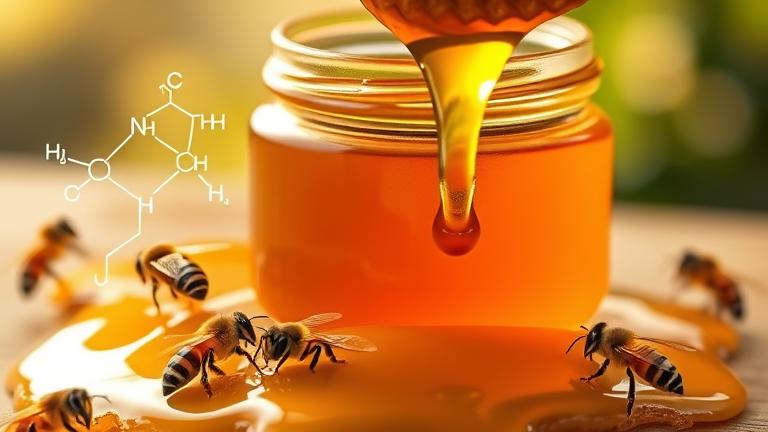
Honey’s sweetness primarily derives from its chemical makeup, especially the presence of simple sugars like glucose and fructose. These sugars are classified as monosaccharides, which are basic carbohydrates that provide immediate energy. When we taste honey, these sugars activate specific taste receptors on our tongue, signaling sweetness to our brain and contributing to honey’s appealing flavor. The interaction between these sugars and our taste receptors is crucial in defining honey’s characteristic sweet taste.
Further, glucose and fructose are the main sugars found in honey, each influencing its flavor profile. Glucose tends to offer a mild, less intense sweetness, while fructose provides a richer, more pronounced sweetness. The ratio of these sugars influences honey’s overall taste, odour, and texture. As the sugars bind to receptors on our taste buds, signals are sent to the brain that are perceived as the sweet sensation we associate with honey, making it a natural source of quick energy and pleasure.
Understanding honey’s chemical composition reveals why it is such a distinctive natural sweetener compared to processed sugars. Its balance of sugars impacts not only flavor but also how our bodies digest and utilize it, making honey a unique, healthful addition to our diets.
Honey in Human Cultures and Mythology
Historical Significance of Honey Across Civilizations
Honey has played a crucial role in human societies throughout history. In ancient Egypt, it was regarded as a divine gift symbolizing purity and immortality. Egyptians used honey in religious rituals and sacred offerings, emphasizing its spiritual importance. Similarly, the Greeks believed honey was a gift from the gods, associating it with wisdom, prosperity, and divine favor. They offered honey to their deities and regarded it as a symbol of abundance.
In Chinese culture, honey was highly valued for its medicinal properties and spiritual significance. Traditional Chinese medicine incorporated honey as a healing remedy, underscoring its importance in folklore and health practices. Across different societies, honey was celebrated not just as a sweetener, but also as a symbol of health, prosperity, and divine blessing.
Mythology and Legends Surrounding Honey
Across diverse cultures, honey features prominently in myths and legends. In Norse mythology, it was believed that gods and giants consumed mead an alcoholic beverage made from fermented honey which symbolized wisdom and poetic inspiration. Indigenous peoples in North America used honey in sacred ceremonies, considering it a gift from nature associated with spiritual connection.
The legendary Chinese emperor Shennong, often called the father of Chinese medicine, revered honey for its curative powers. His tales reflect how honey was seen as more than a sweetener, embodying health, wisdom, and divine favor across civilizations. These stories showcase honey’s cultural significance as a sacred and mystical substance beyond its physical properties.
The Natural Composition of Honey and Its Unique Benefits
Honey’s natural composition distinguishes it from other sweeteners. It is a complex mixture predominantly composed of glucose and fructose, which contribute to its distinctive sweetness and slower digestion compared to refined sugars. Its characteristic sugars are complemented by trace enzymes, minerals, and antioxidants that provide additional health benefits.
Unlike processed sugars, honey contains minimal refinement, preserving all of these beneficial compounds. Its antioxidants such as flavonoids and phenolic acids help combat oxidative stress, while its antimicrobial properties support immune health. When compared to syrups like corn syrup or maple syrup, honey offers a richer nutritional profile due to its enzymatic and antioxidant content. Artificial sweeteners, on the other hand, are designed to mimic sweetness without providing any health benefits and lack the natural complexity of honey.
The natural, minimally processed state of honey means it retains its beneficial properties. Its unique composition makes honey a healthful and flavorful sweetener that can be part of a balanced diet, not just a source of calories.
The Process of Honey Production by Bees
Honey production begins with bees collecting nectar from flowers. Using their proboscis, bees forage for nectar, storing it temporarily in their honey stomachs. This initial nectar collection influences honey’s final sugar content and flavor.
Once back at the hive, worker bees transfer the nectar to hive bees. These bees chew and regurgitate the nectar repeatedly, during which enzymes such as invertase break down complex sugars into simple forms like glucose and fructose. This enzymatic process is vital to develop honey’s characteristic sweetness and taste.
Following enzymatic activity, bees fan the nectar with their wings to evaporate excess water, reducing moisture to about 17 to 18 percent. This dehydration thickens the nectar into honey. The final step involves sealing honey in honeycombs with beeswax, preventing spoilage and maintaining its sweetness for long-term storage.
Health Benefits and Safe Consumption of Honey
Honey’s natural composition offers several health benefits. It contains antioxidants, vitamins, minerals, and compounds with antimicrobial and anti-inflammatory properties. Studies suggest honey can support overall health and bolster immune function. For example, honey is widely used to soothe sore throats and coughs, thanks to its antimicrobial qualities.
Despite its benefits, honey is high in sugars and calories. Excessive consumption can lead to weight gain, blood sugar spikes, and dental issues. Therefore, moderation is essential. When enjoyed in controlled amounts, honey can be part of a healthy, balanced diet.
Consuming honey for energy, digestion, or soothing ailments should be done thoughtfully. Always consider personal health conditions such as diabetes or allergies before including honey regularly in your diet. Moderation allows us to enjoy honey’s benefits while minimizing potential health risks.