
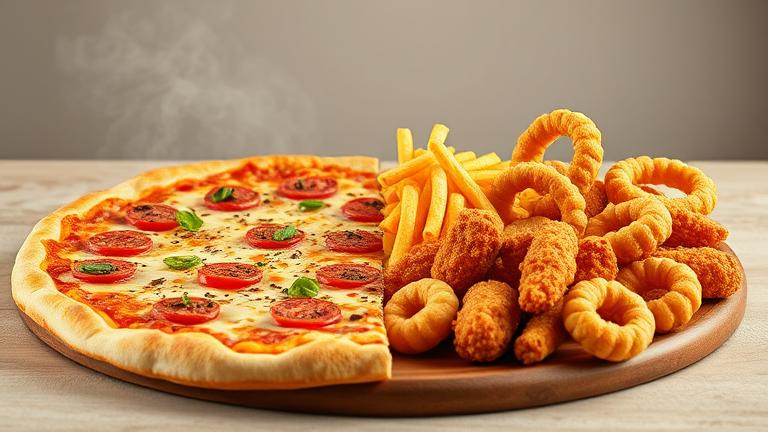
Comparing Taste and Flavors
When it comes to pizza and fried food, the flavors can be quite different, and knowing what to expect can help you choose what to enjoy. Both have their unique taste profiles that appeal to different tastes and preferences. Let’s explore what makes each one special and how they might suit different palates.
Flavor Profiles of Pizza
Pizza is known for its rich, savory flavors, often featuring a combination of a crispy crust, tangy tomato sauce, melted cheese, and a variety of toppings. The flavor profile is usually a balance between salty, umami, and sometimes sweet, depending on ingredients like caramelized onions or sweet peppers. The herbs used, such as oregano and basil, add aromatic notes that enhance the overall taste.
Some pizzas have a smoky flavor if cooked in a wood-fired oven, while others might be more mild and cheesy. The toppings can introduce additional flavors, from spicy pepperoni to fresh vegetables, making pizza a versatile dish. Its flavor tends to be hearty, filling, and satisfying, appealing to those who love a bold and comforting taste.
Flavor Profiles of Fried Food
Fried foods are all about that crispy exterior and juicy interior. The frying process adds a rich, often slightly greasy flavor that many find irresistible. Depending on what’s fried, the flavor can range from savory and spicy to mildly seasoned. For example, fried chicken has a savory, slightly spicy flavor with hints of garlic and herbs, while fried vegetables like zucchini or onion rings have a lighter, more delicate taste.
The oil used in frying can influence the flavor too. For instance, foods fried in vegetable oil will taste different from those fried in lard or butter. Fried foods also tend to have a comforting, indulgent flavor that pairs well with dips, sauces, or just a sprinkle of salt. The crispy texture adds a pleasant crunch with every bite, making them a favorite for snack lovers and anyone craving something crunchy and flavorful.
Comparing the Taste Experiences
While pizza offers a balanced blend of cheesy, savory, and aromatic tastes, fried food provides a crunch, richness, and often a more intense flavor due to the frying process. If you prefer a more complex flavor with herbaceous notes and a variety of toppings, pizza might be your go-to. It’s also customizable, so you can adjust flavors to your liking.
Fried foods tend to be more straightforward in flavor but intensely satisfying. The crispy texture combined with the savory or spicy taste makes it a popular choice for comfort food cravings. However, because fried foods are often greasier, some people may prefer them occasionally or in moderation.
Matching Flavors to Preferences
- If you love cheesy, savory, and aromatic flavors: Pizza might be more appealing.
- If you enjoy crunchy textures and rich, crispy tastes: Fried food could be your favorite.
- For those seeking lighter or more delicate flavors: Pizza can be customized with lighter toppings, while fried foods may be less suitable unless baked or pan-fried.
- In the end: Your choice depends on whether you prefer a complex, balanced flavor or a crispy, indulgent bite.
Health Benefits and Risks
Pizza and fried foods are popular comfort foods enjoyed around the world. While they can be tasty treats, it’s important to understand their nutritional aspects to make healthier choices. Both foods offer some benefits but also come with potential risks if eaten too often or in large amounts.
Let’s start with pizza. When prepared with fresh vegetables, lean proteins, and whole-grain crusts, pizza can be a good source of nutrients. For example, toppings like spinach, tomatoes, and peppers add vitamins, minerals, and antioxidants that support your immune system and overall health. Plus, cheese provides calcium and protein, which are important for strong bones and muscle repair.
Fried foods, on the other hand, are often high in calories and unhealthy fats, especially if fried in trans fats or multiple times in reused oil. However, frying can also enhance flavors and textures, making vegetables or seafood more appealing. When eaten occasionally, fried foods can be part of a balanced diet, especially if cooked with healthier oils like olive or avocado oil.
Potential Risks of Pizza and Fried Foods
Eating too much pizza or fried foods regularly can pose health risks. High levels of saturated fats and trans fats from fried items and processed cheese in pizza can raise bad cholesterol levels. This increases your risk of heart disease over time.
Many commercial pizzas contain added salt, preservatives, and refined carbs. Excessive salt intake can lead to high blood pressure, which increases the risk of stroke and heart problems. Refined carbs, like white flour crust, can cause blood sugar spikes, especially in people with diabetes or insulin resistance.
Fried foods often contribute to weight gain because they are calorie-dense and easy to overconsume. Regular high consumption is linked to obesity, which further increases health risks such as diabetes and joint issues. Additionally, cooking at high temperatures can create harmful compounds, like acrylamide, which some studies suggest may be carcinogenic.
Tips for Making Healthier Choices
- Opt for thinner crusts or whole-wheat bases on pizza to boost fiber intake.
- Add plenty of vegetable toppings to increase fiber and nutrients.
- Limit cheese to reduce saturated fat and sodium content.
- Choose baked or grilled instead of fried foods whenever possible.
- Use healthier oils, such as olive or avocado, if frying is necessary.
- Balance indulgent foods with plenty of fruits, vegetables, and whole grains throughout the day.
Understanding the nutritional aspects of pizza and fried foods helps you enjoy them in moderation and with smarter choices. Incorporate healthier ingredients and cooking methods to savor these favorites without compromising your health. Remember, the key is balance and enjoying treats as part of a well-rounded diet.
Versatility in Recipes
Pizza and fried foods are among the most flexible dishes you can make at home. They easily adapt to different tastes, cuisines, and dietary needs, making them perfect for trying new flavors or accommodating special diets. Whether you love classic favorites or want to experiment with healthier or gluten-free options, these foods can be transformed to suit your preferences.
Starting with pizza, it is incredibly versatile in toppings, sauces, and dough styles. You can use traditional tomato sauce and mozzarella or switch things up with BBQ sauce, pesto, or even hummus as a base. For toppings, the options are endless. Classic choices like pepperoni, mushrooms, and bell peppers work well, but you can also get creative with spinach, pineapple, or roasted vegetables. Vegan, vegetarian, or low-carb diets are easily catered to by choosing plant-based cheeses, veggie toppings, or cauliflower crusts. Home cooks can even make mini pizzas as appetizer bites or customize each portion for family members with different preferences.
Fried foods also excel in versatility. From crispy chicken and fish to veggie tempura and plant-based protein options, frying allows you to incorporate a wide range of ingredients. The key is choosing the right batter or breading for the texture and flavor you want. For example, a crunchy breadcrumb coating works well for chicken cutlets, while a rice flour batter can make vegetables extra crispy for a gluten-free option. Fried dishes can be seasoned with herbs, spices, or sauces to suit various cuisines, like adding Cajun seasoning for Southern flair or curry spices for an Indian twist.
Both pizza and fried foods lend themselves well to different culinary traditions. For instance, you can create a Mexican-inspired pizza topped with jalapenos, black beans, and Mexican cheese, or prepare Asian-style fried chicken coated in a soy-based glaze. This adaptability makes them perfect for themed dinners or when you want to incorporate flavors from around the world into your meals.
Additionally, these dishes can be adjusted for healthier eating. Instead of deep frying, try baking fried foods in the oven for a lighter version. Use whole wheat or gluten-free crusts for pizza to boost fiber content or opt for plant-based cheeses to lower saturated fat. For pizza, loading up on vegetables adds nutrients and fiber, while on fried foods, choosing lean proteins or vegetables as the main ingredient keeps the dish balanced.
- Experiment with different sauces and toppings to keep things interesting.
- Choose appropriate substitutions to meet dietary needs without sacrificing flavor.
- Try baking instead of frying for a healthier approach.
- Use diverse spices and herbs to bring new flavors into your recipes.
In the kitchen, the flexibility of pizza and fried foods means you can get creative and make meals that fit any occasion. Whether cooking for family, friends, or yourself, their adaptability helps you serve delicious, satisfying dishes that can be tailored to everyone’s tastes and dietary needs.
Cultural Significance
Pizza and fried foods hold a special place in many societies around the world. They are not just tasty treats but also symbols of tradition, community, and celebration. Understanding their cultural importance helps us appreciate these foods beyond their flavors.
Pizza, for example, has its roots in Italy, specifically Naples. It started as a simple street food for working-class people. Over time, it spread globally and became a symbol of Italian heritage. Different countries have adapted pizza to their tastes, creating diverse styles like the New York thin crust or the deep-dish Chicago pizza. In Italy, pizza is often seen as a family meal or a special gathering food, especially when made in wood-fired ovens.
Fried foods also have rich cultural stories. In many parts of the world, frying is tied to traditional celebrations. Think of Japanese tempura, which originated from Portuguese cooking and became a key part of Japanese cuisine. Or the Southern United States’ fried chicken, a dish steeped in history, linking food traditions with community and family gatherings. Across Latin America, foods like fried plantains or chicharrón (fried pork skin) are everyday staples with cultural roots in indigenous and colonial histories.
In some societies, fried foods are associated with festivals and holidays. For example, in Spain, churros are popular during festivals and are enjoyed with hot chocolate. In India, snacks like bhature and pakoras are fried and often served during religious festivals or social events. These foods often carry stories of local history, migration, and adaptation, reflecting how culture influences cuisine.
Food traditions also serve as a way to pass down cultural identity. Family recipes and cooking techniques are shared across generations, preserving heritage. For instance, a grandmother’s pizza dough recipe or a family’s secret fried chicken marinade can be treasured heirlooms, connecting loved ones through the taste and tradition.
Many societies have also adopted international foods, adding their own twists. This blending of old and new creates a vibrant and dynamic culinary culture. For example, Mexican taco pizzas or Korean-style fried chicken showcase how global influences become local traditions.
- Food festivals often celebrate these culinary traditions, promoting local culture and community pride.
- Eating meals together, especially pizza or fried foods, strengthens bonds and celebrates shared heritage.
- Understanding these cultural stories makes cooking and sharing these dishes more meaningful.
Next time you enjoy a slice of pizza or crispy fried food, think about the stories behind it. These foods tell stories of migration, adaptation, and community. They connect us to history and culture, making every bite more special.
Tips for Making Healthier Choices
When it comes to enjoying favorite foods like pizza and fried foods, making healthier choices can help you maintain a balanced diet while still satisfying your cravings. Whether you’re preparing these dishes at home or choosing them at a restaurant, there are simple tips you can follow to make smarter selections.
Choosing Healthier Pizza Options
Pizza is a beloved comfort food, but it can also be made healthier with a few easy adjustments. Start by selecting whole-grain crust if available. Whole grains offer more fiber and nutrients than refined flour, helping you feel full longer.
- Opt for veggie toppings: like bell peppers, spinach, mushrooms, and tomatoes. They add flavor and nutrients without extra calories.
- Go light on cheese: or ask for less cheese to reduce saturated fat and calorie content.
- Choose lean proteins: like grilled chicken or turkey instead of processed meats like pepperoni or sausage.
If you’re ordering from a restaurant, don’t hesitate to customize your pizza. Most places are happy to accommodate special requests. Preparing pizza at home gives you even greater control over ingredients, making it easier to include healthy options.
Making Fried Foods Less Harmful
Fried foods are undeniably tasty but often high in unhealthy fats and calories. You can enjoy them in moderation or prepare them in ways that are gentler on your health.
- Use healthier oils: Choose oils with better fat profiles, like olive oil or avocado oil, instead of traditional fried fats.
- Opt for baking or air frying: instead of deep frying. Both methods use less oil and still produce crispy, delicious results.
- Try alternative coatings: Instead of traditional batter, use crushed whole-grain cereal, oats, or almond flour for a nutritious twist.
- Control portion sizes: Sharing a fried dish or eating smaller portions helps reduce overall calorie intake.
If you’re ordering fried foods at a restaurant, consider asking for them to be baked or grilled when possible. At home, experimenting with these healthier cooking methods can still give you that satisfying crunch without the extra fat.
General Tips for Healthier Food Choices
- Read labels carefully: Look for items labeled “baked” or “grilled” instead of “fried” or “breaded.”
- Balance your meal: Pair indulgent foods with fresh salads, steamed vegetables, or whole grains to create a more balanced plate.
- Limit processed ingredients: Choose fresh, minimally processed foods whenever possible to avoid high sodium and preservative content.
- Practice mindful eating: Pay attention to portion sizes, eat slowly, and savor your food. This helps prevent overeating and promotes better digestion.
Making small, intentional choices when selecting or preparing your favorite foods can make a big difference in supporting your health. The goal is to enjoy the flavors you love while also caring for your body. With these tips, you can still indulge in pizza and fried foods without guilt, by simply making updates that are better for you.