
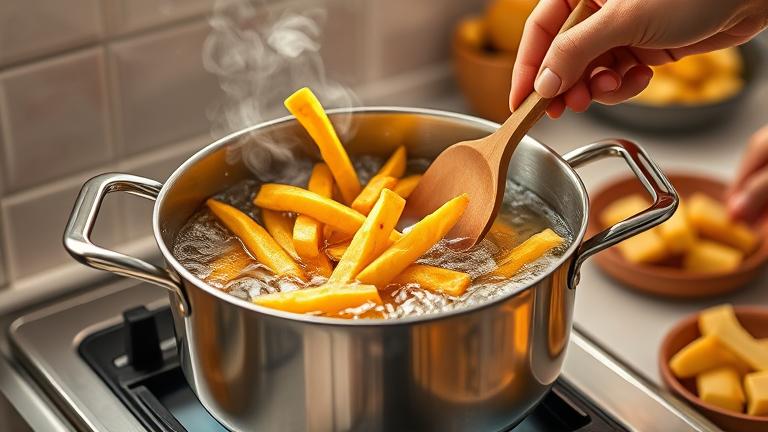
How to Prepare French Fries for Frying
Getting ready to fry perfect French fries starts with choosing the right potatoes and preparing them properly. The key to crispy, golden fries is in the prep work, including peeling, cutting, and soaking. These simple steps help remove excess starch and ensure your fries turn out just right.
1. Choosing the Right Potatoes
Start with starchy potatoes like Russets. They have the right amount of starch and low moisture, which helps create crispy fries. Avoid waxy potatoes such as Yukon Gold or red potatoes because they tend to be less crispy when fried.
2. Peeling the Potatoes
Peeling is optional, depending on your preference. If you want classic fries with a smooth surface, peel the potatoes with a vegetable peeler or a sharp knife. If you like a more rustic look or texture, you can leave the skins on. Just make sure to wash the potatoes thoroughly if you keep the skins on.
3. Cutting the Potatoes into Fries
To achieve evenly cooked fries, cut your potatoes into uniform strips. Use a sharp knife or a mandoline slicer for consistency. Start by slicing the potato into 1/4 to 1/2 inch thick slabs, then stack the slabs and cut into strips of the same width.
Remember, thicker fries take longer to cook and can be less crispy, while thinner fries cook faster but can become overly crispy or burn easily. Find a thickness that matches your cooking time and preference.
4. Soaking the Cut Fries
After cutting, soak the potato strips in cold water for at least 30 minutes. This step removes excess surface starch, which helps prevent the fries from sticking together and promotes crispiness.
If you have time, soak them for a few hours or overnight in the fridge. Drain the fries well, then spread them on a clean kitchen towel or paper towels to dry thoroughly. Excess moisture can cause splattering when frying and makes the fries less crispy.
5. Optional: Double Frying Preparation
For extra crispy fries, some cooks prefer to double fry. After soaking and drying, blanch the fries in hot oil at a lower temperature, about 320°F (160°C), until they are soft but not browned. Then, increase the oil temperature to about 375°F (190°C) for the second fry. This method creates that irresistible crispy exterior.
- Use a thermometer to monitor oil temperature for safety and perfect results.
- Always fry in small batches to prevent temperature drops.
- Stay close and keep a fire extinguisher nearby when working with hot oil.
By following these steps carefully, you’ll prepare French fries that are ready for frying and will turn out crispy and delicious each time. Taking the extra minutes to prep properly makes a big difference in the texture and flavor of your final fries.
Best Oils to Use for Crispy Results
Choosing the right oil is key to making crispy French fries that taste delicious. When frying, you want an oil that can reach high temperatures without burning or breaking down. You also want a flavor that complements the potatoes without overpowering them. In this guide, we’ll explore some of the best oils for achieving crispy, golden fries with perfect texture and flavor.
One of the most important factors to consider is the smoke point. This is the temperature at which the oil starts to smoke and break down. Oils with higher smoke points are better for frying because they can handle the heat needed to get that crispy exterior without burning. Let’s look at some top choices.
Common Oils for Frying French Fries
- Peanut Oil: With a smoke point around 450°F (232°C), peanut oil is a favorite for frying. It has a mild, nutty flavor that adds a subtle richness to fries. It heats evenly and produces crispy results. However, check for allergies before using peanut oil.
- Canola Oil: Canola oil boasts a smoke point of about 400°F (204°C). It has a neutral flavor, making it versatile for many types of frying. It’s also affordable and widely available. Perfect if you want crispy fries without a strong oil flavor.
- Vegetable Oil: This popular choice has a smoke point around 400°F (204°C). It’s typically a blend of different oils, offering a neutral taste and good heat tolerance. It’s convenient and effective for crispy fries.
- Safflower Oil: With a high smoke point of about 510°F (266°C), safflower oil is excellent for high-temperature frying. It has a light flavor that doesn’t interfere with the taste of the fries, ensuring they stay crispy and delicious.
- Sunflower Oil: Similar to safflower, sunflower oil has a smoke point of approximately 440°F (226°C). It produces crispy fries and has a slightly sweet, neutral flavor.
Frying Tips for Crispy French Fries
- Use enough oil so the fries can float freely without sticking to the bottom. This helps cook them evenly and creates a crispy exterior.
- Maintain the oil temperature between 350°F and 375°F (177°C and 191°C). Use a thermometer to monitor the heat and prevent burning or soggy results.
- Avoid overcrowding the pan. Adding too many fries at once drops the oil temperature and results in greasy, less crispy fries.
- Double fry for extra crispiness. Fry the potatoes once at a lower temperature, let them drain, then fry again at the higher temperature for a crunchier finish.
Safety and Storage Tips
- Never leave hot oil unattended to prevent accidents or fires.
- Allow used oil to cool completely before disposing of it or storing for future use.
- Store oil in a cool, dark place away from heat sources to prolong its freshness.
Choosing the right oil with a high smoke point and a neutral flavor will help you make crispy French fries every time. Experiment with different oils to find your favorite, and remember to keep an eye on the temperature for perfect results. Happy frying!
Tips for Perfectly Crispy French Fries
If you love crispy, golden French fries, you’re in the right place. Making fries that are perfectly crispy on the outside and soft on the inside might seem simple, but a few key tricks can make all the difference. Whether you’re using fresh potatoes or frozen, these tips will help you achieve that restaurant-quality crunch every time.
Choose the Right Potatoes
The best potatoes for crispy fries are starchy varieties like Russet or Idaho potatoes. They have a high starch content and low moisture, which help produce a crispy exterior. Waxy potatoes, like Red Bliss or new potatoes, tend to be too moist and can turn out limp.
Prep Your Potatoes Properly
Start by peeling your potatoes if you prefer them skinless, then cut them evenly into your desired shape. Uniform shapes ensure even cooking. Immediately after cutting, soak the fries in cold water for at least 30 minutes. This step removes excess surface starch and helps prevent sticking and sogginess during frying.
Dry Your Fries Well
After soaking, make sure to pat your fries completely dry using a clean kitchen towel or paper towels. Excess moisture on the surface can cause splattering in hot oil and prevent fries from becoming crispy. For best results, air-dry them for a few minutes after patting dry.
Double Fry for Max Crunch
This is one of the best tricks used by professional chefs. First, fry the potatoes at a lower temperature, around 300°F (150°C), until they are cooked through but not browned. Then, let them cool slightly. Increase the oil temperature to around 375°F (190°C) and fry again for 2-3 minutes until crispy and golden. This double-frying process creates that irresistible crunch.
Use the Right Oil and Temperature
Choose an oil with a high smoke point like vegetable, canola, or peanut oil. Set your oil to the correct temperature (between 350-375°F or 180-190°C). Using a thermometer helps maintain a consistent heat, which prevents fries from absorbing too much oil or becoming greasy.
Don’t Overcrowd the Fryer
Placing too many fries in the oil at once lowers the temperature drastically. This results in soggy fries instead of crispy ones. Fry in small batches, allowing the oil to stay hot and circulate evenly around the potatoes.
Drain and Season Properly
Once fried, transfer the hot fries to a paper towel-lined dish to drain excess oil. For extra flavor, season immediately with salt, pepper, or your favorite spices. Toss gently to coat evenly while still hot to help the seasonings stick.
Additional Tips for Crispy Fries
- For extra crispness, sprinkle a little cornstarch or rice flour on the fries before frying.
- Reheating fries in a hot oven or air fryer can restore some crispiness if they get soft.
- Try experimenting with different cut styles, like shoestring or wedge fries, to vary texture and presentation.
Remember, the secret to perfect crispy French fries is a combination of the right potato, proper preparation, accurate frying techniques, and careful seasoning. Practice makes perfect, so don’t be discouraged if your first batch isn’t quite right. With these tips in mind, you’ll be serving crispy, golden fries every time!
Step-by-Step Frying Process Explained
Frying French fries in a pot is a straightforward process that, when done correctly, results in crispy, golden treats. Understanding each stage helps you get perfect fries every time. Let’s walk through the entire process step-by-step, from heating the oil to the finished fry.
Preparing the Pot and Ingredients
Start by selecting a deep, heavy-bottomed pot. This ensures even heat distribution and prevents oil from splattering. Fill the pot with enough oil to fully submerge the fries, usually about 2 to 3 inches deep. Use a neutral oil with a high smoke point, like vegetable, canola, or peanut oil.
Peel the potatoes if you like, or leave the skins on for extra crunch. Cut the potatoes into evenly-sized sticks, about a quarter to half an inch thick. Consistent size helps all fries cook evenly. Rinse the cut fries under cold water to remove excess starch, which can cause sticking and uneven browning.
Heating the Oil
Pour the prepared oil into your pot and turn the heat to medium-high. Use a thermometer if you have one. The ideal frying temperature for French fries is around 350°F (175°C). Heating the oil gradually avoids splatters and ensures safe, even cooking. Watch the temperature closely, adjusting the heat as needed.
If you don’t have a thermometer, you can test the oil by dropping in a small piece of bread: it should sizzle actively and turn golden in about a minute. Remember, too hot oil can burn the fries exterior before the inside is cooked, so keep an eye on the temperature.
First Frying (Blanching)
This initial stage cooks the fries through without browning too much. Carefully add the potato sticks to the hot oil, working in batches if needed. Do not overcrowd the pot, as this lowers the oil temperature and results in soggy fries.
Let the fries cook for about 3-4 minutes. They will become soft and pale, quite different from their final crispy look. Use a slotted spoon or spider to remove the fries and place them on a paper towel-lined tray to drain excess oil.
Cooling and Resting
Allow the fries to cool for at least 15 minutes. This step can be skipped, but resting helps remove moisture and prepares them for their second, crisping fry. During this time, you can increase the oil temperature slightly, up to around 375°F (190°C).
Second Frying (Crisping)
Increase the heat and carefully reintroduce the fries to the hot oil. Fry in batches again for 2-3 minutes until they’re golden brown and crispy. This second fry is what gives French fries their signature crunch.
Once done, remove the fries and drain on fresh paper towels. Season immediately with salt or your favorite seasonings while still hot for maximum flavor absorption.
Serving Tips
- Serve hot for maximum crispiness. Fries tend to lose their crunch as they cool.
- For extra flavor, toss with herbs, spices, or a sprinkle of vinegar.
- Keep the fries warm in a low oven if serving multiple batches.
Following these stages carefully will help you perfect your frying technique and enjoy delicious, restaurant-quality French fries right at home. Practice makes perfect, so don’t worry if your first batch isn’t perfect. Slight adjustments to temperature and timing can make a big difference!
Common Mistakes to Avoid When Frying
Frying foods like fries can seem simple, but a few common mistakes can turn a promising batch into a soggy, greasy disappointment. Knowing what to watch out for can help you get crispy, golden results every time. Whether you’re freshly cutting potatoes or reheating frozen fries, avoiding these pitfalls will improve your frying technique.
One of the biggest errors is not heating the oil enough. When the oil isn’t hot enough, your fries tend to absorb more oil, leaving them greasy rather than crispy. Aim for an oil temperature around 350°F to 375°F (175°C to 190°C). Use a thermometer to check the heat; guesswork can lead to uneven cooking. Also, avoid overcrowding the pan. Adding too many fries at once drops the oil temperature quickly. This results in limp, greasy fries instead of crispy ones. Fry in small batches for consistent heat and texture.
Another typical mistake is not drying the potatoes well before frying. Excess moisture on the surface of the fries causes the oil to splatter and can create steam, making the fries soggy. Use a clean towel or paper towels to thoroughly pat the potatoes dry after washing or cutting. For extra crispness, some cooks do a quick second fry after the first to remove excess moisture and develop a crunch. This double-frying technique is especially popular with thicker cuts.
Using the wrong type of oil can also spoil your fries. Oils with high smoke points like vegetable oil, peanut oil, or canola oil work best because they handle high heat without breaking down. Avoid oils like extra virgin olive oil for frying, as they have lower smoke points and can produce off-flavors or smoke.
Another common mistake is not seasoning at the right time. Fries may taste bland if you wait too long to add salt or seasoning. For best flavor, season the fries immediately after removing them from the oil while they are still hot. This helps the salt and spices stick better and enhances their flavor.
Lastly, keep an eye on your frying time. Over-frying can lead to burnt or overly crisp fries, while under-frying leaves them pale and soft. Use a timer, and check the fries frequently. Thinner fries cook faster and need less time, while thicker cuts require longer, so adjust accordingly.
Practical Tips to Avoid Common Mistakes
- Always heat your oil to the proper temperature before frying.
- Fry in small batches to maintain the right heat level.
- Dry potatoes thoroughly; moisture is the enemy of crispiness.
- Choose oils with high smoke points for frying.
- Season fries immediately after frying for maximum flavor.
By avoiding these common mistakes, you’ll have crispy, delicious fries each time you fry. Remember, practice makes perfect, so don’t be discouraged if your first attempts aren’t perfect. Happy frying!
Serving Suggestions and Flavor Ideas
Getting creative with French fries can turn a simple snack into a delightful experience. Whether you prefer crispy, seasoned, or topped fries, there are many ways to elevate this classic favorite. Here are some ideas to inspire your next fry feast.
First, consider the seasoning options. Traditional salt and pepper are always good, but don’t stop there. You can sprinkle your fries with paprika, garlic powder, onion powder, or even cayenne for a spicy kick. For a more gourmet touch, try herbs like rosemary, thyme, or oregano. A sprinkle of parmesan cheese adds a savory finish, especially when served hot. Experimenting with spice blends such as Cajun seasoning or taco seasoning can give your fries a whole new flavor profile.
Dips are essential to complement the crispy texture of French fries. Classic choices include ketchup, mayonnaise, or ranch dressing. For a tangy twist, try a honey mustard or a sriracha mayo. Guacamole or sour cream with chopped chives also pair wonderfully with fries. If you’re feeling adventurous, build a dipping station with an array of options like garlic aioli, spicy mayo, or blue cheese dressing to impress your guests.
Presentation makes a big difference in enjoyment. Serve your fries in a cute paper cone or rustic basket lined with parchment paper for a cozy, casual vibe. For a more elegant look, arrange them on a platter with garnishes like fresh herbs, lemon wedges, or chopped green onions. You might also stack them high in a glass jar or serve alongside colorful salads and grilled meats for a complete meal.
Creative Serving Ideas
- Loaded Fries: Top with shredded cheese, crispy bacon bits, chopped green onions, and a dollop of sour cream for a loaded flavor punch.
- Sweet and Savory: Mix in some cinnamon and sugar before frying, then serve with caramel dipping sauce for a sweet treat.
- Global Flavors: Try adding curry powder and serve with a side of mango chutney for an Indian-inspired twist.
- Veggie Toppings: Add sautéed mushrooms, bell peppers, or jalapenos for extra crunch and flavor.
If you’re hosting a party, set up a fry bar with various seasonings and dips for guests to customize their own. This interactive approach adds fun and makes everyone feel involved. Keep non-spicy options available for kids or sensitive eaters too.
Finally, pair your fries with complementary dishes. Burgers, sandwiches, or grilled chicken are classic partners, but fries also go well with salads for a balanced meal. Consider serving a refreshing beverage like chilled lemonade or a cold craft beer to round out your meal perfectly.
Healthier Alternatives for Frying
If you love crispy French fries but want to make a healthier choice, there are several great methods to try. Instead of deep frying in oil, baking and air frying can give you that satisfying crunch with much less fat. These options are easier on your heart and can help reduce calorie intake while still allowing you to enjoy your favorite side dish.
Baking French Fries
Baking is a simple and accessible way to prepare crispy fries. Start by preheating your oven to 425°F (220°C). Wash and cut your potatoes into even strips to ensure they cook uniformly. To improve texture and flavor, toss the potato sticks with about 1 to 2 tablespoons of olive oil per pound of potatoes. Add your favorite seasonings, like salt, pepper, paprika, or garlic powder.
Arrange the fries in a single layer on a baking sheet lined with parchment paper or a silicone mat. Spread them out so they are not overlapping. Bake for about 25 to 30 minutes, turning them halfway through. Keep an eye on them and remove once they turn golden brown and crispy. This method produces tasty fries with less oil and fewer calories than traditional frying.
Air Frying French Fries
Air frying is an innovative technique that circulates hot air around the food, creating a crispy exterior much like deep frying but with a fraction of the oil. To make air fryer French fries, cut your potatoes into even sticks. Toss them lightly with a teaspoon of vegetable or olive oil, just enough to help them crisp up. Add your preferred seasonings.
Preheat your air fryer to 400°F (200°C). Place the fries in the basket in a single layer. Avoid overcrowding, as this can prevent even cooking. Cook for about 15 to 20 minutes, shaking the basket or turning the fries halfway through. The result is crispy, golden fries with much less fat. It’s quick and easy, making it a popular choice for healthier meals.
Tips for Healthier Crispy Fries
- Choose starchy potatoes like Russets, which turn crispier when cooked.
- Use minimal oil—sometimes a light spray is enough to achieve crunch.
- Try seasoning with fresh herbs or spices instead of salt to keep sodium low.
- Pour your fries onto paper towels after cooking to absorb excess oil.
- For added flavor, toss cooked fries with a sprinkle of Parmesan cheese or a squeeze of lemon juice.
Common Mistakes to Avoid
- Overcrowding the baking sheet or air fryer basket, which leads to soggy fries.
- Not cutting the potatoes evenly, making some pieces burn while others are undercooked.
- Using too much oil, which defeats the purpose of making healthier fries.
- Neglecting to shake or turn fries during cooking, preventing even crisping.
By choosing baking or air frying instead of traditional frying, you can enjoy delicious, crispy French fries without the excess fat and calories. These methods are convenient, require minimal oil, and deliver satisfying crunches every time. Give them a try and make your favorite snack a little healthier today!