
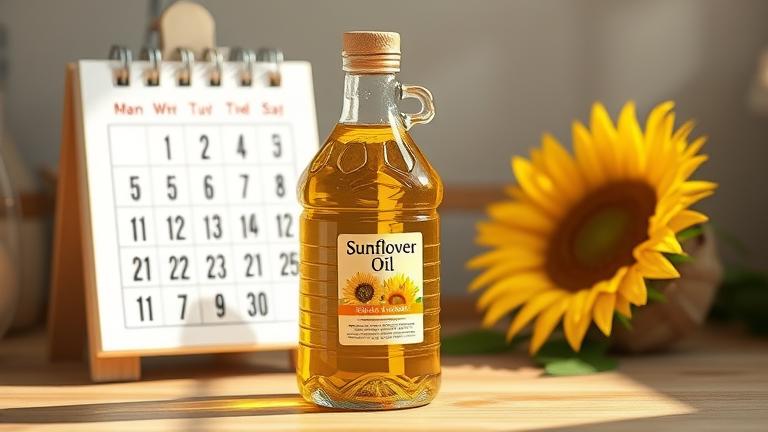
Understanding Sunflower Oil Shelf Life: How Long Does It Last?
Sunflower oil generally remains fresh for about one to two years when stored properly. Factors such as exposure to light, heat, and air significantly influence its longevity. Light exposure accelerates the degradation process, causing the oil to become rancid faster.
Heat speeds up oxidation, which deteriorates the oil’s quality, and air exposure leads to spoilage through oxidation as well. To prolong its shelf life, it is crucial to keep sunflower oil in a cool, dark place and in an airtight container, minimizing contact with elements that can cause spoilage.
Proper storage not only prevents rancidity but also ensures the oil retains its nutritional qualities for longer. Regularly checking the oil for signs of spoilage can help you determine its usability. When stored under optimal conditions, sunflower oil can last up to two years, making it a practical choice for households and professional kitchens alike.
Storage Tips for Extending the Freshness of Sunflower Oil
Maximizing the shelf life of sunflower oil involves adhering to specific storage techniques. It is recommended to store the oil in a cool, dark environment away from direct sunlight, which can accelerate oxidation. The ideal temperature for storing sunflower oil is below 75°F (24°C). While refrigeration can extend its lifespan, it may cause the oil to become cloudy or solidify. This does not affect the quality; simply bring it back to room temperature before use.
The container plays a vital role in preservation. Always ensure that the bottle cap is tightly sealed after each use to prevent moisture and air from entering. Transferring sunflower oil to an opaque, airtight container further shields it from light and air exposure. Using the oil within its recommended shelf life typically about one year from the date of purchase is best practice.
In addition to storage techniques, consider the location. Avoid placing sunflower oil near heat sources like stovetops or in warm areas, as elevated temperatures hasten oxidation. Regularly inspecting the oil through smell, appearance, and taste helps identify spoilage early. Following these storage tips ensures that your sunflower oil remains fresh, safe, and flavorful for as long as possible.
Recognizing the Signs of Rancidity in Sunflower Oil
Spoiled sunflower oil displays several distinct indicators that can be observed and tested for safety. Visually, rancid sunflower oil may look cloudy, darkened, or contain particles that were not present when fresh. It might develop a sticky or tacky surface and show changes in color.
The strongest sign of spoilage is a sour or off smell. Fresh sunflower oil has a mild, neutral aroma. If the oil emits a sour, musty, or fishy odor, it is likely rancid due to oxidation.
Taste tests also offer clues about freshness if the oil tastes bitter, sour, or otherwise off, it should be discarded. Consuming spoiled oil can lead to digestive issues or food poisoning, stressing the importance of early detection. It is advisable to rely on sensory evaluation sight, smell, and taste to assess whether sunflower oil is still safe for use.
Regularly inspecting your oil helps prevent health risks associated with ingestion of rancid products. When in doubt, prefer to err on the side of caution and dispose of questionable oil to maintain health and safety.
The Health Impacts of Consuming Spoiled Sunflower Oil
Consuming rancid or expired sunflower oil can pose significant health risks. Rancidity develops through oxidation, forming harmful substances known as oxidation compounds which can negatively affect the digestive system. These compounds can cause nausea, diarrhea, stomach pain, and other gastrointestinal disturbances.
In addition, oxidized oil substances may contribute to inflammation and cellular damage over time. Regular intake of spoiled oil can weaken the immune system and increase the risk of chronic health conditions. The buildup of toxins from rancid oil may also elevate the risk of developing long-term health issues such as cardiovascular disease.
Experts emphasize the importance of recognizing spoilage signs such as a sour smell, an unusual taste, or changes in appearance to avoid health hazards. Proper storage in a cool, dark place and adhering to expiration dates are essential preventive measures. Using fresh, high-quality sunflower oil supports better digestion and overall health by reducing exposure to potentially toxic oxidation byproducts.
Comparing Sunflower Oil with Other Cooking Oils: Which Lasts Longer?
Sunflower oil is known for its relatively long shelf life and stability. When stored properly in a cool, dark place in a tightly sealed container, sunflower oil can last up to one year, and sometimes extending to two years. Compared to other oils, sunflower oil resists oxidation better than oils like flaxseed or walnut oil, which are more prone to spoilage.
Extra virgin olive oil tends to last about one to two years but becomes susceptible to rancidity once opened. Coconut oil is highly stable due to its high saturated fat content and can last up to two years even at room temperature. Vegetable oils such as canola or soybean oil typically last around six to twelve months but can spoil faster once exposed to light and air.
The stability of an oil depends largely on its fatty acid composition. Oils high in saturated fats, like coconut or palm oil, are more resistant to oxidation. Conversely, oils rich in polyunsaturated fats, like sunflower or flaxseed oil, are more vulnerable to spoilage without proper storage.
Maintaining proper storage conditions a cool, dark, airtight environment significantly extends the life span of these oils. Regular inspection for off smells or tastes helps ensure safety and freshness. Because of its stability, sunflower oil is suitable for long-term storage and everyday use, especially when stored correctly.
Video Summary: How to Properly Store Sunflower Oil
This video provides practical tips on how to store sunflower oil effectively. It emphasizes the importance of keeping the oil in a cool, dark place and the benefits of using airtight containers. Proper storage not only prolongs shelf life but also preserves the nutritional quality of the oil. The video also discusses signs to watch for that indicate spoilage, such as changes in smell, appearance, and taste. Following these simple guidance can help ensure you enjoy fresh, healthy sunflower oil for an extended period.