
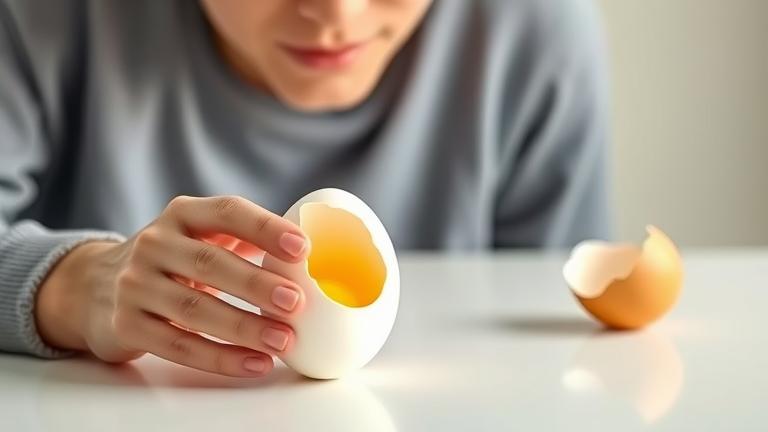
Introduction: Why You Need to Identify Boiled Eggs
Knowing whether an egg is boiled or not is a handy skill in the kitchen. Whether you’re preparing a snack, packing a lunch, or checking on leftovers, being able to identify a boiled egg saves you time and effort. It can also help prevent unnecessary cracking or breaking open eggs that aren’t cooked yet.
Sometimes, you might have a hard-boiled egg stored in the fridge and forget if it’s fully cooked or not. Being able to tell if an egg is boiled helps avoid the surprise of cracked shells or undercooked eggs when you’re in a rush. It also plays a role in safety, especially if you’re unsure how long an egg has been cooked. Consuming undercooked eggs can lead to health issues, so proper identification gives peace of mind.
For home cooks, understanding how to identify boiled eggs makes meal prep easier. It allows you to quickly prepare salads, sandwiches, or snacks without cumbersome guesswork. Plus, if you accidentally have an unboiled egg and need it quickly boiled, knowing how to tell the difference helps you plan your cooking better.
In addition, recognizing a boiled egg’s appearance and texture can assist when you’re experimenting in the kitchen. For instance, if you want to make deviled eggs or use eggs for baking, confirming they are boiled ensures a smoother process. It also helps when labeling or organizing your eggs, so you always know what’s cooked and what’s raw without cracking open every single one.
Overall, being able to identify whether an egg is boiled is a simple but important skill. It enhances your safety, saves you time, and makes your cooking experience more efficient. So, let’s explore some easy ways to tell if an egg has been boiled, and how you can use this knowledge in your daily cooking routine.
Spin Test: The Classic Method
Wondering if your boiled egg is completely cooked? The spin test is a simple and reliable way to find out. It’s a quick trick that anyone can try with just a bit of practice. Whether you’re preparing a salad, breakfast, or snack, knowing if your egg is hard-boiled saves time and guesswork.
To perform the spin test, place your egg on a smooth, flat surface like a countertop or cutting board. Use your fingers or the palm of your hand to give it a quick, firm spin. Make sure the egg is spinning freely and evenly. Now, watch carefully what happens next. If the egg spins smoothly and quickly, it’s almost certainly cooked through. If it wobbles or spins slowly, it might still be raw inside.
The reason this trick works lies in the physics of the egg’s interior. When an egg is hard-boiled, the contents become solid, which allows the shell to spin freely and consistently. On the other hand, a raw egg has liquid inside that moves independently of the shell. This internal movement causes the egg to wobble and spin imperfectly, giving away its raw state.
How to perform the spin test step-by-step
- Place the egg on a flat surface and give it a quick spin.
- Observe how it spins. Does it accelerate quickly and spin smoothly?
- If yes, your egg is likely fully cooked. If it wobbles or spins slowly, it may still be raw or undercooked.
- To double-check, gently stop the egg with your finger while it’s spinning. If it quickly stops and then starts spinning again, it’s probably cooked. If it keeps wobbling after stopping, it’s raw.
Keep in mind, this test is most accurate with eggs that have been boiled for at least 8-10 minutes. Also, eggs that are very fresh tend to spin better than older ones, so consider the age if you’re unsure. If you’re in doubt, you can always crack the egg open for a quick visual check.
Here are a few tips for best results:
- Use eggs that are at least a few days old for more reliable spinning behavior.
- Ensure the surface is clean and flat to get an accurate spin.
- Be gentle when stopping the egg, so you don’t accidentally crack the shell.
This simple test is a handy kitchen trick to quickly confirm if your eggs are ready to eat or need a little more cooking time. Practice a few times, and you’ll be spinning eggs like a pro in no time!
The Shake Test: Listening for Movement
When you’re trying to figure out if an egg is cooked or still raw, the shake test is a simple and effective trick. It’s a handy way to check without cracking the shell. The key is to listen carefully for the sound or feel of the egg moving inside.
Start by holding the egg gently in your hand. Give it a gentle shake back and forth. You don’t need to shake too hard—just enough to notice if there’s any movement inside the shell. A softly moving egg will produce a faint sloshing sound, indicating it’s raw. On the other hand, a solid, cooked egg will feel stable and won’t produce much, if any, sound.
If you hear a sloshing noise when shaking the egg, that’s a sign the inside is still liquid. Often, raw eggs will produce a noticeable sound of fluid moving around inside as you shake. This is because the yolk and clear egg whites are still loose. Be careful, though: if your egg is very fresh, it might be a little harder to hear the difference. The shell’s thickness and the egg’s age can also affect what you hear.
In contrast, a boiled egg usually feels firm and steady. When shaken, there should be minimal movement, and you likely won’t hear much. The cooked inside is solid, so it doesn’t ripple or move much. Some people like to hold the egg close to their ear after shaking to better listen for the sound. This tapping or listening method is quick and easy, especially if you’re in a hurry or don’t want to crack the shell prematurely.
Tips for Excellent Results
- Make sure to shake gently. Too vigorous shaking might crack the shell or cause unnecessary damage.
- If you’re unsure, try the shake test on an egg you already know is cooked—so you get a feel for what it sounds and feels like.
- Use this method carefully, especially with older eggs. Sometimes, the inside can be a little loose even if it’s cooked, which might give a false raw indication.
- For the best accuracy, combine the shake test with other methods, like spinning the egg to see if it can turn easily (a cooked egg won’t turn easily) or carefully cracking it open if needed.
Remember, the shake test isn’t 100% foolproof, but it’s a quick and friendly way to get a good idea of whether your egg is raw or boiled. With a little practice, you’ll be able to tell the difference in just a few seconds. It’s a handy little trick that can save you time and effort in your kitchen!
Visual Cues: Shell and Egg Appearance
Being able to tell if an egg is boiled or raw just by looking at it can save you time and effort. Often, the best clues come from examining the shell texture, shape, and overall appearance. These simple visual cues can help home cooks quickly identify whether an egg has been cooked or if it’s still raw, especially if you’re unsure after handling many eggs.
First, look at the shell’s surface. A raw egg usually has a smooth, glossy shell. Since the egg inside is liquid, it doesn’t cause the shell to crack or distort. In contrast, a boiled egg, especially if it’s been cooked for a while, may have a slightly duller or more matte appearance. The heat can sometimes cause tiny cracks or a more matte finish because the shell’s surface loses some of its gloss after boiling.
Next, inspect the shape of the egg. Raw eggs tend to be more rounded, with a slightly wider bottom. When held in your hand, raw eggs feel smooth and even, with no noticeable bumps or irregularities. Boiled eggs, especially if they’ve been cooked and turned in a container or during handling, might feel a little firmer or have a more uniform shape. Over time, if you are familiar with your eggs, you might notice slight changes in how they settle or move.
Another visual indicator is the egg’s size and symmetry. Raw eggs are usually consistent, but if you notice one that looks oddly misshapen or has a visible crack, it might be worth further inspection before cracking it open. Sometimes, a cracked shell can indicate a raw egg that has been damaged, making it more likely to be raw inside.
To distinguish boiled from raw at a glance, look for any surface irregularities such as tiny cracks or dullness. Boiled eggs often have a more consistent appearance and may show a more matte surface due to the heat exposure. When in doubt, you can also perform a simple shake test or spin the egg, but visual cues are quick and useful first steps.
- Surface finish: glossy for raw, dull or matte for boiled
- Shape consistency: more uniform in boiled eggs
- Surface imperfections: cracks may suggest a raw egg that was damaged
- Shell texture: smooth shell usually indicates raw, while a slightly rougher shell might be boiled
With these visual clues, you can become more confident when sorting and handling eggs in your kitchen. Over time, noticing these small details will help you avoid breaking a raw egg when you wanted a cooked one, or vice versa. Remember, visual cues are the first step, and combining them with gentle handling or other tests can give you even more assurance.
The Light Test: Holding Egg Up to Light
Have you ever wondered if an egg is fresh, raw, or cooked just by holding it up to a light source? The light test is a simple, practical way to peek inside the eggshell without breaking it. It can help you determine the egg’s internal contents and freshness quickly and easily.
When you hold an egg up to a bright light—like a strong flashlight or a dedicated egg candler—you can see inside through the shell. This method works because eggshells are partially translucent, allowing light to pass through small pores. The difference in internal structure between raw, cooked, and old eggs is quite noticeable in this view.
First, pick a well-lit spot or use a flashlight in a dark room. Make sure your eggs are clean and at room temperature for the clearest view. Carefully hold the egg with the larger end facing the light. Don’t squeeze too hard, as eggs can crack easily.
What to Look For
Inside, your goal is to interpret what you see. Here are the common indicators:
- Raw Egg: You will notice some movement or swaying inside the shell. The egg’s yolk and white move freely because they are liquid. You might see a small, dark spot (the yolk) that shifts if you gently tilt the egg. The interior appears less uniform and more translucent.
- Cooked Egg (Boiled): On holding it to the light, a hard-boiled egg appears more solid and less transparent. The yolk looks firm and evenly colored, with no movement inside. The egg white is dense and opaque if fully cooked, and you won’t see any swaying or shadows moving inside.
- Old Egg: This may vary, but older eggs tend to have more air inside. When held up to the light, they often show a larger air pocket at the larger end. The internal contents may look more uneven, and the yolk may appear somewhat flattened or less centered.
Tips for Accurate Light Testing
- Use a bright, focused light source for best results. A flashlight designed for eggs or a small LED works well.
- Hold the egg gently and steadily. Moving it around slightly can help observe different angles.
- Perform the test in a dark room for sharper contrast. Bright ambient lighting can make it harder to see inside the egg.
- Remember, this test is observational. If unsure, crack the egg open into a bowl to confirm its condition.
Common Mistakes to Avoid
- Holding the egg too tightly, risking cracking or breaking the shell.
- Using a weak or unfocused light source, which makes it hard to see inside.
- Testing eggs that are visibly dirty or cracked — the test works best with clean, intact shells.
- Relying solely on the light test for spoilage; always check expiration and smell before use.
Once you get the hang of holding eggs up to light, you’ll find it’s a handy skill for sorting eggs at the store or confirming freshness at home. It’s a quick, safe way to gain insight into what’s inside — without risking a surprise in your recipes.
Temperature and Time Clues
When you’re cooking or testing eggs, understanding their temperature and how long they’ve been since boiling can help you figure out if they’re cooked just right, without even cracking them open. This can be handy when making soft-boiled eggs, preparing for salads, or grabbing a snack in a hurry.
Many home cooks rely on visual cues, but temperature and timing are your friends for accuracy. Eggs go through different stages as they cook, and paying attention to these clues can make your results more consistent and delicious.
Why Temperature Matters
Eggs are sensitive to heat, and their internal temperature tells us a lot about their doneness. For example, a raw egg at room temperature is at about 20°C (68°F). During boiling, the egg’s interior heats up gradually.
A soft-boiled egg usually reaches an internal temperature of around 63°C to 65°C (145°F to 149°F). At this point, the whites are set, but the yolk remains runny. For a medium egg, expect about 70°C to 74°C (158°F to 165°F), where the yolk is slightly firmer. Hard-boiled eggs climb above 80°C (176°F) and become solid all the way through.
If you have a thermometer handy, measuring the internal temperature can give you precise results. Otherwise, knowing approximate cooking times helps. Just remember: the size of the egg and starting temperature can affect these times.
Timing and Its Clues
Remember that the time since boiling isn’t just about when you turn off the heat — it’s a key clue. After turning off the stove, eggs continue to cook slightly from residual heat. For soft eggs, a 4 to 6-minute soak usually hits the spot. Medium eggs usually need around 7 to 9 minutes, and hard-boiled eggs take about 10 to 12 minutes.
Keep in mind that these timing guidelines are based on large eggs straight from the fridge. If you’re using extra-large eggs or eggs at room temperature, adjust accordingly. The best way is to keep a kitchen timer and note how long they’ve been since the boil.
Practical Tips to Assess Egg Doneness
- Spin test: Gently spin the egg on a flat surface. A fully cooked and solid egg will spin smoothly and quickly, while a runny yolk causes it to wobble or spin slowly.
- Light touch: Carefully tap the shell to see if it feels firm or slightly soft. With practice, you’ll get a sense of the right firmness without cracking open the shell.
- Timing as a guide: Use your timer based on desired doneness, knowing that residual heat can slightly cook the egg after removal from boiling water.
Monitoring egg temperature and keeping track of cooking time are simple tricks that can save you from overcooking or undercooking. With experience, you’ll develop a feel for your eggs and perfect your favorite results every time.
Tips for Perfectly Soft and Hard Boiled Eggs
Boiling eggs might seem simple, but getting the right consistency can be tricky. Whether you prefer soft, runny yolks or fully firm hard-boiled eggs, it’s all about timing and technique. With a few easy tips, you can master the art of boiling eggs to perfection every time.
Choose the Right Eggs
Fresh eggs are great for cracking and eating but can be harder to peel when boiled. If peeling is important to you, opt for eggs that are a week or so old. Slightly older eggs tend to release their shells more easily after boiling.
Use the Right Amount of Water
Place your eggs in a single layer in a saucepan. Cover them with cold water so that the water is about an inch above the eggs. Using cold water helps prevent the shells from cracking by gradually warming the eggs evenly.
Control the Temperature and Timing
The key to perfect boiled eggs is knowing how long to cook them. Here are basic guidelines:
| Desired Egg Consistency | Cook Time |
|---|---|
| Soft boiled (slightly runny yolk) | 4 to 6 minutes |
| Medium boiled (creamy yolk) | 7 to 9 minutes |
| Hard boiled (firm yolk) | 10 to 12 minutes |
Start timing once the water reaches a rolling boil. For the most consistency, consider using a timer—this helps you avoid overcooking or undercooking your eggs.
Cooling and Peeling
Once the eggs reach your desired doneness, transfer them immediately to a bowl of ice water. Cooling stops the cooking process and makes peeling easier. Let them sit for at least 5 minutes.
To peel, gently tap the egg on a hard surface to crack the shell. Start peeling from the wider end, where there’s usually an air pocket. Rinsing the egg under cold water helps loosen stubborn shells and makes peeling smoother.
Practical Tips and Mistakes to Avoid
- Adding a pinch of salt or a splash of vinegar to the water can help prevent eggs from cracking and make peeling easier.
- Do not boil eggs directly from the fridge. Let them sit at room temperature for a few minutes to prevent cracking due to thermal shock.
- Beware of overcooking. Overcooked eggs can develop a greenish ring around the yolk and a sulfuric smell. Stick to the recommended times for the best results.
- If you’re boiling multiple eggs, ensure they all are of similar size for even cooking.
By paying attention to timing, cooling, and handling, you can achieve perfectly soft or hard boiled eggs tailored to your taste. Experiment with the times and techniques to find your ideal egg every time!