
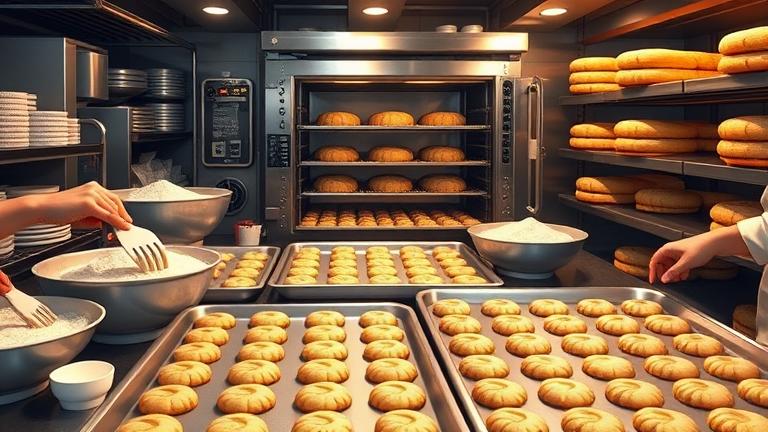
Baking Tips for Bulk Baking
Bulk baking can be a great way to save time and serve more people, whether you’re preparing for a big event or stocking up your freezer. To make your large-scale baking projects successful, it’s important to follow some helpful tips and best practices. These strategies will help you work efficiently while maintaining the quality of your baked goods.
Start by choosing recipes that scale well. Some baked goods, like cookies and muffins, are easy to multiply, but delicate items such as layered cakes may need adjustments. Always double-check ingredient ratios and baking times when increasing the batch size.
Make a detailed shopping list to ensure you have all the necessary ingredients in bulk. Buying ingredients like flour, sugar, and butter wholesale can save money and prevent last-minute trips to the store.
Invest in large mixing bowls and sturdy baking pans that can handle bigger quantities. Consider using commercial-sized baking sheets or multiple smaller pans if your oven size is limited. Having reliable, heavy-duty equipment helps ensure even baking and reduces the risk of accidents.
Using an oven with even heat distribution is crucial to avoid uneven baking. If your oven has hot spots, rotate pans halfway through baking.
Prep Ingredients and Tools in Advance
Measure all ingredients before you begin. Pre-measuring helps streamline the process and keeps everything organized. Use clear containers or bowls to keep ingredients accessible and visible.
Gather all necessary tools — spatulas, whisks, ladles, and mixers — so you won’t need to search for them mid-baking. Having everything at hand speeds up the process and reduces mistakes.
Adjust Baking Times and Temperatures
Bulk baking often requires adjusting baking times. Larger quantities or thicker pans may need extra time in the oven, but be careful not to overbake. Monitor your goods closely, especially the first few times you scale a recipe.
If baking multiple trays at once, rotate them halfway through. This promotes even cooking and browning.
Use Consistent Portions for Even Results
Portion out dough or batter evenly using a scoop or scale. Consistent sizing ensures all items bake uniformly, which makes presentation and serving easier.
This approach also helps in managing oven space and baking times more predictably.
Cool and Store Properly
Allow baked goods to cool completely before storing. Use wire racks for even cooling and to prevent sogginess.
Store items in airtight containers to keep them fresh. If freezing, use vacuum-sealed bags or airtight containers for longer shelf life. Proper storage extends freshness and flavor, saving you time and hassle later.
- Batch test new recipes before large-scale baking to find optimal baking time and temperature.
- Label your baked goods clearly if you’re making different types to avoid mix-ups.
- Clean as you go to keep your workspace organized and efficient.
By following these friendly tips, your bulk baking projects will be smoother and more enjoyable, giving you delicious results every time. Happy baking!
Easy Batch Baking Recipes
Batch baking is a fantastic way to save time and enjoy homemade treats without baking every day. Whether you want to prepare snacks for the week or get a head start on special occasions, these easy recipes are perfect for making in bulk. They require simple ingredients and straightforward steps, so even beginners can enjoy baking success.
Why Choose Batch Baking?
Batch baking allows you to prepare large quantities of baked goods at once. This method not only saves time but also helps reduce energy use since you’re using your oven more efficiently. Plus, homemade baked goods often taste better and are healthier than store-bought options.
Another advantage is having ready-to-eat snacks or desserts in your freezer or pantry. It’s great for busy weekdays or last-minute guests. Plus, many recipes can be easily adapted to different flavors or dietary needs.
Popular Batch Baking Recipes
- Cookies: Oatmeal raisin, chocolate chip, or peanut butter cookies are perfect for making in large batches. They store well in airtight containers and can be enjoyed over several days.
- Banana Bread: This classic bread is easy to double or triple, and it freezes beautifully. It’s a great way to use overripe bananas.
- Muffins: Blueberry, banana nut, or bran muffins can be baked all at once and eaten throughout the week. Make a big batch and keep some in the freezer for later.
- Cakes and Cupcakes: Baking a full sheet cake or a batch of cupcakes is handy for parties or family gatherings. They stay moist and delicious when properly stored.
- Granola Bars: Homemade granola bars are healthy and customizable. Mix oats, honey, nuts, and dried fruits, then press into a pan and bake.
Tips for Successful Batch Baking
- Plan ahead: Choose recipes that scale well, and make a shopping list for all ingredients needed.
- Use the right containers: Store baked goods in airtight containers or freezer bags to keep them fresh.
- Label and date: Always label your batches so you know what they are and when you baked them.
- Adjust baking times: Larger quantities might require a longer baking time or a different oven temperature. Keep an eye on your baked goods to prevent overbaking.
- Cool before storing: Let baked items cool completely before storing to avoid moisture buildup and sogginess.
Storage and Freezing
Most baked goods can be stored at room temperature for a few days or frozen for longer. Cookies and granola bars keep well in airtight containers at room temperature for about a week. Muffins and bread can be frozen individually wrapped, then thawed at room temperature or warmed slightly in the oven.
For best results, try to consume baked goods within a month of freezing, and always label them with the date. Reheat items in the oven or microwave for a quick, fresh taste.
Batch baking is a practical and fun way to enjoy homemade treats without constant baking. With these simple recipes and helpful tips, you’ll be able to create tasty baked goods in large quantities while saving time and effort.
Save Time with Bulk Baking
Bulk baking is a fantastic way to save time and effort in the kitchen. Instead of baking small amounts every time you need baked goods, you prepare larger quantities at once. This approach helps you have homemade treats ready to go and reduces the daily cooking workload. Whether you’re planning for a busy week or hosting a gathering, mastering bulk baking can make your life much easier.
To get started, it’s important to plan your baking schedule and recipes. Choose baked items that store well and freeze nicely, like muffins, cookies, bread, or muffins. These foods can be made in large batches and stored for later use. Think about making enough for multiple meals or snacks, and consider how long each item will stay fresh.
Preparation Tips for Efficient Bulk Baking
- Organize your ingredients: Gather all necessary ingredients before you start. This saves time searching for what you need mid-baking.
- Use large mixing bowls and pans: Bigger tools help you combine ingredients faster and bake in larger quantities.
- Set up a workspace: Clear your counters and set out all tools. This makes the process smooth and prevents unnecessary pauses.
Techniques to Speed Up Baking
Batch your tasks to minimize downtime. For example, mix all your ingredients first, then fill several baking pans or trays at once. If a recipe allows, do multiple batches in succession. Cooling racks, sheet pans, and storage containers should be within easy reach. This way, you can move swiftly from baking to cooling and storing.
Using convection ovens, if available, can save time by cooking food more evenly and faster than traditional ovens. Also, consider preheating the oven while you prepare your dough or batter. This small step reduces waiting time.
Effective Freezing and Storing
Once baked, many items freeze well and can be stored for weeks or even months. Use airtight containers, zip-top bags, or wrapping to protect foods from freezer burn. Label each package with the content and date. When you need a quick snack or meal, simply reheat in the oven, microwave, or toaster.
Sample Bulk Baking Schedule
| Task | Time Needed | Tips |
|---|---|---|
| Gather ingredients and tools | 10 minutes | Check pantry and fridge first to avoid extra trips |
| Mix large batches of dough/batter | 15-20 minutes | Measure accurately for consistent results |
| Portion and place in pans or trays | 10 minutes | Use a cookie scoop or measuring cup for uniform sizes |
| Bake multiple sheets or batches | Adjust based on oven capacity | Rotate trays if needed for even baking |
| Cool and pack for freezing or storage | 15-30 minutes | Use cooling racks to speed up the process |
By adopting these strategies, you can bake more efficiently and enjoy homemade goodies anytime. Remember to plan ahead, organize your space, and utilize freezing to keep your efforts fresh and accessible. With practice, bulk baking becomes a quick and rewarding routine that saves time and enhances your culinary skills.
Storing and Freezing Baked Goods
Proper storage and freezing are key to keeping your baked goods fresh and delicious for longer. Whether you’ve baked a big batch of cookies, bread, or muffins, knowing the best methods helps prevent spoilage and preserves their flavor and texture.
When you’re storing baked items, it’s important to consider the type of baked good. For example, cookies and muffins are best kept differently from bread or cakes. Each has specific needs to stay fresh and tasty.
To start, allow baked goods to cool completely before storing. Hot or warm items can create moisture, which leads to sogginess or mold. Once cooled, you can choose the best storage method.
For short-term storage, use airtight containers or resealable plastic bags. Squeeze out as much air as possible to prevent freezer burn or drying out. If you’re storing baked goods like bread, wrapping them tightly in plastic wrap before placing them in a container helps maintain moisture.
Baked items like cakes with frosting should be kept in a sealed container in the refrigerator if you plan to eat them within a few days. But for longer storage, freezing is your best choice.
Freezing baked goods is a simple way to extend their shelf life. Wrap individual items or portions tightly in plastic wrap or aluminum foil. For added protection, place wrapped items in a freezer-safe bag or container. Label each package with the date to keep track of how long they’ve been frozen.
Most baked goods freeze well for up to three months. However, freshness begins to decline afterward. Cookies, muffins, and crumpets keep nicely in the freezer without much change. Breads and cakes freeze well too, but be aware that frost or ice crystals might form if not properly wrapped.
When you’re ready to enjoy your frozen baked goods, thaw them at room temperature or in the refrigerator. For crispy items like cookies, reheating in a 350°F (180°C) oven for a few minutes helps restore their crunch. Soft items like bread and cake can be easily refreshed with a quick microwave or oven warm-up.
Tips for Long-Term Freezing
- Always cool baked items completely before freezing or storing.
- Wrap items tightly to prevent freezer burn and moisture loss.
- Label everything with the date to keep track of storage time.
- Use resealable bags or airtight containers for best results.
- For best texture, consume baked goods within three months of freezing.
Avoid freezing baked goods that contain fresh fruit, cream, or custard, as these ingredients don’t freeze well and can spoil or change texture upon thawing.
By following these methods, you’ll enjoy fresh-tasting baked treats even days or weeks after baking. Proper storage and freezing help minimize waste and make bulk baking more convenient and enjoyable.
Essential Equipment for Large Batches
When baking in large quantities, having the right equipment makes all the difference. Whether you’re cooking for a big family gathering, a community event, or running a bakery, the proper tools will help you work efficiently and get consistent results. Let’s go over some of the essential equipment you’ll need to bake large batches without the hassle.
First, a set of sturdy mixing bowls is a must. Opt for big, deep bowls made of metal or heavy-duty plastic. These allow you to mix large amounts of batter or dough easily, without splashing or spilling. It’s also helpful to have several bowls of different sizes, so you can prep ingredients in stages or keep things separate.
Next, investing in industrial-sized baking sheets or pans is a good idea. Look for pans that are large, flat, and made of durable materials like aluminized steel. These help in baking even layers of cookies, bread, or sheet cakes. If space allows, consider a few extra large pans so you can bake multiple batches at once. For those baking specialized items like muffins or cupcakes, large muffin tins can be more efficient.
A stand mixer is a game-changer for big batches. A high-capacity mixer with a powerful motor can handle hefty quantities of dough or batter without straining. Brands like KitchenAid or commercial mixers often come with extra attachments, making mixing, kneading, or whipping much easier and faster. If you don’t have a stand mixer, a good quality hand mixer with a big bowl can suffice for larger large-batch tasks.
Having multiple baking sheets and racks is also essential. Use wire racks for cooling large quantities of baked goods. Stackable racks save space and allow multiple batches to cool simultaneously. When planning your workspace, ensure your racks are stable and easy to move around so you can efficiently transfer items from oven to cooling.
A reliable oven with ample space is key. Commercial or convection ovens work well because they heat evenly and can accommodate larger trays or multiple dishes simultaneously. If your oven is small, consider doing batch baking in stages or using multiple ovens.
Thermometers, both for checking oven temperature and internal baked goods, help ensure everything is cooked to perfection. A reliable instant-read thermometer can be used to verify baked items like bread or meat fillings, ensuring safety and quality.
For storage, large airtight containers are helpful for keeping ingredients fresh before baking, especially when working in bulk. Consider clear, stackable containers for easy access and organization.
Lastly, don’t forget the smaller essentials. Good spatulas, measuring cups, and spoons made for handling larger quantities save time and effort. Also, non-stick sprays or parchment paper can prevent sticking and help with clean-up.
In summary, the right equipment for large-batch baking includes big mixing bowls, sturdy pans, a powerful stand mixer, multiple racks, and a spacious oven. Combining these tools keeps your workflow smooth, minimizes mess, and delivers consistent results. With the right gear, you’ll be able to bake large quantities efficiently and enjoy the process even more.
Common Mistakes in Bulk Baking
Baking in large quantities can be a great way to save time and feed a crowd, but it comes with some pitfalls. Knowing the common mistakes to avoid helps you achieve consistent results and prevents waste. Whether you’re preparing for a big family gathering or baking for a bakery, paying attention to these tips will make bulk baking easier and more successful.
One common mistake is not adjusting ingredient measurements properly. When baking in bulk, it might be tempting to simply multiply recipes. However, some ingredients, like baking powder or baking soda, don’t scale up linearly. Too much can cause your baked goods to rise too quickly and collapse, while too little can lead to dense, flat products. Always double-check your measurements, and consider making small test batches before large-scale baking sessions.
Another frequent error involves mixing times and techniques. Over-mixing can incorporate too much air, leading to cakes that rise and then fall. Under-mixing can cause uneven distribution of ingredients, resulting in gooey or dry spots. When baking in bulk, use a gentle, consistent mixing method and avoid overworking the batter. If you’re using large mixers, follow recommended mixing times, and scrape down the sides of the bowl often to ensure even blending.
Temperature control is also crucial. Oven temperatures can vary more when baking in large quantities or using multiple pans. An oven that runs hot or cold can cause uneven baking. Always preheat thoroughly and use an oven thermometer to check accuracy. Rotate pans midway through baking to ensure even heat distribution. When baking in bulk, consider using multiple racks and adjusting rack positions as needed to promote uniform baking.
Another common mistake is not preparing your pans properly. For large batches, it’s important to grease or line pans well, or your baked goods may stick or break apart. Use parchment paper or non-stick spray generously, especially when baking multiple trays. When baking in bulk, it helps to use uniform pans and sizes, so baking times remain consistent.
Overlooking resting and cooling times can also cause problems. Baked goods need time to set and cool evenly. Removing them from the oven too early or stacking them before they cool may lead to misshapen or soggy results. Allow baked items to cool on racks, and resist the urge to cut or package until fully cooled.
Finally, waste generally comes from not planning properly. Overestimating ingredients, baking too much at once, or not storing leftovers correctly can lead to waste. To avoid this, portion out ingredients carefully, be mindful of baking times, and store smaller batches properly in airtight containers. If some items turn out differently than expected, consider freezing extras to preserve freshness for later use.
By steering clear of these common mistakes, your bulk baking efforts will be more consistent, enjoyable, and economical. Remember, practice makes perfect. With a little attention to detail, you’ll enjoy delicious results every time.
Baking Ideas for Events and Gatherings
Hosting a party or gathering is a great chance to showcase your baking skills and treat your guests to delicious, homemade goodies. Whether it’s a birthday, family reunion, or casual get-together, having the right baked goods can make your event memorable and fun. Here are some practical baking ideas and tips to help you serve plenty of guests with ease.
First, consider baked items that can be prepared ahead of time and are easy to serve to a crowd. Cookie platters, brownies, and bars are always crowd-pleasers. They store well, can be made in large batches, and are simple for guests to pick up and enjoy. For a more elegant touch, think about mini tarts or pastry cups filled with sweet or savory ingredients. These are easy to portion and look impressive on a buffet table.
If you’re hosting a larger event, think about baked goods that can be prepared in advance and serve many people at once. Sheet cakes are perfect because they are easy to make, decorate, and cut into individual servings. You can customize flavors to match the theme of your event, such as chocolate and vanilla or seasonal fruit. Layered cakes are beautiful but take a little more time, so plan ahead if you want to include one in your menu.
For a fun and interactive idea, bake a variety of muffins or cupcakes. These are portable, and guests can enjoy them without needing plates or utensils. Decorate cupcakes with colorful frosting or themed toppers to add a special touch. For breakfast or brunch gatherings, consider baked goods like cinnamon rolls or Danish pastries, which can be prepared the night before and warmed up before serving.
Another smart tip is to include savory baked items in your lineup. Think about garlic bread, cheese straws, or stuffed bread rolls. These are popular snacks that pair well with drinks and can be made ahead of time. If you want to keep things simple, a puff pastry platter with various fillings offers a variety of flavors and can be baked in large quantities.
- Plan for variety: Mix sweet and savory baked goods to cater to different tastes.
- Batch bake: Use large baking sheets or pans to prepare multiple items at once.
- Make ahead: Choose recipes that keep well and can be stored or frozen until needed.
- Decorate simply: Use icing, sprinkles, or fresh fruit to make baked goods look festive without extra fuss.
Finally, think about presentation. Arrange baked treats on colorful platters, tiered stands, or decorative trays to make your table inviting. Label different items if there are many options, so guests know what they’re choosing. With a little planning and these baking ideas, you’ll be ready to impress your guests and enjoy your event without last-minute stress.