
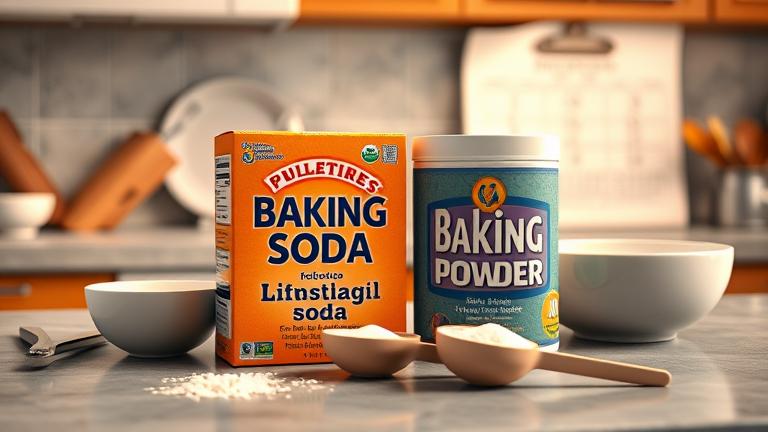
Understanding Baking Soda and Baking Powder
If you’ve ever baked cookies, cakes, or bread, you’ve probably come across baking soda and baking powder. These two common ingredients are key to helping your baked goods rise and become light and fluffy. But what exactly are they, and how do they work? Let’s explore the basics of these leavening agents so you can understand how to use them properly in your recipes.
What Is Baking Soda?
Baking soda is also known as sodium bicarbonate. It’s a simple chemical compound made of sodium, bicarbonate, and a small amount of other elements. When baking soda is mixed with moisture and an acid, like yogurt, vinegar, or lemon juice, it produces carbon dioxide gas. This gas creates tiny bubbles in the dough or batter, making it expand and rise.
Because of its quick action, baking soda is often used in recipes that include acidic ingredients. If you forget to add an acid, or if you use too much baking soda without enough acid, your baked good might turn out flat or have a bitter taste. Always follow the recipe’s instructions to get the right balance.
What Is Baking Powder?
Baking powder is a bit more complex. It contains baking soda along with an acid, usually cream of tartar, and sometimes a stabilizer like cornstarch. This combination means baking powder is designed to produce carbon dioxide in two ways: once when you mix it with wet ingredients, and again when it’s heated in the oven.
Because baking powder already contains the acid, it’s more forgiving than baking soda. It’s ideal for recipes that don’t include acidic ingredients, such as plain cakes or pancakes. There are two types of baking powder: single-acting, which reacts as soon as it’s mixed with liquid, and double-acting, which reacts twice — once when mixed and again during baking.
Key Differences Between Baking Soda and Baking Powder
| Feature | Baking Soda | Baking Powder |
|---|---|---|
| Chemical Composition | Sodium bicarbonate only | |
| Reaction Trigger | Requires an acid and moisture | |
| Uses | Needs acidic ingredients in recipes | |
| Contains acids | No, just baking soda | |
| Reaction | Quick, when mixed with acid | |
| Baking Powder | Contains acid and base, reacts in two stages | |
| Uses | In recipes without added acids | |
| Reaction | Reacts during mixing and baking (double-acting) |
Quick Tips for Using Baking Soda and Baking Powder
- Measure carefully: Too much baking soda or baking powder can cause a bitter taste or unwanted swelling.
- Freshness matters: Old baking powder may lose its effectiveness over time. Test by mixing a teaspoon in hot water; it should bubble vigorously.
- Adjustments: If a recipe calls for baking soda but you only have baking powder, you may need to adjust the quantity or include an acid to activate it.
- Don’t forget the acid: If you’re using baking soda, make sure to include an acid in your recipe for it to work properly.
How Baking Soda Works in Baking
Baking soda, also known as sodium bicarbonate, is a common ingredient in many baked goods. It acts as a leavening agent, helping cakes, muffins, and bread become light and fluffy. But how exactly does it do that? The science behind baking soda’s leavening power is straightforward and fascinating.
The magic happens when baking soda reacts with acids present in the batter or dough. These acids can come from ingredients like yogurt, lemon juice, vinegar, buttermilk, or brown sugar. When baking soda encounters an acid, a chemical reaction occurs that produces carbon dioxide gas. This gas forms tiny bubbles in the mixture, creating the airiness we associate with well-risen baked treats.
The reaction between baking soda and acid is fast. Once the batter hits the oven and heats up, the reaction accelerates, releasing a burst of carbon dioxide. These bubbles expand as the temperature rises, pushing upward on the structure of the baked good. That’s what gives baked goods their rise and fluffy texture.
Without enough acid in the recipe, baking soda won’t react properly. You might end up with a flat, dense result instead of a light crumb. Conversely, too much acid can cause a bitter taste, or the bubbles might form too early and escape before baking. Finding the right balance is key to successful baking with baking soda.
Choosing the right acid source depends on your recipe. For example, buttermilk or yogurt are popular choices in pancakes and waffles. Lemon juice works well in lighter cakes and quick breads. Sometimes, recipes call for vinegar because it reacts quickly and helps with rising.
Here are some practical tips to get the most out of baking soda:
- Use fresh baking soda for best results since it loses potency over time.
- Measure carefully: too much can cause a soapy taste, too little might mean less rise.
- Combine baking soda with the acid just before baking to maximize the reaction.
- Ensure your recipe contains an acid to activate the baking soda; plain flour and sugar alone won’t produce rising.
In summary, baking soda works in baking by reacting with acids to produce carbon dioxide gas. This gas creates bubbles that help your baked goods become light and airy. Understanding this reaction can help you tweak recipes and troubleshoot if your baked treats aren’t rising as expected.
The Role of Baking Powder in Recipes
Baking powder is a common ingredient in baking that helps your baked goods rise and turn out light and fluffy. It is a leavening agent, which means it creates gases that make dough and batter expand during baking. This process gives bread, cakes, and muffins their soft texture and nice height.
So, what exactly is baking powder? It’s a dry mixture made of an acid, usually cream of tartar, and a base, which is typically baking soda. Sometimes, it also contains a little cornstarch to keep everything dry and stable. When you mix baking powder into your batter and then bake, a chemical reaction occurs that releases carbon dioxide bubbles. These bubbles get trapped in the dough, making it puff up and set into a light and tender structure.
It’s important to know how baking powder differs from baking soda because they are not interchangeable. Baking soda is pure sodium bicarbonate, which needs an acid (like lemon juice or buttermilk) in the recipe to produce gas. Baking powder already contains both an acid and a base, so it only needs moisture and heat to activate. This makes baking powder very convenient and reliable for quick recipes.
Most recipes use either single-acting or double-acting baking powder. Single-acting powders release most of their gas as soon as they get wet, so you should bake the batter right away. Double-acting powders release some gas when mixed and the rest when heated, giving a little more flexibility in timing and helping your baked goods rise more evenly.
Here are some practical tips to remember: if your recipe calls for baking powder but you only have baking soda, you’ll need to add an acid to make it work properly. For example, if you’re using baking soda, add a touch of lemon juice or buttermilk to activate it. Also, avoid overusing baking powder, as too much can cause a bitter taste and a coarse, crumbly texture.
Comparison Chart
| Ingredient | Contains | Activation | Use in Recipes |
|---|---|---|---|
| Baking Powder | Acid + Base + Starch | Moisture + Heat | Cakes, muffins, quick breads |
| Baking Soda | Sodium bicarbonate | Acid + Moisture | Cookies, pancakes, recipes with acidic ingredients |
Understanding the role of baking powder helps you get better results in your baking. With this knowledge, you can adjust recipes or troubleshoot when baked goods don’t rise as expected. Remember, the key is knowing when and how to use it for the light, tender treats you want to enjoy.
Key Differences Between the Two Agents
When it comes to baking, understanding the differences between baking soda and baking powder is essential for successful results. Both are leavening agents that help baked goods rise, but they have distinct chemical compositions, uses, and effects on your baking.
Let’s start with their chemical makeup. Baking soda, also known as sodium bicarbonate, is a simple compound. It needs an acid to activate it and produce carbon dioxide, which makes dough and batter expand and become light and fluffy. Common acids used with baking soda include vinegar, lemon juice, buttermilk, or yogurt.
Baking powder, on the other hand, contains both baking soda and an acid, usually cream of tartar or another acid salt. It also often includes a moisture absorber like starch to keep everything stable. Because baking powder already includes the acid, it only needs moisture and heat to activate, making it more convenient for most recipes.
Usage differences
In baking, you’ll notice that baking soda is used in recipes that already include an acid. For example, if you’re making chocolate chip cookies or pancakes with buttermilk, baking soda gives a good rise and helps develop a brown crust. It also reacts quickly, so it’s best to bake your recipe soon after mixing.
Baking powder suits recipes that do not contain additional acidic ingredients. It provides a more controlled rise because it reacts in two stages: once when mixed with wet ingredients and again when exposed to heat. There are two types of baking powder: single-acting (reacts once with moisture) and double-acting (reacts twice—once with moisture and once with heat). Most store-bought baking powders are double-acting, providing more leeway in your baking process.
How they affect baking outcomes
Baking soda, when activated, produces a quick release of carbon dioxide gas. This results in a rapid rise, which is great for tender cookies and light cakes. However, if you forget the acid or use too much baking soda, your baked goods may taste bitter or metallic, and they might not rise properly.
Baking powder produces a more gradual rise, creating a softer, more uniform texture. It’s ideal for recipes that require a balanced, gentle lift, like sponge cakes or muffins. Because it contains acid and baking soda, using too much can cause a soapy taste or over-expansion, leading to a collapsed or dense baked good.
Practical tips
- Always measure carefully. Too much baking soda can leave a bitter taste, while too much baking powder can cause a soapy flavor.
- If a recipe calls for baking soda but you only have baking powder, you might need to adjust the amount—generally, use three times more baking powder than baking soda.
- Freshness matters. Both baking soda and baking powder lose their potency over time, so check expiration dates and test for activity if unsure.
- To test baking soda, add a small amount to vinegar. If it bubbles vigorously, it’s still active. For baking powder, drop a teaspoon into hot water; if it bubbles, it’s good to use.
- Combine ingredients properly and don’t overmix. Overmixing can develop gluten in flour, making baked goods dense even with leavening agents.
Understanding these key differences helps you choose the right leavening agent and troubleshoot when a recipe doesn’t turn out quite right. With practice, you’ll recognize when each agent is appropriate and how to get the best rise in your baked creations.
Common Questions and Myths Explored
Many home cooks often wonder about the differences between baking soda and baking powder, and there are plenty of myths floating around. Understanding these common questions can help you bake with confidence and avoid mistakes in your recipes. Let’s clear up some confusion and explore the truths behind these two popular leavening agents.
What is the main difference between baking soda and baking powder?
Baking soda is pure sodium bicarbonate. It needs an acid, like lemon juice or vinegar, to activate and create carbon dioxide, which helps baked goods rise. Baking powder contains baking soda plus an acid and a drying agent, usually starch. It’s designed to produce leavening without additional acids, making it more convenient in recipes without acidic ingredients.
Can I substitute baking soda for baking powder?
Not directly. Because baking soda is much stronger, using it in place of baking powder can cause your baked goods to taste bitter or metallic if not adjusted properly. If you need to substitute, use about 1/4 teaspoon of baking soda for 1 teaspoon of baking powder, and add an acid to your recipe to activate it. Keep in mind that this can affect the flavor and texture.
Myth: Baking soda and baking powder are interchangeable.
False. They serve different purposes and are not interchangeable without adjustments. Using one instead of the other can result in flat or overshifted baked goods. Always use the specified leavening agent in your recipe.
Why do some recipes call for both baking soda and baking powder?
This is common when recipes contain acidic ingredients like brown sugar, buttermilk, or yogurt. Baking soda reacts quickly to provide immediate lift, while baking powder ensures continued rise during baking. Using both balances the leavening and improves texture.
Are there any health concerns with baking soda or baking powder?
Used in typical baking amounts, both are safe for most people. However, excessive consumption can cause stomach upset or electrolyte imbalances. People with certain health issues, like high blood pressure, should monitor their intake since baking soda contains high levels of sodium.
How should I store baking soda and baking powder?
Keep both in airtight containers, in a cool, dry place away from moisture and strong odors. Moisture can cause them to lose their leavening power, so always ensure the lids are tightly closed after use.
How can I tell if my baking soda or baking powder have gone bad?
Test baking soda by mixing a small amount with vinegar. If it bubbles strongly, it’s still active. For baking powder, add a teaspoon to hot water—if it bubbles, it’s good. If nothing happens, it’s time to replace them for best results.
- Use fresh ingredients for best leavening.
- Measure carefully to avoid chemical taste or flat results.
- Follow recipe instructions closely for optimal texture and rise.
Substitutes for Baking Soda and Powder
If you’re out of baking soda or baking powder, don’t worry! There are plenty of alternatives that can help your baked goods rise just as beautifully. Knowing how to replace these leavening agents can save your recipe and keep your baking on track.
Baking soda and baking powder are common leavening agents, but they work differently. Baking soda is a pure chemical (sodium bicarbonate) that reacts with acids to produce carbon dioxide, which makes dough and batter rise. Baking powder contains baking soda along with an acid and a drying agent, so it only needs moisture and heat to activate. Substituting them requires understanding their roles in your recipe.
Using Baking Soda Substitutes
If you don’t have baking soda, you can use alternatives, but remember that they may also contain acids or bases that influence the flavor and texture. Here are some options:
- Self-Rising Flour: This flour has baking powder and salt added. Replace the flour called for in your recipe with self-rising flour, and omit any added salt or baking powder.
- Baking Powder: You can replace baking soda with baking powder, but since baking powder is less potent, you need about three times more baking powder than baking soda. For example, if the recipe calls for 1 teaspoon of baking soda, use 3 teaspoons of baking powder—but reduce or omit other acids in the recipe.
- Potassium Bicarbonate: A good low-sodium alternative. Use the same amount as baking soda, but note it may add a slight saltiness.
- Whipped Egg Whites: Beaten egg whites can trap air and provide leavening in some recipes like pancakes or sponge cakes. Fold in stiffly beaten egg whites at the end of mixing.
Replacing Baking Powder
Baking powder can be replaced by various mixtures, usually involving an acid and a base to generate the necessary carbon dioxide. Some options include:
- Option 1: Cream of Tartar and Baking Soda: For one teaspoon of baking powder, mix ¼ teaspoon of baking soda with ½ teaspoon of cream of tartar. This creates a homemade baking powder substitute.
- Option 2: Buttermilk or Yogurt + Baking Soda: Use ½ cup of buttermilk or yogurt plus ¼ teaspoon of baking soda to replace 1 teaspoon of baking powder. Adjust other liquids in the recipe accordingly.
- Option 3: Lemon Juice or Vinegar + Baking Soda: Mix ¼ teaspoon of baking soda with ½ teaspoon of lemon juice or vinegar to mimic the action of baking powder. Use immediately after mixing to ensure activation.
Tips for Successful Substitution
- Always consider the acids in your recipe. If you’re adding baking soda, include an acid like buttermilk, yogurt, lemon juice, or vinegar to activate it.
- When using baking powder substitutes, remember that the rise might be slightly different. Test small batches if unsure.
- Don’t overuse baking soda or baking powder. Excess can cause a bitter taste or a soapy flavor.
- Keep in mind that substituting can affect texture and color. For example, using egg whites for leavening makes baked goods lighter.
- Store homemade substitutes in airtight containers and label them clearly.
Common Mistakes to Avoid
- Using too much baking soda or baking powder, which can lead to a bitter flavor.
- Forget to adjust other ingredients like liquids or acids.
- Substituting without considering the recipe’s acidity, which can prevent proper rising.
- Not mixing your substitutes thoroughly, causing uneven rising.
Knowing how to replace baking soda and baking powder gives you flexibility in the kitchen. With these tips, you can keep baking even when you’re short on supplies and still create delicious, fluffy treats.
Tips for Perfect Baking Results
Getting your baked goods just right often depends on how you use leavening agents like baking soda and baking powder. These ingredients help your baked items rise and become light and fluffy. Using them correctly can make a big difference in your baking success.
First, it’s important to understand the difference between baking soda and baking powder. Baking soda is a pure chemical that reacts quickly when it contacts moisture and an acidic ingredient, like yogurt or lemon juice. Baking powder contains baking soda plus an acid and a stabilizer, so it releases carbon dioxide twice—once when it gets wet and again when heated.
Always measure your leavening agents carefully. Too much baking soda or powder can cause a bitter flavor and a coarse texture. Use measuring spoons for accuracy, and level them off with a knife. For best results, sift these ingredients with your flour to ensure even distribution throughout your batter or dough.
Freshness matters a lot. Old baking soda and baking powder lose their potency over time. To check if your baking powder is still active, drop a teaspoon into hot water; if it bubbles vigorously, it’s good to go. For baking soda, mix a small amount with vinegar; it should fizz strongly. Replace expired leavening agents for consistently good rises.
When incorporating baking soda or baking powder into your recipe, add them at the right stage. Usually, they are mixed with dry ingredients first, then combined with wet ingredients. This helps ensure an even rise and prevents clumping, which can cause uneven texture or flavor spots.
Be mindful of your oven temperature and baking time. Many recipes require a preheated oven, often at 350°F (180°C), to activate the leavening properly. Baking at too low a temperature might cause your baked goods to rise slowly or not at all, while too high can lead to a burnt crust before the inside is cooked.
Another tip is to avoid overmixing once you’ve added your leavening agents. Overmixing can develop gluten, resulting in a dense or chewy texture instead of a light, airy one. Mix just until ingredients are combined, and no streaks of flour remain.
- Use fresh, properly measured ingredients for the best rise.
- Sift baking soda and powder with dry ingredients for even distribution.
- Follow recipe instructions carefully, especially amounts and baking temperature.
- Always preheat your oven before baking to activate the leavening agents at the right temperature.
- Avoid overmixing to keep your baked goods tender and fluffy.
By paying attention to these details, you’ll improve your baking results significantly. Your cakes will be taller, muffins lighter, and cookies fluffier, all because of simple but crucial adjustments when using baking soda and baking powder properly.