
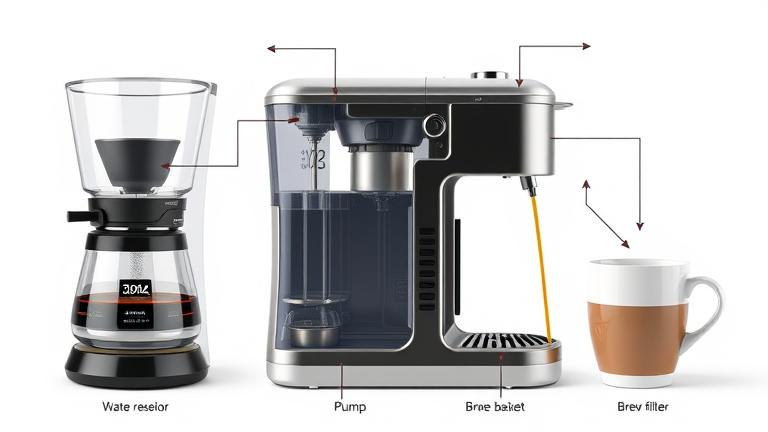
Overview of Coffee Makers
Coffee makers are popular appliances that help us brew our favorite morning drink easily and quickly. From simple drip machines to advanced espresso makers, they have become a staple in many kitchens around the world. Understanding how they work and their history can help you choose the right one for your needs.
The story of coffee makers begins in the 19th century, when inventors started creating devices to automate brewing coffee. The earliest models were simple and manual, like percolators and French presses. Over time, technological advances led to electric drip coffee makers, which became widely popular in homes and offices. Today, there are many types designed to suit different tastes, budgets, and lifestyles.
Today’s coffee makers play a significant role in daily life. They save time in the morning rush, ensure a fresh cup every time, and can even help you experiment with different brewing styles. Whether you prefer a quick brew with a basic machine or a gourmet experience with a high-end espresso machine, there is a coffee maker that fits your routine.
Understanding the main features of coffee makers can make your decision easier. For example, some machines are simple and straightforward, perfect for beginners. Others come with special features like built-in grinders, timers, or milk frothers for creating lattes and cappuccinos at home. Additionally, different brewing methods offer variations in flavor, strength, and aroma, adding variety to your daily cup.
Choosing the right coffee maker depends on several factors. Think about how much coffee you usually drink, your budget, and how involved you want to be in the brewing process. If you enjoy experimenting, a machine with adjustable settings might be best. If you want quick, hassle-free coffee, a basic drip machine or single-serve device could be ideal.
Most importantly, caring for your coffee maker is key to ensuring it lasts a long time and brews great coffee each time. Regular cleaning, descaling to remove mineral buildup, and using quality water can make a big difference in taste and machine performance.
- Get familiar with different types of coffee makers to find what suits your style.
- Maintain your machine by cleaning it routinely to keep your coffee fresh and flavorful.
- Experiment with brewing methods to discover new flavors and customize your drink.
- Read the user manual carefully to understand specific features and safety tips.
In summary, coffee makers are versatile appliances that have evolved over centuries. They make brewing coffee at home convenient, enjoyable, and tailored to your preferences. Whether you’re just starting out or a seasoned coffee enthusiast, understanding the basics will help you make the most of your brewing experience.
How Brewing Happens Inside a Coffee Maker
When you press the brew button on your coffee maker, a fascinating process begins inside. The machine works by heating water and then guiding it through coffee grounds to extract their rich flavors. Understanding this process can help you make better coffee and troubleshoot any issues that arise.
The first step is heating the water. Most coffee makers have a heating element, which is usually a metal coil or plate located at the bottom of the machine. When you turn it on, electricity flows through this element, causing it to warm up. This heat transfers to the water in the reservoir, quickly raising its temperature to the optimal range between 195 and 205 degrees Fahrenheit. This temperature is ideal because it extracts the full flavor from the coffee grounds without making the brew bitter or harsh.
While the water heats, the machine prepares to move it through the coffee grounds. In drip coffee makers, water is stored in a reservoir at the top. When the machine is turned on, a pump or gravity pulls the hot water down through a tube or spray head. This spray distributes the hot water evenly over the coffee grounds in a filter basket or cone. If you’re using a single-serve machine, the process is similar, just scaled down for smaller quantities.
The water then filters through the coffee grounds, which are held in a paper, metal, or reusable filter. This step is called extraction. During extraction, hot water dissolves the soluble compounds in the grounds, including flavors, oils, and caffeine. The contact time between water and coffee is important: too short, and the brew will be weak; too long, and it may become over-extracted and bitter.
As water flows through the coffee grounds, it creates a bed of soaked coffee, gradually picking up their flavors. The brewed coffee then drips into a carafe, pot, or cup below. Many coffee makers have a warming plate that keeps the brewed coffee warm until you’re ready to pour. This plate uses a gentle heat to maintain temperature but should be used carefully to prevent burning or over-drying the coffee.
- Good water temperature ensures proper extraction.
- Even distribution of hot water over grounds helps maximize flavor.
- Timing of water contact influences brew strength and flavor.
- Using fresh coffee grounds improves aroma and taste.
In all, the process inside a coffee maker combines heat and flow mechanics to transform plain water and coffee grounds into a delicious brew. Knowing how these steps work can help you better understand your machine and improve your coffee-making skills.
Different Types of Coffee Machines Explained
If you love coffee, choosing the right machine can make a big difference in flavor and convenience. There are several popular types of coffee makers, each with their own features and benefits. Knowing the differences can help you pick the best one for your daily brew.
Drip Coffee Makers
Drip coffee makers are probably the most common type in many homes and offices. They work by heating water and slowly dripping it over ground coffee contained in a filter. The brewed coffee then drips into a pot below.
These machines are easy to use and great for making multiple cups at once. They are perfect if you want a simple, consistent cup every morning. Some models come with programmable timers so you can wake up to fresh coffee.
- Pros: Affordable, simple, can make large quantities
- Cons: Takes a bit longer to brew, less customization
Espresso Machines
If you love strong, concentrated coffee, an espresso machine might be your best friend. These machines pump hot water under high pressure through finely ground coffee to produce a rich and bold shot.
Espresso machines come in various styles, from manual to fully automatic. They are ideal for making espresso-based drinks like lattes and cappuccinos. Keep in mind that they can be more expensive and take some practice to master.
- Pros: Great for coffee connoisseurs, produces powerful espresso
- Cons: More costly, learning curve involved
French Press
The French press is a simple, manual way to make flavorful coffee. It uses a plunger and a mesh filter to steep coarsely ground coffee directly in hot water. After a few minutes, you press down the plunger to separate the grounds from the liquid.
This method produces a full-bodied coffee with rich flavor and oils. It is popular for its ease, affordability, and the ability to control brewing time. Plus, it requires no electricity—just hot water and patience.
- Pros: Affordable, flavorful coffee, portable
- Cons: Takes a few minutes, can be messy if not careful
Single-Serve Machines
Single-serve coffee makers are designed for quick, one-cup brewing. They use pre-packaged pods or capsules filled with ground coffee, making it easy to brew a fresh cup in minutes.
These machines are perfect for busy mornings or if you prefer different coffee flavors regularly. They are compact and user-friendly, with minimal cleanup. Just pop in a pod, press a button, and enjoy.
- Pros: Very quick, no fuss, lot of flavor options
- Cons: Can be more expensive per cup, waste from capsules
Choosing the Right Coffee Machine
When selecting a coffee maker, think about how much coffee you drink daily, your taste preferences, and your budget. Drip machines are great for making many cups at once, while espresso machines suit those who love strong coffee or espresso drinks.
If you value flavor and simplicity, the French press could be perfect. For quick, individual cups, single-serve machines are very handy. Each type has its own charm, so pick what fits your routine best!
Tips for Maintaining Your Coffee Maker
Taking good care of your coffee maker is key to making great coffee every day. Regular cleaning and maintenance help prevent buildup, extend the life of your machine, and ensure your coffee tastes fresh and delicious. Whether you use a drip brewer, a single-serve machine, or a French press, these tips will help you keep your coffee maker in top shape.
1. Clean Your Coffee Maker Regularly
Dirty coffee makers can develop mold, bacteria, and mineral deposits that affect flavor and performance. It’s best to clean your machine at least once a month, or more often if you use it daily. Start by removing any used coffee grounds and emptying the drip tray if your machine has one.
For thorough cleaning, use warm water and mild dish soap. Wipe down all accessible parts with a soft cloth or sponge. Be careful not to submerge electrical parts. If your machine has a removable filter basket, wash it well to remove oil and coffee residue.
2. Descale Your Coffee Maker
Over time, mineral deposits from water can clog your coffee maker’s internal components. This process is called descaling. To do this, use a mixture of equal parts water and white vinegar. Fill the water reservoir with the mixture and run a brewing cycle without coffee grounds.
After the cycle finishes, turn off the machine and let it sit for about 15 minutes. Then, run two or three more brewing cycles with fresh water to rinse out any vinegar taste. For machines with a descaling indicator, follow the manufacturer’s instructions for descaling frequency.
3. Keep the Water Fresh and Clean
Using fresh, clean water makes a big difference in your coffee’s flavor. Always fill your machine with cold water and avoid reusing water that’s been sitting out for a long time. If your water supply has a lot of minerals, consider using filtered or bottled water to extend the life of your machine.
4. Check and Replace Parts When Needed
Some parts like filters, seals, and gaskets wear out over time. Check your user manual for recommended replacement intervals. Changing these parts on time can prevent leaks and poor performance. Keep a set of spare filters and seals handy so you can swap them out as needed.
5. Store Your Coffee Maker Properly
If you aren’t going to use your coffee maker for a while, clean it thoroughly first. Store it in a dry place, away from dust and moisture. Leave the lid open slightly to prevent mold growth inside. A little regular attention can keep it fresh and ready for your next cup.
- Regular cleaning prevents buildup and improves coffee taste.
- Descaling is essential to keep internal parts working smoothly.
- Using quality water reduces mineral deposits and extends your machine’s life.
- Replacing worn parts on schedule avoids problems and keeps your machine running well.
Benefits of Using a Coffee Maker
Owning a coffee maker can make your mornings easier and more enjoyable. If you love having a fresh cup of coffee, a good coffee machine is a practical kitchen gadget to consider. It offers several benefits that can improve your daily routine and coffee experience.
One main advantage is convenience. With a coffee maker at home, you don’t have to visit a cafe or wait in line to get your favorite brew. Instead, you can prepare your coffee quickly and with minimal effort. Many machines let you set a timer the night before, so your coffee is ready when you wake up. This feature saves you time and helps you start your day smoothly.
Another benefit is consistent quality. Commercial cafes often use high-end equipment, but good home coffee makers can also produce rich, flavorful coffee. They allow you to control brewing conditions like water temperature and strength. This means you can customize your coffee to match your taste perfectly. Over time, you’ll learn what settings give you the best flavor, making every cup just right.
Using a coffee maker also saves you money. Frequent trips to coffee shops can add up quickly. By brewing your own, you enjoy your favorite drinks at a fraction of the cost. Plus, there are many affordable machines on the market that work well for home use. If you drink coffee regularly, investing in a machine can be a smart financial choice.
Time-saving is another major benefit. Modern coffee makers can brew a single cup or a full pot in minutes. This is great for busy mornings when you’re rushing out the door. Instead of waiting for your coffee to be made manually or boiling water on the stove, a machine handles it quickly. Some models even include features like built-in grinders or milk frothers, giving you café-style drinks right at home.
Environmental impact is worth mentioning too. Many coffee makers are designed to be energy-efficient or use less water. Reusable filters reduce waste compared to disposable paper filters. Making coffee at home also cuts down on single-use containers from coffee shops, helping the environment in small but meaningful ways.
Finally, owning a coffee maker can encourage better coffee habits. When you brew at home, it’s easier to try new types or blends of coffee. You can experiment with different beans, roasts, or brewing methods. This makes the process more enjoyable and helps you discover new favorites. Plus, it’s satisfying to start your day with a brew you’ve made yourself.
- Easy to use and set up
- Allows personalized brewing preferences
- Provides a cost-effective coffee option over time
- Saves time during busy mornings
- Supports eco-friendly practices
- Encourages exploring different coffee styles
Customizing Your Perfect Coffee Cup
Making your ideal cup of coffee starts with understanding how to adjust the key factors like strength, temperature, and add-ins. Personalizing these elements helps you enjoy each sip exactly how you like it. Whether you prefer a bold brew or a lightly flavored cup, fine-tuning your coffee can turn an average morning into a special moment.
Adjusting Coffee Strength
The strength of your coffee depends mainly on the coffee-to-water ratio and brewing time. If you like a stronger cup, use more coffee grounds relative to water. For example, a standard ratio is about two tablespoons of coffee per six ounces of water, but you can increase this for a bolder taste.
If your coffee comes out too weak, try increasing the coffee amount or brewing it longer if your method allows. Conversely, for a lighter taste, use less coffee or shorten the brew time. Keep in mind that different brewing methods, like French press or drip, can influence how strong the coffee tastes even with the same ratio.
- Tip: Start with a standard ratio and experiment gradually—small changes can make a big difference.
- Avoid: Overloading your coffee maker with coffee grounds, which can lead to bitterness.
Controlling Temperature
The optimal drinking temperature for coffee is around 135°F to 150°F. If your coffee cools too quickly or is too hot to enjoy, adjusting the temperature is key. When brewing, most coffee makers have a temperature setting or keep-warm function. Use the highest safe temperature setting to ensure a hot cup or lower it if you prefer a milder heat.
To keep your coffee warm longer, consider pouring it into a pre-heated mug or using a thermal mug with insulation. Just be cautious not to reheat coffee multiple times, as it can lose flavor and develop a burnt taste.
- Tip: Use a thermometer if you want precise control during brewing or reheating.
- Warning: Reheating coffee in the microwave can unevenly heat it, affecting flavor.
Adding Flavors and Extras
Enhancing your coffee with add-ins is a fun way to customize each cup. Popular options include milk, cream, sugar, spices, or flavored syrups. For a creamy texture, add a splash of milk or a dollop of whipped cream. If you like a sweeter taste, adjust the sugar or try flavored syrups like vanilla or caramel.
Spices like cinnamon, nutmeg, or cardamom can add warmth and depth. For a healthier twist, try a drizzle of honey or a dash of cocoa powder. To get even more creative, experiment with extracts such as almond or coconut.
- Tip: Add flavorings gradually, tasting as you go to avoid overpowering your coffee.
- Note: Keep in mind that some add-ins, like certain syrups or creams, contain extra calories and sugar.
Practical Tips for Personalizing
Track your preferences by keeping a small journal or making notes on the ratios and add-ins you enjoy most. This helps you replicate the perfect cup every time. Also, consider investing in tools like a milk frother or a temperature-controlled kettle for more precise customization.
Remember, the best part of customizing your coffee is exploring what makes it just right for you. Don’t be afraid to experiment and adjust until every sip feels like it was crafted just for you.
Common Troubleshooting Tips
If your coffee maker isn’t working perfectly, don’t worry. Many common issues can be fixed easily with a few simple steps. Whether your brew is weak, leaking, or the machine won’t turn on, these tips can help you get your favorite coffee back on track.
First, consider the problem of poor brewing. This often happens if the machine isn’t cleaning itself regularly. Mineral deposits from hard water can build up inside the machine, affecting flavor and performance. To fix this, run a descaling cycle using a mixture of equal parts water and white vinegar. Repeat this process once a month if you use tap water often. Also, check the coffee grounds—using too much or too little can affect the strength. For a richer brew, use the correct coffee-to-water ratio (usually about 1 to 2 tablespoons per 6 ounces of water). Clean the filter basket regularly to prevent clogs.
If your coffee maker is leaking, the problem could be a worn-out seal or a loose part. Inspect the water reservoir and the lid—if they don’t sit tightly, water can escape during brewing. Tighten any loose fittings or replace damaged seals. Sometimes, buildup of old coffee grounds or mineral deposits blocks the drainage. Remove and clean the filter basket, and run hot water through any tubes or spouts. Remember to check the machine’s drip tray—if it’s full or misaligned, leaks can occur. Keeping the machine dry and clean helps prevent leaks from happening again.
Hardware malfunctions, like the machine not turning on or stopping mid-brew, can be frustrating. First, make sure it’s plugged in securely. Next, check the power switch and circuit breaker. Sometimes, a blown fuse or a tripped breaker can be the cause. If everything seems fine, unplug the machine and wait a few minutes before plugging it back in. This resets the electronics. Examine the power cord for any damage—if it looks worn or frayed, it’s time to replace it for safety reasons. If your coffee maker has a removable water reservoir, make sure it’s seated properly—an incorrectly placed reservoir can cause the machine to stop working.
Tips to Prevent Common Problems
- Use filtered or bottled water for better flavor and to reduce mineral buildup.
- Schedule regular cleaning to keep the machine in top shape.
- Be gentle when cleaning parts—avoid harsh abrasives that can scratch surfaces.
- Always follow the manufacturer’s instructions for maintenance and use.
If problems persist despite these steps, consult your coffee maker’s user manual or contact customer support. Often, small adjustments or replacements can restore your machine’s performance. With a little attention and routine care, your coffee maker can serve up delicious brews for many mornings to come.