
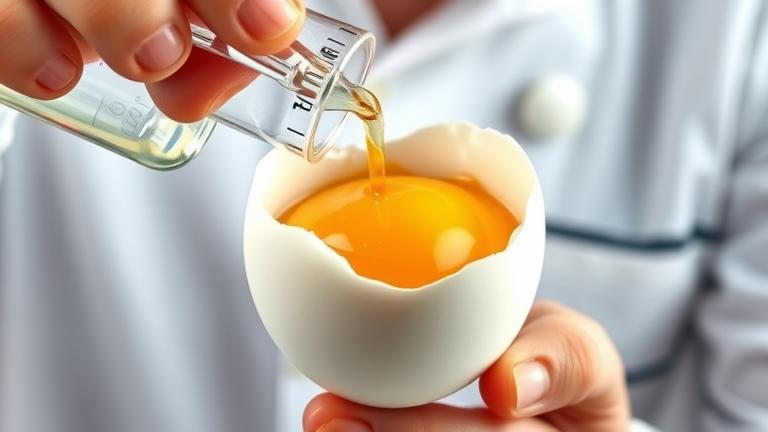
The Science Behind Unboiling Eggs
Unboiling eggs might sound like magic, but it’s actually based on interesting scientific principles. The key to understanding this process lies in proteins, the building blocks of egg whites. When eggs are cooked, the heat causes these proteins to change shape in a process called denaturation. This makes the egg whites firm and opaque.
Denaturation occurs because heat breaks the weak bonds that hold protein molecules in their natural shape. As a result, the proteins unfold and form new bonds with each other, creating a solid mass. This is why cooked egg whites turn from clear and runny to white and firm.
What makes unboiling possible is the process of reverse protein folding, called renaturation. Under special conditions, it’s possible to coax the proteins back into their original shape. Scientists find that by carefully controlling temperature, pH, and adding specific chemicals, they can encourage proteins to unfold and then fold back correctly. This allows the egg white to go from cooked back to a more raw-like state.
How Does It Work?
- First, the egg white proteins are denatured when heated, causing the change in texture and appearance.
- Then, through a process called reversible denaturation, the proteins are coaxed back into their original shape.
- This is done by using special methods like applying chemicals or adjusting temperature in a controlled way.
The science behind this is similar to what happens in certain laboratory techniques. One example is using compounds that stabilize protein structures or break the bonds that hold them unfolded during cooking. When the conditions are right, these proteins renature, effectively ‘unboiling’ the egg whites.
Practical Applications and Limitations
Scientists are experimenting with this technology for food safety, waste reduction, and even in medicine. For instance, it could help in recycling protein-rich waste or improving the quality of processed foods.
However, unboiling eggs isn’t a simple kitchen trick yet. It requires precise control of conditions and often involves chemicals that aren’t suitable for home use. Currently, it remains mostly a scientific breakthrough rather than a common cooking method.
Nevertheless, understanding the science gives us a deeper appreciation for how versatile proteins are. It also highlights how advances in biochemistry might one day change the way we cook and eat food. For now, the ability to unboil eggs remains fascinating — a glimpse into how chemistry can challenge what we think is possible in the kitchen.
Egg Proteins and Their Properties
Egg proteins are an important part of what makes eggs both nutritious and versatile in cooking. These proteins are complex molecules made up of long chains of amino acids. In their natural state, egg whites contain mainly water and proteins that are tightly packed and organized.
Understanding how these proteins behave can help you get better results when cooking eggs or experimenting with techniques like unboiling. In raw eggs, the proteins are in a delicate, folded shape, similar to a folded-up paperclip. This shape keeps them stable and keeps the egg white clear and runny.
When you start cooking an egg, the heat causes these protein chains to unfold—a process called denaturation. Once unfolded, the proteins can bond to each other, forming a network that turns the egg white cloudy and firm. This explains why cooked eggs have a different texture than raw ones.
How Egg Proteins Change When Cooked
- Heat causes proteins to unfold: When you apply heat, the proteins lose their folded shape. This process begins at around 140°F (60°C). As the temperature rises, more proteins unfold.
- Proteins form new bonds: Once unfolded, the proteins start bonding together through a process called coagulation. This creates a solid or semi-solid network, which is why cooked eggs are firm.
- Texture changes: The transition from clear, runny whites to opaque, firm whites is due to these bonds forming. Overcooking can lead to a rubbery texture because the proteins get too tightly packed, squeezing out moisture.
Factors That Affect Protein Behavior
Besides heat, other factors influence how egg proteins behave:
- pH level: Adding acid (like vinegar or lemon juice) or alkaline substances (like baking soda) can change how proteins coagulate. For example, acid can make eggs more tender by delaying protein bonding.
- Cooking time and temperature: Gentle, slow cooking leads to tender textures, while high heat or rapid cooking can cause tough, rubbery eggs. That’s why soft-boiled eggs are different from hard-boiled eggs, even if they cook for the same amount of time.
- Agitation: Stirring or whisking introduces air and can affect how proteins unfold and bond, leading to fluffy scrambled eggs or meringues.
Uncooking Eggs: The Science of Reversal
What’s fascinating is that under certain conditions, it’s possible to reverse some of these changes, a process called uncoiling or even unboiling. This involves carefully manipulating temperature and other factors to undo protein bonds. While fully uncoiling an egg is complex, scientists have made progress in understanding how to partially reverse protein denaturation.
It’s a promising area for food innovation and understanding how proteins behave under different conditions. In summary, egg proteins are dynamic molecules that change form when heated. Recognizing how these changes occur helps you control texture, flavor, and even experiment with unique culinary techniques. From raw to cooked, understanding protein structure is key to mastering eggs in the kitchen.
Methods to Reverse Cooked Eggs
Reversing cooked eggs might sound like a magic trick, but with the right techniques, it’s possible to undo some of the cooking process. While you can’t fully turn a hard-boiled egg back into a raw one, there are methods to repair or improve eggs that have been overcooked or improperly cooked.
In this section, we’ll explore practical approaches that home cooks have tried to reverse or mitigate overcooked eggs and how to work with eggs that didn’t turn out as planned.
Cooling and Shocking the Eggs
The first step in reversing or stopping the cooking process is immediately cooling the eggs after cooking. When eggs are overcooked, residual heat continues to cook them even after removal from boiling water. To prevent this, drop the eggs into an ice bath, a bowl filled with cold water and ice cubes.
This rapid cooling stops the cooking process instantly, preserving their current state and preventing further overcooking. It also makes peeling easier if you’re preparing hard-boiled eggs. For eggs that are partially cooked, cooling can sometimes help regain some of their original texture, especially if you catch them early enough.
Peeling and Reworking Eggs
Once eggs are cooked, peeling them and then gently heating the peeled egg can sometimes improve texture. For instance, overcooked scrambled eggs become rubbery, but reheating them softly in a low-temperature skillet with a bit of butter can soften their texture. This isn’t exactly reversing the cook, but it can make eggs more palatable.
Similarly, if you find your hard-boiled eggs overcooked with a greenish yolk, peeling and slicing them for salads can still make delicious dishes, even if their appearance isn’t perfect. The key is to handle overcooked eggs gently and rework them into dishes where appearance matters less than flavor and texture.
Rehydrating overcooked eggs
For dishes like scrambled eggs that are dried out from overcooking, adding a splash of milk or cream and gently reheating can restore some moisture. This method is especially effective if you plan to serve eggs as part of a dish like scrambled eggs or frittata.
Be careful to cook them gently and avoid high heat, which can make overly cooked eggs turn rubbery. Stirring constantly during reheating helps distribute the heat evenly and prevents further overcooking.
Experimenting with Egg Extraction or Separation
Some cooks have tried breaking eggs open and removing the cooked parts, especially in recipes like quiches or casseroles. Once the eggs are cooked, you can separate the fluffy whites from the yolks and decide whether to incorporate them into other recipes or serve them separately. This approach can help salvage part of the egg that hasn’t overcooked.
Practical Tips and Cautions
- Always use an ice bath immediately after cooking to prevent carryover heat from overcooking eggs further.
- If eggs are overcooked, peeling and reworking them into other recipes is often the best way to salvage them.
- Gentle reheating with added liquids can improve the texture of dried-out scrambled eggs.
- Remember, full reversal of cooking is impossible, but these techniques can help you make the best of a less-than-perfect situation.
While you can’t turn a fully cooked egg back into raw, these methods can help you minimize damage, improve texture, and even turn overcooked eggs into tasty new dishes. Practice makes perfect, so don’t be discouraged if your first attempts don’t go perfectly. With patience and a little creativity, you’ll learn how to rescue eggs that didn’t cook quite as planned.
Experimental Research on Unboiling Eggs
Have you ever wondered if it’s really possible to unboil an egg? Scientists have taken on this curious challenge, conducting experiments to reverse the cooking process and see if raw egg whites can be restored after being boiled. While it might sound like magic, research into unboiling eggs has provided some fascinating insights into the science of proteins and how they react under heat.
One of the most well-known studies on unboiling eggs was conducted by researchers who used a technique involving high-powered ultrasound waves. The aim was to break apart the protein structures that form when eggs cook. To do this, they took boiled egg whites and subjected them to intense ultrasonic waves. This method created vibrations that disrupted the protein chains, causing them to partially revert back to a more raw, uncoiled form. However, this process is complex and not practical for home cooking, but it proved that proteins can, under certain conditions, be partially reversible.
Scientists also experimented with chemical solutions, trying to dissolve or reshape the proteins. In one notable study, researchers added chemicals to boiled eggs to see if they could undo the denaturation—that is, the change that happens when proteins are cooked. While these methods showed some promise in a lab setting, they required special chemicals and equipment that are far from kitchen-friendly. The takeaway is that the proteins in eggs can be manipulated to some extent, but completely unboiling an egg is still beyond everyday cooking techniques.
Many experiments focus on understanding the nature of proteins. They analyze how heat causes proteins to unfold and stick together, forming the solid structure we see as cooked egg. Through microscopy and other advanced tools, scientists observed that the proteins don’t actually go back to their original state easily. Instead, they settle into new, stable arrangements once cooked. Some recent research explored using enzymes that can reverse protein denaturation, but these are still in experimental phases and aren’t available for culinary use.
What do these experiments mean for home cooks? While the idea of unboiling an egg isn’t currently feasible in your kitchen, understanding the science helps explain why cooked eggs are mostly permanent. They also highlight how proteins behave under heat and why certain cooking methods, like gentle poaching or slow cooking, can give you more control over texture. For now, the best approach remains to cook eggs you want to eat, rather than trying to reverse the process.
In summary, experimental research on unboiling eggs has shown that, under laboratory conditions, it’s possible to partially reverse protein denaturation using ultrasound and chemical methods. But these techniques require specialized tools and aren’t practical for everyday use. Still, these studies help us appreciate the complex science behind cooking and inspire future innovations in food technology.
Safety and Ethical Aspects
When considering the idea of unboiling eggs, whether at home or in a lab, safety should always come first. Attempting to reverse the cooking process or manipulate raw eggs involves certain risks that you should be aware of. It is essential to understand both the safety considerations and the ethical implications involved in such experiments.
Safety Considerations
Unboiling eggs is a complex scientific process that involves working with raw eggs and possibly chemical solutions. Handling raw eggs can pose a risk of bacterial contamination, especially with Salmonella. Always wash your hands thoroughly before and after handling eggs, and avoid cross-contamination with other foods.
If performing this at home, use clean utensils and work on a sanitized surface. Wear gloves if possible to minimize contact with raw eggs and chemicals. If you are using chemical agents, such as proteins or enzymes, to facilitate uncoiling, follow all safety instructions provided by the manufacturer. Never mix chemicals unless you are fully aware of their reactions and potential hazards.
Working with temperature-sensitive processes requires caution. Ensure your workspace is well-ventilated if you are heating or cooling solutions. Avoid inhaling fumes and keep children and pets away from the workspace for safety reasons.
Laboratory vs Home Setting
In a lab, scientists usually use controlled environments and equipment like centrifuges and precise temperature controls. These settings are safer and more suitable for such experiments. At home, attempting to unboil eggs is more of a demonstration or science project and comes with more risks.
For home experiments, it is best to focus on basic safety and avoid using harmful chemicals or extreme temperatures. Remember that some methods, especially those involving complex chemical reactions, may not be safe outside professional laboratories. If in doubt, consult scientific resources or professionals before proceeding.
Ethical Implications
The idea of unboiling eggs raises interesting ethical questions about scientific experimentation. Most home cooks see eggs as food, and manipulating them might seem more like a curiosity than an ethical issue. However, in a laboratory setting, ethics involve proper handling of biological materials and chemicals.
Consider whether your experiment involves the use of resources that could be better spent or if it produces waste that needs responsible disposal. For example, chemical solutions used in some unboiling techniques might be hazardous to the environment if not disposed of properly. Always follow recommended disposal procedures for chemicals and biological waste.
Further, if you are experimenting in an educational context, ensure that your activities are safe, responsible, and compliant with any institutional or legal guidelines. Remember that ethical science includes honesty in reporting results and respect for safety protocols.
Tips for a Safe and Ethical Approach
- Always do thorough research before attempting complex experiments involving eggs or chemicals.
- Stick to simple methods that do not require dangerous chemicals or extreme temperatures.
- Work in a clean, well-ventilated space and use proper safety gear.
- Dispose of all materials responsibly, following local regulations.
- Be honest and clear about the limits of what you are trying to achieve.
By prioritizing safety and adhering to ethical principles, you can enjoy the scientific curiosity of unboiling eggs while avoiding unnecessary risks. Remember, safety is not just for your protection but also for respecting the integrity of science and the environment.
Tips for Home Unboiling Techniques
If you’re curious about unboiling eggs at home, you’re not alone. This process might sound strange, but with the right methods, it can be an interesting experiment. Unboiling eggs involves reversing the cooking process so that the egg whites turn back into a liquid state. While it’s a fun science project, it also requires careful attention and safety precautions.
First, it’s important to understand that unboiling eggs isn’t a typical kitchen trick. It’s more of a scientific experiment that uses advanced techniques like manipulation of specific proteins. That said, you can try simplified versions using certain ingredients and conditions. Always remember to work in a clean environment to avoid bacteria contamination.
Use Fresh Eggs and Proper Storage
- Start with very fresh eggs, ideally just bought. Older eggs tend to have different protein structures that might not unboil as effectively.
- Keep eggs refrigerated until you’re ready to experiment. Cold eggs are safer and more predictable for scientific tests.
Gather the Right Equipment and Ingredients
- You’ll need a reliable blender or food processor to help with mixing and manipulating the egg proteins.
- Use distilled or filtered water to avoid any contaminants influencing your process.
- Optional: include ingredients like salts or acids to alter protein stability, but do some research beforehand.
Practice Safety and Precautions
- Always work in a well-ventilated area. Some chemicals or processes can produce fumes or odors.
- Wear gloves and safety goggles if you’re handling any chemicals or performing more advanced experiments.
- Ensure your workspace is clean and sanitized. Do not consume unboiled or experimental eggs unless you are certain they are safe to eat.
Follow the Basic Process Carefully
- Crack the eggs into a blender and blend at high speed. This can help break down the protein structure.
- Optional: Add a small amount of water or chemical agents like urea or ethanol, known to affect proteins, but only if you’re knowledgeable about safe concentrations.
- Blend until the mixture reaches a liquid or semi-liquid consistency, which might take a few minutes.
- Stop and observe the changes. If you want to experiment further, you can try heating or cooling the mixture to see how it reacts.
Be Patient and Adjust
Unboiling isn’t a guaranteed process and often requires trial and error. Adjust factors like blending time, temperature, and chemical concentrations. Record your steps to learn what works best.
Additional Tips and Common Mistakes
- Avoid over-blending, which can lead to irreversible changes or a frothy texture.
- Don’t attempt unboiling with spoiled eggs or ones past their expiry date.
- Remember, safety first. If something smells off or looks strange, discard the experiment.
Practicing unboiling eggs at home is a fun way to get familiar with food science. While it’s not a practical cooking method, understanding the proteins involved can deepen your appreciation for how eggs cook and the incredible chemistry behind everyday foods. Just take your time, stay safe, and enjoy the learning process!
FAQs About Unboiling Eggs
Can you really unboil an egg?
Unboiling an egg is a way to reverse the cooking process and return it to a more raw-like state. While you can’t turn a fully cooked, solid egg back into a completely raw egg, scientists have developed methods to partially reverse the coagulation of the proteins. This process mainly works on eggs that are only slightly cooked or partially boiled.
How does unboiling eggs work?
Unboiling eggs involves breaking down the protein structures that form when an egg is cooked. Typically, this is achieved by using a process called reverse protein aggregation, often with special chemicals or techniques. One common method includes using a combination of heat, chemicals, and sometimes enzymes to reverse some of the changes caused by cooking.
However, it is important to note that this process does not restore the egg to its original raw state completely. Instead, it can make partially cooked eggs more liquid and easier to work with, especially in scientific or culinary experiments.
Is unboiling eggs safe?
In general, unboiling eggs for cooking purposes is considered safe when done properly and with food-grade materials. In scientific experiments, specialized chemicals and techniques are used that are not safe for ingestion. Do not attempt chemical unboiling at home without proper knowledge and equipment.
For culinary uses, the focus is on carefully controlling the cooking process, not reversing it after fully cooking. Always prioritize food safety and avoid poisoning or contamination risks.
Can unboiled eggs be used for recipes?
Yes, partially unboiled eggs can sometimes be used in recipes that call for raw or lightly cooked eggs. For example, in professional kitchens, chefs might use these techniques for making specific sauces or dishes where raw eggs are preferred.
However, keep in mind that these eggs may not perfectly mimic raw eggs. They can sometimes have a different texture or appearance. Always check the recipe and safety guidelines before using unboiled eggs for eating or cooking.
What are some common mistakes to avoid when dealing with unboiled eggs?
- Trying to unboil eggs that are fully cooked — it’s usually impossible to restore a fully cooked egg back to raw.
- Using unsafe chemicals or DIY methods at home that are not designed for food processing.
- Skipping proper sanitation steps, which can lead to bacterial contamination.
- Expecting a perfect reversal; most techniques only work partially or under scientific conditions.
Are there any practical uses or experiments involving unboiled eggs?
Yes, unboiling eggs is often part of scientific experiments exploring protein structures or testing new food science techniques. It is also sometimes used in culinary innovation, such as creating texture variations for specialty dishes.
For everyday cooking, focusing on proper boiling and cooking times is best for safety and taste. Unboiling remains an interesting scientific curiosity rather than a common kitchen trick.