
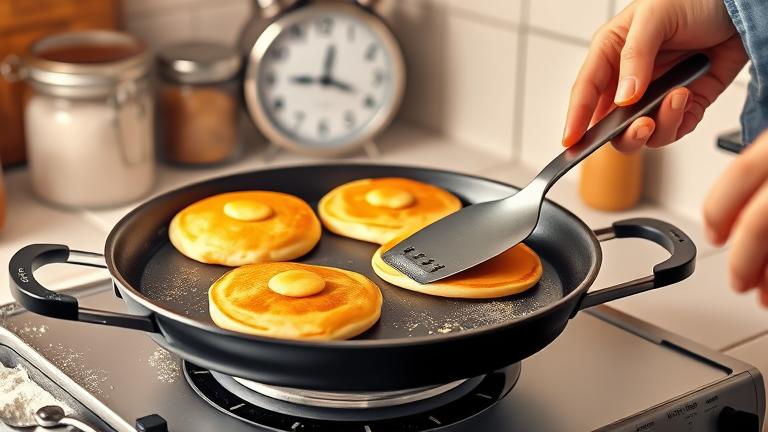
Pancake Cooking Basics and Timing
Cooking pancakes to perfection is both an art and a science. Getting the timing right ensures your pancakes are fluffy, golden, and cooked all the way through. This section covers essential techniques and tips to help you master pancake making in your own kitchen.
Start with a good batter. Most pancake recipes involve mixing flour, baking powder, sugar, salt, eggs, milk, and a bit of melted butter or oil. Once your batter is ready, let it rest for a few minutes. Resting helps the gluten relax and results in fluffier pancakes.
Preheat your cooking surface properly. Whether you’re using a griddle, frying pan, or non-stick skillet, set it to medium heat. Too hot, and the outside burns before the inside cooks; too low, and your pancakes might turn out dense and pale.
To check if your pan is hot enough, sprinkle a few drops of water on the surface. If they dance and evaporate quickly, you’re ready to cook. Lightly grease the pan with butter or oil, then wipe away excess with a paper towel. This helps prevent sticking and gives pancakes a nice crust.
Cooking Technique
Pour the batter onto the hot surface using a ladle or measuring cup. Aim for roughly 1/4 cup per pancake for smaller, uniform sizes. When the batter starts to bubble on top, with some bubbles bursting and leaving holes, it’s a sign that it’s time to flip. This usually takes about 2-3 minutes, but can vary depending on heat and pancake size.
Use a spatula to gently lift one side. The pancake should be golden brown and firm enough to flip without breaking. Flip carefully and cook for another 1-2 minutes on the second side until evenly golden and cooked through.
Timing and Troubleshooting
Every stove and pan are different, so it’s good to observe your first few pancakes to get a feel for timing. A good rule of thumb is about 2-3 minutes cooking on the first side, then 1-2 minutes on the second. Adjust heat if pancakes are burning or not browning sufficiently.
Want perfect results? Remember these tips:
- Keep the heat moderate to prevent burning and undercooking.
- Watch for bubbles and edges that look set as signs to flip.
- Don’t press down on pancakes while cooking. It flattens the batter and makes them dense.
For thicker pancakes, cook longer on low heat to allow the center to cook through without burning the outside. If your pancakes are becoming too brown too fast, lower the heat slightly. Conversely, if they are pale, increase the heat gradually.
Once cooked, transfer the pancakes to a warm plate or oven set to low to keep warm while you finish the rest. Serve immediately with your favorite toppings, like syrup, fresh fruit, or whipped cream.
Mastering pancake timing takes a bit of practice, but once you’ve perfected your process, you’ll be rewarded with light, fluffy, and beautifully golden pancakes every time. Enjoy experimenting with different batter recipes and toppings to find your favorite combinations!
How Long to Cook Different Types of Pancakes
Making pancakes is a delicious way to start the day, but cooking them just right can be tricky. The time it takes depends on the type of pancake, its thickness, ingredients, and heat level. Knowing how long to cook different pancake styles helps you achieve that perfect golden-brown color and fluffy texture.
Let’s explore typical cooking times for popular pancake varieties. Keep in mind, these times are approximate and can vary based on your stove settings and pan type. Always watch your pancakes and adjust as needed. A good rule of thumb is to flip them when bubbles form on the surface and the edges look set.
Basic American Fluffy Pancakes
These classic pancakes are thick and soft. They usually take around 2 to 3 minutes per side. Start with medium heat, cooking until bubbles appear on top and the edges look dry. Then flip and cook for another 2 to 3 minutes until golden brown. When done, the pancake should be firm but tender.
Thin Crepes
Crepes are thin and delicate. Since they cook quickly, expect about 30 seconds to 1 minute per side. Use medium-high heat to prevent burning while ensuring even cooking. Watch for tiny bubbles and a slight browning. Remove from the pan promptly to keep their tender texture.
Whole Wheat or Grainy Pancakes
These denser pancakes may need a little longer, about 3 to 4 minutes per side. Because of their thicker texture and ingredients, ensure your pan isn’t too hot, or they might burn outside before cooking through. Check doneness by inserting a toothpick; if it comes out clean, they’re ready.
Vegan or Protein Pancakes
Vegan pancakes often have a similar cooking time to basic pancakes—around 2 to 3 minutes per side. Protein pancakes, which tend to be thicker, might need 3 to 4 minutes per side. Be patient and cook on medium heat to ensure they cook evenly without becoming dry.
Tips for Perfect Pancakes
- Always preheat your pan well before adding batter. This ensures even cooking and prevents sticking.
- Use a non-stick skillet or lightly grease your pan with butter or oil.
- Avoid flipping too early; wait until bubbles form and edges look set.
- If pancakes brown too quickly, lower the heat slightly to prevent burning outside while ensuring they cook through.
- For thicker batters, cover the pan with a lid for a minute after flipping to help cook the inside thoroughly.
Remember, practice makes perfect. As you cook more pancakes, you’ll get better at recognizing the right timing and color. Keep an eye on the bubbles and edges, and don’t rush the process. Soon, you’ll be flipping pancakes like a pro and enjoying perfectly cooked stacks every time.
Tips for Perfect Pancake Frying
Frying the perfect pancake is both an art and a science. The goal is to achieve evenly cooked, golden pancakes that are fluffy inside and slightly crispy outside. With a few simple tips and some attention to detail, you can turn out breakfast treats that everyone will love.
Choose the Right Pan
Using a good non-stick skillet or cast-iron pan makes a big difference. These pans distribute heat evenly, helping your pancakes cook uniformly. Avoid hot spots that can burn one side while leaving the other undercooked.
Make sure your pan is large enough to hold several pancakes without crowding. Crowding causes temperature drops, resulting in uneven cooking. A diameter of around 10 inches (25 cm) usually works well for most home kitchens.
Preheat and Test the Pan
Preheat your pan over medium heat for a few minutes before pouring batter. Test if the pan is hot enough by flicking a tiny drop of water onto the surface. If it dances and evaporates quickly, your pan is ready.
If the water sizzles immediately, your pan is perfect. If it splatters or takes a long time to evaporate, adjust the heat accordingly. Keep the heat at medium or medium-low during frying to prevent burning and ensure even cooking.
Use the Right Amount of Fat
Adding a small amount of butter or oil to the pan helps achieve a golden color and prevents sticking. Use about 1-2 teaspoons of butter or oil per batch. Wait until the pan is hot, then add the fat and swirl to coat the surface evenly.
Too much fat can make pancakes greasy, so avoid pouring a large amount. If using butter, watch out for burning, especially on high heat—consider adding it just before pouring the batter to get a better flavor without risking burning.
Pour the Batter Correctly
Pour batter from a small pitcher or using a ladle for uniform pancakes. Filling the center of the pan and letting the batter spread naturally promotes even cooking.
A typical pancake size is about 4 inches (10 cm) in diameter. To make multiple pancakes at once, keep the batter consistent in size for even cooking times.
Watch for Bubbles and Edges
Great pancakes are usually ready to flip when bubbles form on the surface. These bubbles pop and leave small holes that stay open.
Additionally, the edges should look set and slightly crispy. Gently lift one edge with a spatula to check the color before flipping. Be careful not to flip too early, or your pancake might tear or cook unevenly.
Flip with Confidence
Use a wide spatula to flip the pancake smoothly. Flip when the surface shows bubbles and the edges are firm. Cook for another 1-2 minutes after flipping until the pancake is golden brown and cooked through.
If your pancakes aren’t cooking evenly, adjust the temperature. Lower the heat slightly if they brown too quickly or if the inside remains undercooked.
Keep Pancakes Warm
To serve pancakes hot and fresh, keep them warm in a low oven (around 200°F or 95°C) while you finish cooking the rest. Stacking them with a piece of parchment paper between helps prevent sticking and retains heat.
Once all are cooked, serve immediately or keep covered until everyone is ready to enjoy.
- Tip: Avoid pressing down on pancakes during cooking. This flattens the batter and makes them dense instead of fluffy.
- Tip: For extra flavor, add a pinch of cinnamon or vanilla to your batter.
- Tip: If using frozen pancakes, thaw and reheat on a low heat in the oven instead of frying again to prevent burning.
Common Pancake Cooking Questions
If you love pancakes, you’re probably wondering about the best way to cook them perfectly. Here are some answers to some of the most common questions about cooking pancakes, including times, temperatures, and methods. Whether you’re a beginner or just looking to improve your technique, this guide will help you make fluffy, delicious pancakes every time.
How long should I cook pancakes on each side?
Most pancakes take about 2 to 3 minutes to cook on the first side. You’ll know it’s ready to flip when you see bubbles forming on the surface and the edges look set. After flipping, cook for another 1 to 2 minutes until the second side is golden brown. Keep in mind that cooking times can vary slightly depending on your stove and pan thickness.
What’s the best temperature to cook pancakes?
The ideal temperature for cooking pancakes is medium heat. If your burner is too hot, the outsides will burn before the inside cooks through. Too low, and your pancakes might turn out flat and pale. A good way to test your pan is to sprinkle a few drops of water on it. If they dance and evaporate quickly, your pan is ready. Generally, a temperature around 375°F (190°C) works well.
How do I know when to flip the pancake?
Look for bubbles to form and pop on the surface of the batter. The edges should look cooked and slightly dry. If you try to flip too early, the pancake might tear or end up undercooked. When the bubbles are mostly gone and the bottom is golden, it’s time to flip.
What methods help pancakes cook evenly?
- Use a good non-stick or well-seasoned cast iron pan.
- Preheat the pan properly before pouring the batter.
- Cook on medium heat to prevent burning and ensure even cooking.
- If cooking multiple batches, keep the oven at 200°F (90°C) and place cooked pancakes inside to stay warm without drying out.
Can I cook pancakes in the oven?
While traditional pancakes are cooked on the stove, you can bake pancake batter in the oven for a different style, like oven pancakes or Dutch baby. For regular pancakes, the stovetop method gives the best control over cooking time and temperature. However, if you’re making a large batch, baking at 350°F (175°C) in a greased dish for about 15-20 minutes can work. Just keep an eye to prevent overbaking.
What should I do if my pancakes are unevenly cooked?
This might happen if your skillet isn’t heated evenly or the heat fluctuates. Use a heavy, flat pan to distribute heat evenly. Adjust the burner as needed during cooking. Also, avoid overcrowding the pan, which can cause temperature drops. Finally, flipping the pancakes at the right time helps prevent undercooked centers.
Key Tips for Perfect Pancakes
- Always preheat your pan before pouring batter.
- Use a consistent, medium heat for even cooking.
- Don’t press down on the pancakes while cooking; let them rise naturally.
- Keep cooked pancakes warm in a low oven if serving multiple plates.
- Experiment with different cooking times and temperatures to find what works best for your stove and pan.
With these tips and answers to common pancake questions, you’ll be able to cook perfect pancakes every time. Practice makes perfect, so don’t worry if your first few aren’t exactly how you want. Enjoy the process and the tasty results!
Troubleshooting Pancake Cooking Issues
Cooking pancakes can sometimes be tricky. You might end up with pancakes that are undercooked inside or burnt on the outside. Don’t worry. With a few simple tips, you can fix these common problems and enjoy perfect pancakes every time.
Why Are My Pancakes Undercooked in the Center?
Undercooked pancakes usually happen when the heat is too high or the batter is too thick. When the pan gets very hot, the outside cooks too quickly while the inside stays wet and raw. Thick batter also takes longer to cook through.
To fix this, lower the heat on your stove to a medium or medium-low setting. This gives the pancake enough time to cook evenly without burning on the outside. If your batter is thick, consider adding a little more milk or water to loosen it up. This helps the heat penetrate the center more easily.
- Use a medium setting instead of high to prevent quick burning.
- If the batter is thick, add a splash of milk or water and gently mix.
- Cook pancakes slowly enough to let the heat cook all the way through.
Also, flip your pancake only once it has bubbles forming on the surface and the edges look set. This usually means the pancake is ready to turn. Gently lift an edge to check if the bottom is golden brown before flipping.
Why Are My Pancakes Burning on the Outside?
Burnt pancake surfaces are often a sign of your pan being too hot or using too much butter or oil. When the heat is too high, the outer layer burns quickly while the inside remains raw. Also, excessive butter creates a greasy surface that browns faster.
To prevent this, turn down the heat and ensure your pan is properly preheated. Use a light amount of butter or oil—just enough to lightly coat the bottom of the pan. If you see smoke or the batter sizzles loudly, your pan is too hot.
- Start with a low to medium heat and adjust as needed.
- Use just a small amount of butter or oil, spread evenly.
- Test by dropping a small spoonful of batter into the pan—if it sizzles gently and doesn’t burn immediately, you’re at the right temperature.
If you notice your pancakes browning too quickly, reduce the heat and cook a little longer. This will give them a tender, evenly cooked interior without turning black on the outside.
Additional Tips for Perfect Pancakes
- Always preheat your pan before pouring the batter. A hot pan ensures even cooking.
- Use a consistent measuring cup or ladle to pour your batter. This helps pancakes cook evenly and look uniform.
- If you notice bubbles forming and popping on the surface, it’s a sign to flip the pancake.
Remember, every stove and pan heats a little differently. Don’t be afraid to experiment with heat levels and timing. With practice, you’ll learn the right balance for your equipment, and pancakes will become a simple and delicious part of your breakfast routine.
Ingredients and Recipes for Fluffy Pancakes
Making fluffy pancakes at home is easier than you might think. The key lies in selecting the right ingredients and following a simple recipe that creates the perfect rise and soft texture. With just a few pantry staples and some tips, you can enjoy irresistibly fluffy pancakes for breakfast, brunch, or whenever the craving strikes.
First, gather your ingredients. The basic pancake batter typically includes flour, baking powder, salt, sugar, eggs, milk, and butter. To get that light and airy texture, use baking powder as your leavening agent. It creates tiny bubbles in the batter that expand during cooking, giving your pancakes their signature fluffiness.
Essential Ingredients
- All-purpose flour: Provides the structure. For even lighter pancakes, some people mix in a little cornstarch or use cake flour.
- Baking powder: The leavening agent that makes pancakes rise. Use fresh baking powder for best results.
- Salt: Enhances flavor. A pinch balances sweetness and prevents bland pancakes.
- Sugar: Adds subtle sweetness and helps with browning. Adjust amount for sweeter or less sweet pancakes.
- Eggs: Help bind the batter and add richness. Beating the eggs well ensures smoother batter and better rise.
- Milk: Moistens the batter. Whole milk gives a richer flavor, but you can use skim or plant-based milks too.
- Butter or oil: Adds moisture and improves texture. Melted butter is preferred for flavor, but oil works just as well.
Basic Fluffy Pancake Recipe
- In a large bowl, whisk together 2 cups of all-purpose flour, 2 teaspoons of baking powder, ½ teaspoon of salt, and 2 tablespoons of sugar.
- In a separate bowl, beat 2 eggs until light, then mix in 1¾ cups of milk and 4 tablespoons of melted butter.
- Pour the wet ingredients into the dry ingredients. Gently stir until just combined. Do not overmix; lumps are okay.
- Preheat a non-stick skillet or griddle over medium heat. Lightly grease with butter or oil.
- Pour ¼ cup of batter onto the hot surface for each pancake. Cook until bubbles form on the surface and the edges look set, about 2–3 minutes.
- Flip carefully and cook for another 2 minutes, until golden brown and cooked through.
- Serve warm with syrup, fruits, or your favorite toppings.
Tips for Perfect Fluffy Pancakes
- Use fresh baking powder for maximum rise. Check its effectiveness by mixing a teaspoon with warm water—if it foams, it’s good.
- Do not overmix the batter. Stir just until ingredients are combined. Overmixing can make pancakes dense instead of fluffy.
- Let the batter rest for 5 minutes after mixing. This helps produce more air bubbles, leading to fluffier pancakes.
- Maintain a consistent, medium heat. Too hot and they burn; too low and they won’t rise well.
- For extra fluffy pancakes, try folding in whipped egg whites into the batter after mixing.
Variations and Add-ins
Once you master the basic recipe, experiment with add-ins to make your pancakes even more special. Examples include blueberries, chocolate chips, or slices of banana added to the batter before cooking. For a richer flavor, incorporate vanilla extract or cinnamon.
Serving and Presenting Delicious Pancakes
When it comes to enjoying pancakes, presentation can make a big difference. After all, a beautifully plated stack can make breakfast feel extra special. Serving pancakes attractively not only delights the eyes but also enhances the overall experience. Whether you’re preparing a simple weekend brunch or a fancy breakfast for guests, the key is to balance looks with practicality.
Start by choosing the right plate or platter. A clean, flat plate works well for stacking pancakes. If you want a more eye-catching display, consider using a colorful or patterned plate that complements your toppings. Make sure the plate is big enough to hold your stack comfortably without squeezing or spilling over.
Stacking and Garnishing
Pancakes are most often enjoyed as a tall stack. To keep your layers neat, use a spatula or your fingers to gently place each pancake on top of the other. If you want a fluffier appearance, try stacking an odd number of pancakes, like three or five. Avoid pressing down too hard, which can make the pancakes turn dense or squished.
Garnishing your pancakes adds visual appeal and flavor. Fresh fruit, such as sliced strawberries, blueberries, or banana slices, look lovely and add natural sweetness. A dollop of whipped cream or a swirl of yogurt can make the presentation more inviting. For a touch of elegance, sprinkle chopped nuts, chocolate shavings, or a dusting of powdered sugar on top.
Drizzle and Sauces
Adding sauces enhances both taste and aesthetics. Maple syrup is the classic choice, and pouring it over hot pancakes creates a shiny, appetizing look. You can also get creative with honey, fruit compotes, or chocolate sauce. Use a spoon or squeeze bottle to drizzle sauces artfully over the pancakes, creating patterned lines or zigzags.
Serving Tips
- Serve pancakes warm. They stay fluffier and tastier when they are still hot or just slightly cooled.
- Offer additional toppings or condiments on the side, such as extra syrup, butter pats, or more fruit.
- If serving a large group, keep pancakes warm in a low oven (around 200°F/95°C) covered with foil until ready to serve. Just make sure they don’t dry out.
- Slice larger stacks into smaller sections for easier eating, especially if children are involved. Use a serrated knife for clean cuts.
Creating a Beautiful Breakfast Table
Presentation isn’t just about the pancakes themselves. Setting the table with a pretty cloth, colorful napkins, and cutlery can make breakfast feel special. Include small bowls of toppings, fresh flowers, or decorative teaspoons for a complete look. A well-arranged table encourages everyone to indulge in a hearty, visually appealing meal.
Remember, the goal is to serve pancakes that are not only delicious but also eye-catching. With a few simple techniques, you can transform an ordinary breakfast into a memorable feast that everyone will enjoy. Happy stacking!