
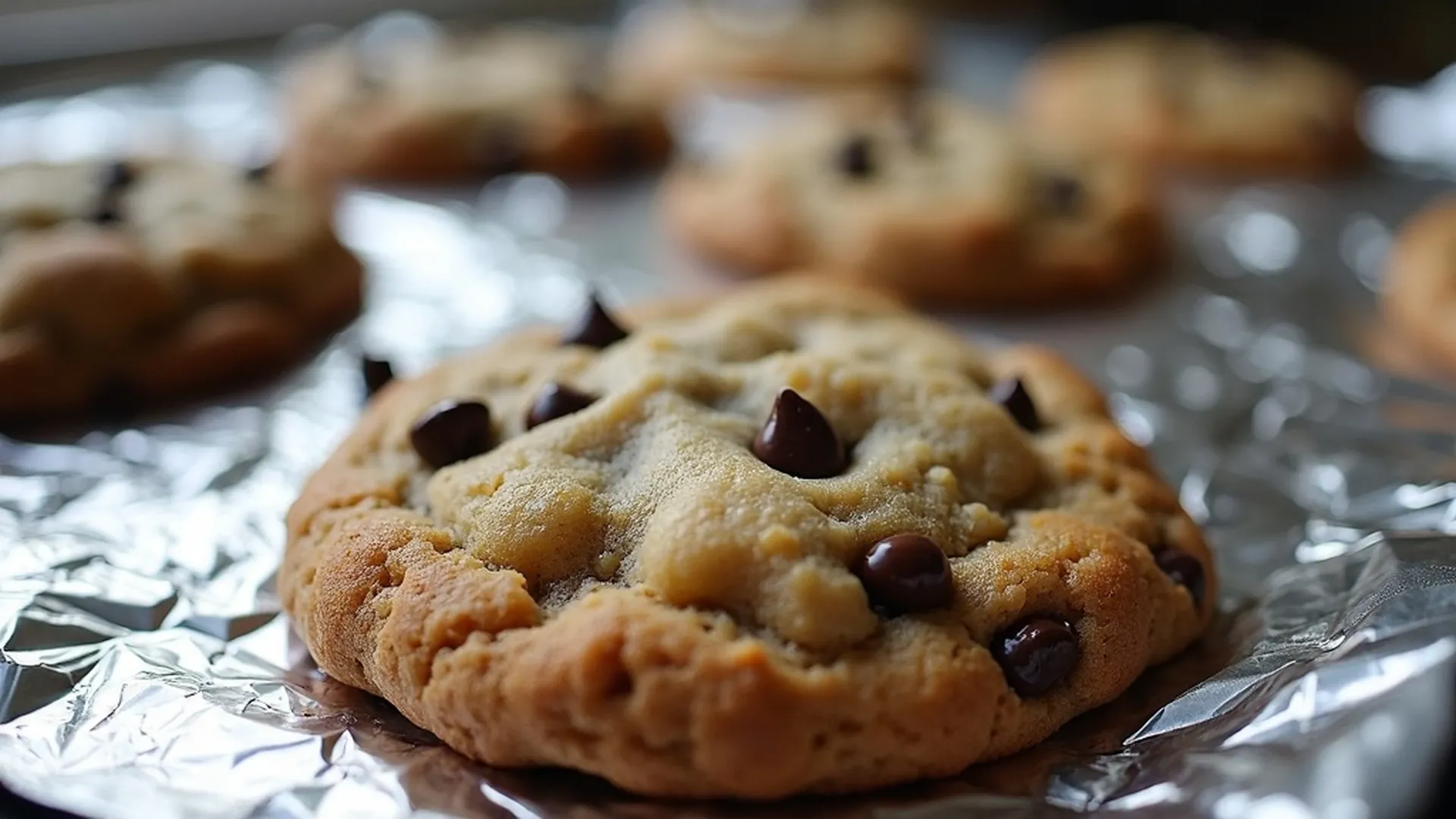
Yes, you can bake cookies on top of aluminum foil, and it’s actually pretty simple. Aluminum foil is heat-safe and can handle your oven’s temperature without burning. It can also make cleanup a breeze because you just toss the foil when you’re done.
Here’s a quick tip: lightly grease the foil or spray it with nonstick cooking spray. This stops the cookies from sticking and helps them slide off easily once they’re baked. You can also use a little parchment paper on top of the foil if you want an extra nonstick layer.
Keep in mind that cookies baked directly on foil might spread a little more than on a regular cookie sheet. Foil doesn’t conduct heat as evenly as a baking sheet, so cookies can brown slightly differently on the bottom. If you like a crisp bottom, place the foil on a sturdy baking sheet for more even baking.
Another tip is to check your cookies a few minutes earlier than usual. Because foil is thin, cookies might bake a little faster.
Using foil is perfect when you don’t have a cookie sheet handy or want less cleanup. With just a bit of greasing and attention to timing, your cookies will turn out tasty and golden.
Understanding Aluminum Foil in Baking
I remember the first time I tried baking cookies on aluminum foil. I thought, “Why not? It’s metal, it can handle heat, right?” Well, it turns out there’s a little more to it than that. Aluminum foil reacts differently to heat compared to parchment paper or silicone mats. One thing to know is that foil has two sides: shiny and dull. The shiny side reflects heat more, which can help cookies bake evenly, while the dull side absorbs heat slightly more, which might brown the bottoms faster.
Another thing is that foil is very thin and flexible. That makes it easy to tear or wrinkle, and cookies can spread into the folds if you’re not careful. It also doesn’t have the natural non-stick surface that parchment paper has, so your cookies might stick unless you grease it well. I’ve had batches where I didn’t grease the foil, and pulling off the cookies felt like trying to wrestle a stuck sticker off a notebook. Not fun.
Foil also affects cookie texture. Since it conducts heat quickly, cookies can crisp up faster on the edges but stay soft in the middle. Sometimes that’s great, but other times, it means you have to watch the oven more closely. Thin foil might even warp under higher temperatures, so using a baking sheet underneath for support is a good idea.
Finally, there’s safety. Aluminum foil is safe in the oven, but you want to avoid it touching the heating elements or flames directly. Also, never use foil in the microwave.
So, understanding how foil works with heat, how to handle it, and how to grease it properly makes a huge difference. Once I learned this, baking cookies on foil became much less stressful and more predictable. It’s not perfect, but if you know what to expect, it can work in a pinch.
Pros of Baking Cookies on Aluminum Foil
Honestly, I didn’t expect to like baking cookies on foil at first, but it does have some real perks. The first thing I noticed is how easy clean-up is. You just lay down a sheet of foil, bake your cookies, and when they’re done, you can toss the foil or give it a quick rinse. No scrubbing baking sheets for half an hour total win for busy evenings or when you’re making a huge batch.
Another advantage is that foil can prevent sticking if you grease it well. I always spray mine lightly with non-stick spray or rub a little butter across the surface. That creates a thin barrier, so cookies slide off more easily than you might think. For small batches or if you’re experimenting with new cookie recipes, this makes foil a handy option. You can even shape cookies directly on foil if you’re in a rush or don’t have a silicone mat handy.
Foil also handles heat pretty well. It heats up quickly and spreads the heat evenly, which can be useful if your oven has hot spots. Some of my first attempts with foil actually had better browning on the bottoms than with parchment, which was a nice surprise. It’s great if you like cookies with slightly crisp edges but soft centers.
Finally, foil is super versatile. You can cut it to fit your pan perfectly, wrap cookies in it for storage, or even make little cookie boats for chocolate chip experiments. It’s flexible in a way parchment or mats aren’t, and sometimes that extra flexibility saves you when you don’t have other options.
So, while foil isn’t perfect, it does have some real advantages that make it worth trying. The key is knowing how to handle it and what to expect, and suddenly baking cookies on foil doesn’t feel so scary anymore.
Cons and Common Issues
Even though baking cookies on aluminum foil has some perks, it definitely comes with its fair share of problems. I learned this the hard way the first few times I tried it. The biggest issue? Cookies sticking. If you don’t grease the foil properly, you’re in for a fight. I’ve had batches where I thought a light spray would be enough, and when I tried to lift a cookie, half of it stayed behind. Total frustration.
Another problem is uneven baking. Foil conducts heat fast, which sounds good, but it can also mean that cookie edges brown quicker than the center. I remember one batch where the edges were golden brown and crisp, but the middle was still soft and undercooked. You end up checking the oven every few minutes, which can be a little stressful if you’re trying to multitask in the kitchen.
Foil can also tear or warp, especially thin sheets. I once grabbed a really cheap roll, and halfway through baking, it wrinkled under the weight of the cookie dough. Some of my cookies spread into the folds and came out misshapen. That’s not just annoying, it also changes the way they bake.
Another minor but real issue is that aluminum foil doesn’t give you that nice non-stick surface that parchment paper or silicone mats do. So even when greased, the cookies can sometimes stick a little, leaving behind crumbs or breaking when you lift them. And of course, you can’t just throw it in the microwave later for reheating because foil sparks there, so it’s less flexible for post-baking use.
All that said, none of these problems are impossible to manage. You just need to know what to expect and plan ahead. Proper greasing, using a solid baking sheet underneath, and watching your baking times closely will solve most of these issues. But be ready: if you’re used to the ease of parchment or silicone, baking on foil requires a bit more attention.
Tips for Successful Cookie Baking on Foil
Baking cookies on aluminum foil doesn’t have to be tricky, but there are a few tips I’ve picked up that make it way easier. First off, always, always grease the foil. I usually use a light spray of non-stick cooking spray or rub a tiny bit of butter across the sheet. It doesn’t take much, but it makes the difference between cookies sliding off smoothly and fighting with the foil like it’s glued on.
Next, pay attention to which side of the foil you’re using. The shiny side reflects heat more evenly, so I always put that side up. It helps the cookies bake a bit more evenly and can prevent those burnt edges that catch you by surprise. Thin foil can warp, so putting it on a solid baking sheet is a good move. That extra stability stops it from folding under the dough.
Adjusting your baking time is also important. Because foil heats up quickly, cookies can brown faster than usual. I’ve learned to check them a few minutes earlier than the recipe says. Sometimes the edges look golden before the middle is fully cooked, and that’s okay you just want to keep an eye on them.
Spacing the cookies properly matters too. Since foil is slippery, cookies can slide a bit if the pan shifts, and they also spread out while baking. Leave enough space between each one, and resist the urge to overcrowd the foil. That way, they bake evenly, keep their shape, and don’t stick together.
Finally, don’t be afraid to experiment. Each oven is different, and each batch of dough behaves differently. Try a small batch first, tweak your greasing method, or test the baking time. With a little patience, baking cookies on foil can be surprisingly easy, and sometimes a real lifesaver if you’re out of parchment or mats.
Alternatives to Aluminum Foil for Baking Cookies
While aluminum foil can work in a pinch, there are a few other options that usually make baking cookies easier and more reliable. The most common one is parchment paper. I love using it because it’s naturally non-stick, so cookies slide off effortlessly. Plus, it handles heat evenly, so you don’t get those dark, crispy edges before the centers are cooked. If you’ve ever had cookies stick to foil and break apart, parchment feels like magic in comparison.
Another great option is a silicone baking mat. These mats are reusable, easy to clean, and they give you consistent results every time. I’ve had batches where the dough spread more than I expected, and silicone mats helped the cookies keep their shape without sticking or burning. They can be a little pricey at first, but honestly, they last forever and save a ton of frustration over time.
If you’re out of both foil and parchment, there are some simple hacks you can try. For example, lightly greased baking sheets alone can work, especially for sturdier cookies like chocolate chip or oatmeal. Some people even use cut-up foil lined with a bit of butter as a makeshift solution, though it’s not perfect. A trick I like is to double-layer foil if you’re worried about warping or sticking. That extra thickness keeps everything stable.
The key takeaway is that foil is just one option, not the only one. Parchment and silicone mats give you smoother results and less stress, especially for delicate cookies. But knowing how to use foil properly or combining it with a few tricks can be handy when you’re in a pinch and don’t have other options. It’s all about choosing the right tool for your dough and your oven.
Common Mistakes to Avoid
Baking cookies on aluminum foil sounds simple, but I’ve definitely made my fair share of mistakes. One of the biggest is not greasing the foil properly. I thought a quick spray would be enough once, and my cookies stuck like glue. Lifting them off was a disaster, crumbs everywhere, some cookies broke in half, and I spent more time cleaning than eating. Lesson learned: a little extra grease goes a long way.
Another mistake is placing cookies too close together. Foil is slippery, so as cookies bake, they spread and sometimes slide into each other. I had one batch where chocolate chips ran together into a giant cookie blob. It was funny but not very practical. Always leave enough space so each cookie can bake evenly without touching its neighbor.
Using thin or low-quality foil is another common trap. Cheap foil tears easily and warps in the oven, especially under heavier dough. I had a roll of thin foil once, and by the end of baking, it had folded under my cookies. They baked unevenly and looked weird. Thick, sturdy foil is worth the small extra cost.
Finally, forgetting to watch the baking time can ruin your batch. Foil heats up quickly, so cookies can brown faster than expected. I’ve pulled cookies out thinking they were done, only to find the edges a little too crispy. Keep a close eye on the oven, especially the first few times you bake on foil.
Avoiding these mistakes makes a huge difference. Once I learned them, baking cookies on foil became much less stressful, and I even started enjoying it when I ran out of parchment or silicone mats. With a little care, foil can actually be a useful backup tool for cookie baking.
Conclusion
So, can you bake cookies on aluminum foil? Absolutely, but it’s not without its quirks. Foil is flexible, heats quickly, and can help you in a pinch, but you need to know what you’re doing. Greasing it properly, watching your baking times, and leaving enough space between cookies are key to avoiding sticky or burnt messes. I’ve learned the hard way that a little prep goes a long way.
That said, foil isn’t always the best choice. Parchment paper or silicone baking mats usually give more consistent results, smoother bottoms, and less stress. But foil can be a real lifesaver when you run out of other options or just want to experiment. I even started trying small experiments with double-layered foil or shaping cookies directly on it, and some of those batches turned out surprisingly well.
At the end of the day, baking is about experimenting, learning from mistakes, and having fun. If you’ve got foil in your kitchen, go ahead and try it, but watch your cookies closely, grease the sheet well, and don’t be afraid to tweak your method. Your cookies can still come out golden, delicious, and ready to eat, even without parchment or a silicone mat.
Now it’s your turn grab that foil, give it a shot, and see what works best for your oven and your dough. And if you have your own tricks or funny kitchen fails, share them. Baking is always more fun when you learn and laugh along the way.