
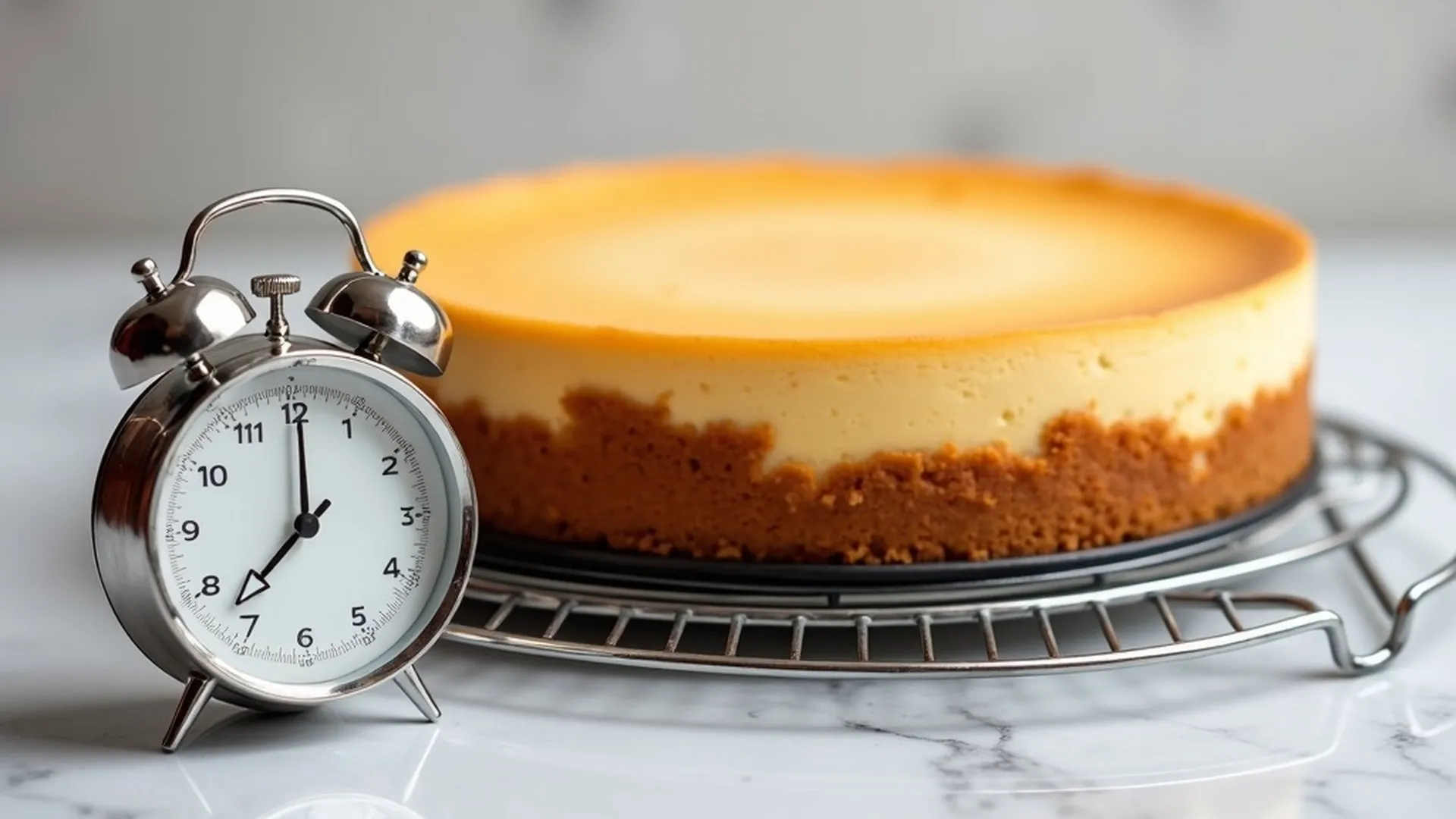
The short answer is that most cheesecakes need about 50 to 60 minutes in the oven at 325°F. The exact time depends on your oven and how thick your cheesecake batter is, but this range works for most classic recipes.
A good way to tell if your cheesecake is done is to gently shake the pan. The edges should look set, and the center should still have a small wobble. If it moves like loose batter, it needs more time. If it looks fully firm, it might be overbaked, which can lead to cracks.
Try not to keep opening the oven door while it bakes. Sudden temperature changes can make the top split. When the cheesecake is ready, turn off the oven and leave it inside for about an hour. This helps it cool slowly so the texture stays smooth and creamy.
Once it reaches room temperature, chill it for at least four hours. This step makes the cheesecake firm up and taste even better.
So aim for 50 to 60 minutes, watch for the light wobble, and let it cool slowly. That’s how you get a cheesecake that turns out soft and rich every time..
Standard Baking Time for a Classic Cheesecake
Whenever someone asks me how long they should bake a classic cheesecake, I always think back to the first one I ever made. I followed the recipe perfectly. Or at least I thought I did. I baked it for the exact time it said, pulled it out, and the whole thing wiggled so much I thought it might slide right out of the pan. I panicked, shoved it back into the oven, baked it again, and ended up with a big dry block that looked like a sponge. That was the day I learned that cheesecake isn’t about strict time. It is about understanding how it should look and feel.
Today, when I bake a classic cheesecake, I usually start with a simple number. Around 55 to 70 minutes at 325 F for a nine inch pan. That’s the sweet spot for most cheesecakes. But the truth is that ovens, pans, and even the way you mix the batter change how long it needs. I learned that the hard way when I bought a new oven and everything baked faster than the old one. My first cheesecake in that oven cracked right down the middle because it baked too quickly. I didn’t know the back of my oven was hotter than the front, so one side set before the other. That little mistake taught me to rotate the pan halfway through baking.
Something I still remind myself every single time is that cheesecake is supposed to jiggle. Not shake like soup. Not wiggle like pudding that never set. Just a small jiggle in the center. If the edges look firm and only the middle moves a bit when you tap the pan, that is actually perfect. Once I finally understood that, I stopped overbaking. The cheesecake firms up as it cools. It is so weird to trust that, but it works every time. When I first tried it, I kept thinking it was raw. It wasn’t. It just needed to rest.
Another thing that affects baking time is how thick the cheesecake batter is in the pan. A taller cheesecake always needs longer. One time I doubled a recipe because I wanted a taller slice, but I forgot to change the baking time. The middle stayed raw while the top browned too fast. After that, I learned to add at least fifteen to twenty extra minutes when baking a tall cheesecake. And I lower the heat a little when I want an extra creamy center.
Mixing plays a part too. I used to beat the batter like I was whipping cream. All that air made the cheesecake puff up in the oven and then collapse when cooling. When it sinks like that, the center takes longer to bake because the air bubbles break down the structure. Now I let the cream cheese soften fully and mix slowly so I don’t add too much air. The bake becomes way more predictable when the batter is smooth and not fluffy.
Pan material changes the clock more than people think. I used a dark nonstick pan once, thinking it would make things easier. Instead, it baked way too fast because dark pans hold more heat. The edges browned faster than the center set. With dark pans, I now check the cheesecake ten minutes earlier. When I use a light colored aluminum pan, it bakes more evenly but usually on the longer end of the time range.
You know what surprised me most? Even room temperature ingredients change the timing. If the cream cheese, eggs, and sour cream are cold, the batter needs extra minutes because the oven has to bring everything up to temperature first. When everything is softened and warm, the cheesecake starts baking right away. I always leave my ingredients out for at least an hour now. It saves me from guessing whether I need five extra minutes or fifteen.
I used to think a toothpick could tell me if a cheesecake was done. That was such a bad idea. Toothpicks create holes and pull out thick batter even when the cheesecake is done. One time I poked so many holes that it looked like someone attacked it with a fork. Now the only test I trust is the jiggle test and feeling the edges. If the outer two inches look slightly puffed and set, I know it’s ready to come out.
Sometimes, when I want an extra creamy cheesecake, I stop the bake a little early. Not too early, but maybe around the 50 minute point if it looks almost done. It finishes cooking from the leftover heat. That trick makes the texture smooth and silky. When I want a firmer cheesecake that slices super cleanly, I let it go to the full 70 minutes. It sounds strange, but those small time choices change the whole personality of the cheesecake.
So if you’re trying to figure out exactly how long to bake your cheesecake, here’s the simple version I wish someone had told me years ago. Start with 325 F for around an hour. Check the edges. Check the center wiggle. Look for that calm little jiggle, not a wave. Trust your eyes more than the timer. And remember that your oven, pan, and batter temperature all play a part. Once you get used to these signs, you’ll never stress over the time again. You’ll just know. And that confidence makes every cheesecake come out smoother, creamier, and way less stressful.
How Oven Temperature Changes Bake Time
I used to think ovens were simple. You set a temperature, and it just works. Then I started baking cheesecake more often and realized ovens have personalities. Some ovens run hot. Some act lazy and barely hit the right temp. Some heat unevenly and turn one side of the cheesecake golden while the other side stays pale. Once I figured that out, everything about bake time finally made sense. Cheesecake is super sensitive to heat, so even a small change in temperature can mess with the texture or add ten extra minutes without warning.
The first time I baked a cheesecake at 350 F, I thought I was saving time. I figured hotter meant faster. Instead, the edges cooked too quickly and started to puff up. The top browned like it was trying to turn into bread. I pulled it out, hoping it would settle, but the middle was still loose. When it cooled, it cracked right across the top. That was when I learned that higher heat makes the cheesecake rise fast, fall fast, and dry out. So even though 350 F is common in recipes, I almost never use it now unless the cheesecake is shallow.
On the opposite end, I once tried baking at 300 F because someone online said low and slow makes the creamiest cheesecake. It did come out creamy, but it also took more than an hour and a half. I kept peeking into the oven like a worried babysitter. I remember tapping the pan gently and the whole thing wobbled like jelly. I thought it would never set. The final result was good, but it tested my patience. Baking that low works, but only when you have plenty of time and a calm mind. It is amazing how much slower the cheesecake sets when the heat is gentle.
These days, 325 F is my happy place. It is warm enough to bake evenly but cool enough to keep the top from browning too fast. At that temp, most cheesecakes finish within that 55 to 70 minute range. But even then, ovens do their own thing. I discovered my oven was 20 degrees hotter than what it said. I only found out because I used an oven thermometer once out of curiosity. Before that, I kept wondering why everything baked too fast. If your cheesecake keeps cracking or baking too quickly, checking your oven temperature can change everything.
Something funny I noticed is how often people switch ovens without thinking it will matter. When I moved and baked a cheesecake in a different kitchen for the first time, I was shocked. My old oven heated from the bottom more, so the crust finished fast. The new oven heated from the top, so the cheesecake browned before the middle set. I had to adjust the oven rack position. Middle rack works best for me now because it gives the cheesecake even heat on all sides. If your cheesecake browns too early, try dropping the rack lower. It actually helps.
Convection ovens are a whole different story. The first time I baked cheesecake with the fan on, it looked like a storm hit it. The fan blew hot air across the top and caused skin to form while the inside was still soft. After cooling, the top wrinkled like a shirt that sat in the dryer too long. Convection can work, but I always lower the heat by about 25 degrees and check the cheesecake earlier. If your oven has a fan, turning it off for cheesecake is usually the best idea.
Another thing I learned is that opening the oven changes the baking time. I used to open the door five or six times because I wanted to check the jiggle. Every time I did, the temperature would drop. The cheesecake would stop baking for a minute and then start again. That repeated stop and start caused uneven texture. The center would stay soft longer and sometimes the top cracked because the temp kept swinging. Now I only check once after about 45 to 50 minutes. I let the oven stay steady the rest of the time.
Even the weather affects oven temperature. On super cold days, my oven has to work harder and sometimes the bake time stretches a little. On hot days, it preheats faster and stays hot between checks. I never believed that until I paid attention and saw the small changes. It is strange, but true.
Once you understand how heat affects cheesecake, bake time becomes a lot easier to predict. High heat means faster baking but a higher risk of cracks and dryness. Low heat means longer baking but creamier texture. Uneven heat means weird textures and unpredictable timing. If you learn your oven’s quirks and pick the right temp, the rest becomes way more relaxed.
So now, whenever someone asks why their cheesecake took longer or baked too fast, I tell them the same thing I tell myself every time I make one. Trust the signs more than the numbers. Your oven gives you clues. If the top is browning fast, lower the temp. If the center never seems to set, raise it just a little or give it more time. Pay attention to how your oven behaves. Once you learn that, you can bake a great cheesecake in pretty much any kitchen.
Baking Time When Using a Water Bath
When I first heard about baking cheesecake in a water bath, I honestly thought it sounded like a weird science experiment. I pictured the cheesecake floating around in hot water like a sponge. The idea confused me so much that I avoided it for years. Looking back, I laugh at myself because the water bath is one of the best things I ever learned for getting smooth cheesecake. But it does change the baking time quite a bit, and that took me more than a few tries to understand.
The very first time I used a water bath, I expected the cheesecake to bake in the same time as usual, around an hour. I set the timer, waited, and checked the center. Still jiggly. Not the good gentle jiggle. The whole thing was barely set. I put it back in. Checked again. Still not ready. I ended up baking it almost twenty minutes longer than my normal cheesecakes. That taught me something important. Water baths slow baking because the water keeps the oven environment moist and the temperature around the pan steady. Moist heat is softer and takes longer to cook dense batter like cheesecake.
Even though it takes more time, the payoff is huge. A water bath keeps the edges from drying out and helps the cheesecake bake evenly from top to bottom. When I bake without a water bath, the edges sometimes firm up before the middle is ready. With a water bath, everything cooks at almost the same pace. The extra time is worth it for that creamy texture that feels like velvet.
One mistake I made early on was not sealing the pan well enough. I wrapped the springform pan in foil, but I only used one layer. Water leaked in and soaked the crust. It still baked, but the crust tasted mushy and sad. And the extra water cooling the crust slowed the bake even more. Now I use at least two layers of foil and press them tight around the bottom and sides. Some bakers put the springform inside a larger pan so water never touches it. I tried that too, and it helped keep the crust crisp and the baking time more predictable.
The height of the water changes the bake time too. Once, I filled the roasting pan only a little because I ran out of hot water. The cheesecake baked faster than I expected because the water level didn’t reach high enough to help the sides heat evenly. Another time, I filled the pan almost to the top of the springform. The cheesecake took longer because the water insulated the sides more. Now I aim for water that reaches halfway up the pan. That seems to give the most even results.
I also learned that the water must be hot when it goes into the oven. If you pour cold water into the roasting pan, it lowers the oven temperature and adds even more baking time. I made that mistake once when I was rushing and didn’t want to wait for the kettle to boil. My cheesecake baked almost twenty five minutes longer than usual and still didn’t have the texture I wanted. Now I always pour in hot water right after placing the pan in the oven.
There was one time when I forgot to preheat the roasting pan. I put the cheesecake in the roasting pan, poured water around it, and then slid the whole thing into the oven. This cooled the oven down so much that the cheesecake baked unevenly. The edges baked slower than the center and the timing was all over the place. After that disaster, I started putting the empty roasting pan in the oven during preheating so everything is the same temp when the cheesecake goes in. It makes the bake more consistent.
Another funny thing is how different pans handle the water bath. My old thin springform pan used to warp a little from the heat. When it bent, the cheesecake leaned slightly to one side, and that side baked slower. I switched to a heavier pan and the difference was huge. The cheesecake baked evenly and the bake time became stable. Sometimes it is the little things you never think about that fix the biggest problems.
Because water baths slow the cooking, you have to be patient when checking for doneness. The first time I saw the center still jiggling after more than an hour, I almost kept baking. But I stopped and let it cool, and it set perfectly. With a water bath, the cheesecake can look underdone for longer. That is normal. I try to remember that the water bath protects it from overbaking, so the timing will always drift toward the longer side.
When you remove the cheesecake from the water bath, it keeps cooking a bit longer from the gentle heat. That carryover cooking is part of why the texture turns out so smooth. I once rushed and pulled it out of the foil right away and set it on the counter. The sudden temperature change made a little crack appear, which defeated the whole point of the water bath. Now I take the pan out of the water bath but leave the foil on while it cools slowly.
If anyone asks me whether a water bath is worth the extra time, I always say yes. My cheesecakes without water baths look fine but the ones with water baths look like they came from a bakery. Creamy texture. Even color. No cracks. But you have to plan for that extra ten to twenty five minutes of baking time. The softness of the heat makes cheesecake bake slower but better.
After all these years of baking, the rule I follow is simple. If I want the most even and creamy cheesecake possible, I use a water bath and don’t rush the time. The slow gentle bake gives me the texture I love. And even though the timer helps, the real test is still the jiggle. If the edges are set and the center moves slightly, it is ready, even if the clock says something different.
Bake Time for Different Cheesecake Sizes
I never paid much attention to cheesecake pan sizes until I ruined a whole batch that I made for a family dinner. I had always used a nine inch springform pan, but that day I only had a six inch pan clean. I figured I could just pour the same amount of batter into the smaller pan and bake it for the same time. That was the day I learned cheesecake does not forgive guessing. The center stayed raw even after an hour and a half, and the edges started to dry out. I ended up scooping the middle out like pudding and eating it with a spoon because I didn’t want to waste the ingredients. It was tasty, but it definitely wasn’t cheesecake. That moment taught me that pan size changes everything.
When I bake a classic nine inch cheesecake, I usually expect around 55 to 70 minutes. That is my baseline. But when I use a ten inch pan, which spreads the batter out thinner, the time drops fast. Sometimes I only need 45 or 50 minutes. The first time I baked in a ten inch pan, I didn’t check early. I waited the usual hour and came back to a cheesecake that had pulled away from the edges, browned on top, and felt way firmer than I wanted. It tasted fine, but it had that dry texture that makes you reach for water after every bite. Now I always peek around the 40 minute mark if the cheesecake is wide and shallow.
Six inch cheesecakes are a whole different game. They are small, cute, and perfect for testing new recipes, but the batter sits much deeper in the pan. The heat takes longer to reach the center. When I first switched to a six inch pan, I baked the cheesecake for a normal amount of time and thought it was done. The top looked great. The edges were set. But when I sliced it later, the middle oozed out. I ended up learning that a six inch cheesecake usually needs around 70 to 90 minutes, and sometimes even longer if the batter is thick or cold. It still catches me off guard. You look at it and think it should be done because it is so small, but the depth tricks you.
Then there are the mini cheesecakes. I love making them for parties because they look cute and nobody has to fight over slice sizes. But these little guys bake in a fraction of the time. Sometimes just 15 to 20 minutes is enough. One time, I left them in the oven for half an hour because I forgot how fast they set. When I pulled them out, the tops were brown and the edges had shrunk so much that they looked like little hockey pucks. Ever since that disaster, I stay close to the oven when I bake minis. They go from perfect to overdone so fast that you barely have time to react.
Tall cheesecakes are a whole adventure too. When I want to make one of those towering slices you see in fancy restaurants, I often double the batter and use a deep pan. The height slows the baking so much that I sometimes need an extra half hour or more. Once, I baked a tall cheesecake for 90 minutes, checked it, and it still had a huge wobble. I almost panicked because I thought it would never finish. But the trick is to lower the temperature a little and be patient. Tall cheesecakes cook slow but come out amazingly creamy if you take your time.
There was also the time I used one of those cheap aluminum foil pans from the grocery store because I was baking at a friend’s house. The pan was so thin that it heated way too fast. The crust baked quicker than the filling. The whole thing cooked unevenly, and there was no way to fix it. That experience made me realize that pan material changes how long things need to bake. Light pans and dark pans act differently, and deep pans behave differently than shallow ones.
Even the batter amount matters. One time I had a little extra batter and decided to pour it all into the pan instead of saving it. The cheesecake ended up thicker than normal and needed almost 20 extra minutes. Another time, I didn’t have enough batter and the cheesecake baked faster than expected. It surprised me how much just an inch of difference could change the timing.
The shape of the pan matters too. I once tried a square pan because I thought it would be fun to cut cheesecake bars. But the corners baked faster and the middle baked slower, so I had to pull the pan out at the exact perfect moment or risk overbaking the edges. Round pans bake more evenly because heat moves more easily around the sides. Whenever I use a different shape, I remind myself to check a little earlier and not trust the normal timing.
If I had to give a simple rule, it would be this. Wider pans bake faster. Smaller pans bake slower. Deeper batter always needs more time. Mini cheesecakes bake almost ridiculously fast. And never trust the clock alone. I used to rely on the timer like it was a law, but cheesecake doesn’t follow laws. It follows physics and patience.
These days, when I bake cheesecake in any size pan, I start checking early and using the jiggle test. If the edges are set and the center jiggles gently, it is done, no matter what the timer says. That simple rule has saved me from so many ruined batches. And it works for every pan size, every recipe, every oven.
How Long to Bake a No-Bake or Hybrid Cheesecake
The first time I tried making a no bake cheesecake, I remember feeling almost guilty because it seemed too easy. I kept thinking, how does this thing even set without baking? I mixed everything, poured it into the crust, put it in the fridge, and checked it every hour like it was a growing plant. It finally set after about six hours, and I was so proud of myself even though I didn’t turn on the oven once. But that experience also taught me that the idea of bake time in no bake or hybrid cheesecakes is totally different from classic baked cheesecake. You have to think about chill time, not oven time, and that takes patience just like baking does.
For a true no bake cheesecake, there is basically no oven time at all, unless you decide to prebake the crust. Most of the work happens in the fridge. I usually tell people to give it at least six to eight hours. Some of my cheesecakes only set well after an overnight chill. One time, I tried to serve it after only three hours because I was impatient. The middle collapsed when I cut the first slice, and the filling looked like soft pudding. It was delicious but not at all what I wanted. That day I learned that fridge time is just as important as oven time, maybe even more.
Hybrid cheesecakes are a whole different story. They are kind of the middle ground between baked and no bake. Usually, you bake the crust or part of the filling for a short time and then finish it in the fridge. The first hybrid cheesecake I made confused me like crazy because I didn’t know how long to bake the part that needed heat. The recipe said ten minutes, but after ten minutes, the top looked exactly the same as when I put it in. I thought it wasn’t done, so I kept baking. By the time I pulled it out, the edges were firm and crumbly, and the middle didn’t set right in the fridge. Later I learned that the short bake in hybrid recipes isn’t about setting the cake. It is just to stabilize certain ingredients like eggs, chocolate, or gelatin so everything holds together later.
The bake time in hybrid cheesecake is usually really short. Sometimes only five or ten minutes. And sometimes you only bake the crust. When I prebake a crust, I bake it for about eight to ten minutes at a higher temperature like 350 F. That little bit of heat helps the crust stay firm under a creamy filling. If you don’t prebake it, the crust can get soggy, especially with no bake filling. I skipped prebaking once and the crust turned into wet sand under the cheesecake. I couldn’t even lift slices out of the pan. So now I almost always prebake if I am doing a hybrid style.
There was one hybrid cheesecake I made where the filling had melted chocolate mixed in. The recipe said to bake it for only five minutes to let the chocolate and cream cheese bond together. I didn’t believe that would do anything, so I baked it for fifteen minutes instead. When it cooled, the texture felt grainy because the chocolate overheated and tightened up. That mistake taught me to trust the recipe when it comes to tiny bake times in hybrid cheesecake. Those short bursts of heat do more than you think.
No bake cheesecakes rely a lot on ingredients to set the filling. Gelatin, whipped cream, and cream cheese strength all play a role. I once made a no bake cheesecake without enough gelatin, thinking the cream cheese would hold it. It never fully set, even after being in the fridge for almost a whole day. It tasted fine but looked like a melted cloud on top of a crust. Now when a recipe calls for gelatin, I don’t try to be clever. I use the right amount and bloom it properly because the set time depends on those details.
Hybrid cheesecakes with gelatin or whipped cream also need time to chill. Even though part of the batter gets baked, the fridge still does most of the work. I usually chill hybrid cheesecakes for at least four to six hours, sometimes overnight if the filling is thick. The bake time is small, but the chill time is huge. Once I tried to rush it by putting a hybrid cheesecake in the freezer to speed things up. The top froze before the middle set and the texture turned icy. I learned that freezing is not the same as chilling. Cheesecake likes steady cold, not aggressive cold.
No bake cheesecakes also react a lot to room temperature. If the kitchen is warm, the filling gets softer faster and needs more time in the fridge. One summer, I made a no bake cheesecake for a picnic and left it out while we packed the food. By the time we reached the park, the whole top had shifted like sliding cream. After that, I started chilling no bake cheesecakes right up until the second they leave the house, and I store them in a cooler when I travel with them. They are delicate because the structure depends on being cold, not baked.
When people ask me how long it takes to “bake” a no bake cheesecake, I tell them the truth. You don’t bake it in the oven. You bake it in the fridge. And fridge baking takes six to eight hours minimum if you want slices that hold their shape. Hybrid cheesecakes need only a few minutes of oven time, but they need hours of chilling just like the no bake ones. So even though the oven isn’t doing most of the work, you still need to plan your timing carefully.
At the end of the day, no bake and hybrid cheesecakes feel less stressful than classic baked ones, but they still require patience. You just shift your waiting from the oven to the fridge. Once you accept that the fridge is part of the process, the timing becomes easier. And honestly, that cold slow setting does something magical to the texture. It gives you that smooth creamy bite that melts on your tongue without ever seeing high heat.
How the Crust Affects Bake Duration
I used to think the crust didn’t matter much when it came to baking time. I figured it was just the base, almost like a plate made of crumbs. Then one day I tried a new cheesecake recipe that had a super thick crust pressed all the way up the sides. I baked the cheesecake for my usual hour, pulled it out, and the filling looked perfect. But when I cut into it later, the bottom crust was still soft and almost damp. The filling was cooked, but the crust wasn’t ready. That’s the day I realized the crust changes more about bake time than I ever expected.
When I use a classic graham cracker crust, I almost always prebake it for about eight to ten minutes. This tiny step helps the crust set so it doesn’t soak up too much moisture from the filling. One time I skipped prebaking because I was in a hurry. The cheesecake tasted fine, but the crust turned soggy and fell apart when I lifted the first slice. The bake time for the filling didn’t change, but the quality of the crust did. After that, I never skip that short prebake unless the recipe specifically tells me not to.
Thicker crusts need even more time. I once doubled the amount of graham cracker crumbs because I wanted a stronger crunch. I prebaked it for the normal ten minutes, thinking it would be fine. But the thicker crust needed at least five extra minutes or maybe more. It didn’t crisp up enough and some parts stayed soft. The filling ended up taking longer too because the soggy crust trapped steam underneath, slowing the bake. That experience made me start adjusting prebake times depending on how thick the crust is.
Cookie crusts behave totally differently. Oreo crusts, for example, tend to bake faster because the cookies already contain sugar and fat that melt in the oven. I once overbaked an Oreo crust by leaving it in for twelve minutes. It hardened so much that cutting through it felt like sawing a brick. When the crust turns too hard, the cheesecake bakes unevenly because the base stops absorbing heat correctly. Now I bake cookie crusts for only about seven or eight minutes, just enough to melt the butter and bond everything together.
Then there’s the stubborn shortbread crust. The first time I tried using crushed shortbread cookies, I didn’t realize how buttery they already were. I added extra butter and prebaked it, thinking it would come out rich and perfect. Instead, the crust melted down into a thick pool that bubbled at the edges. The butter overflow slowed the whole baking process and made the bottom take way longer to firm up. Now when I use shortbread, I cut back on butter and shorten the prebake so it doesn’t turn into a puddle.
Pressing the crust up the sides of the pan changes bake time too. When the crust goes up high, it acts like insulation. I noticed that the cheesecake tends to bake slower because the heat can’t move through the sides as easily. Once, I pressed the crust up almost to the rim because I wanted that pretty bakery look. The filling took nearly ten extra minutes to set, probably because the crust was blocking heat from reaching the edges. Now when I make a tall side crust, I start checking the cheesecake earlier but plan for extra time if the edges look pale.
I once tried using a crust made of nuts mixed with butter, thinking it would be healthier. The problem with nut crusts is that nuts burn fast. When I prebaked it for the normal amount of time, the nuts turned dark and tasted bitter. Then while the cheesecake baked, the nuts kept browning. By the time the filling set, the crust was almost burnt. I learned that nut based crusts either shouldn’t be prebaked at all or should be baked for only a few minutes. The shorter prebake means the filling can bake at a normal pace without the crust getting too dark.
The temperature of the crust matters too. If the crust is still warm from prebaking when you pour the filling in, it helps the cheesecake start baking right away. If the crust is cold, the filling takes longer to heat up, which adds a few minutes to the bake time. I once prebaked a crust, walked away to do something else, came back after half an hour, poured in the filling, and wondered why the cheesecake needed almost ten more minutes. It was because the cold crust slowed everything down. Since then, I usually pour the filling in while the crust is still warm, not hot but warm enough that it doesn’t drag down the oven temperature.
Another thing I learned is that crust thickness affects how moisture moves during baking. If the crust is thin, steam from the filling escapes easily. If it is thick or pressed tightly, moisture gets trapped longer and slows down the center set. Once, I pressed the crust too firmly with the bottom of a glass. It felt like cement. The cheesecake took longer to bake and the middle stayed soft for way too long. Now I press the crust gently so it holds together but still lets heat move through.
Crustless cheesecakes bake the fastest. The first time I made one, I baked it for the same amount of time as usual and ended up overbaking it badly. Without a crust acting as a buffer, the filling cooks quicker. The edges firm up sooner and the middle sets faster because heat travels directly into the batter. If I make a crustless cheesecake now, I start checking it almost fifteen minutes earlier than normal.
At the end of the day, the crust isn’t just a base. It controls how heat moves, how moisture escapes, and how long the cheesecake needs to bake. I didn’t realize how important it was until I messed up dozens of crusts. Now I treat the crust as part of the baking time equation. Thin crust equals faster bake. Thick crust means slower bake. Cookie crusts bake quicker. Nut crusts brown easily. Crustless means you better check early.
And every single time I make cheesecake, I remind myself that the crust is not just for flavor. It is one of the biggest clues to how long the cheesecake will really take.
How to Tell When Cheesecake Is Fully Baked
Learning how to tell when a cheesecake is truly done took me years. I used to rely completely on the timer, like the oven would magically know exactly when my cheesecake should be ready. I can’t count how many times I pulled out a cheesecake that looked perfect on top, only to discover later that the center was still soft enough to slide off the knife. Other times, I left it in too long because I was scared of underbaking, and I ended up with dry edges and cracks that looked like the desert. Eventually, I stopped trusting the clock and started trusting what I could see and feel. That’s when cheesecake baking finally started to make sense.
The biggest lesson I learned is that the cheesecake should jiggle, not slosh. I used to panic when the center moved, thinking it meant the cheesecake was raw. One time I baked a cheesecake for an extra forty minutes because the middle kept wiggling. It came out so dry that it tasted like sweet cardboard. Later, I found out the center is supposed to jiggle. The test is simple. You gently tap the side of the pan. If only the inner two inches wobble softly and the edges stay firm, it is done. It should remind you of gelatin that is almost set. If the whole cheesecake shakes like a bowl of soup, that means it needs more time. That one detail changed everything for me.
Another trick that helped me is looking at the edges. When a cheesecake is ready, the edges puff up slightly and look set. They should not be brown or cracked, just firm and smooth. If the edges still look wet or glossy, it’s not done. I once baked a cheesecake where the top looked perfect, but the edges were still shiny. I thought the shine was just moisture, but when I cut it later, the filling near the crust was mushy. Now I always check the edges first. They tell you almost everything.
I also learned to pay attention to how the top looks. A fully baked cheesecake will lose its wet shine on top and look matte, but not dry. If the top looks glossy everywhere, it probably needs more time. If it looks completely matte but also cracked or puffed up, you’ve gone too far. There was a time when I baked a cheesecake until the entire top looked dry because I thought that meant it was set. It cooled into a solid block with a crack line straight across the middle. Ever since then, I look for a soft matte finish. A tiny bit of shine in the very center is totally fine.
You can also gently touch the surface. I was scared to do this at first, but it helps. If you tap the top lightly with a fingertip, it should feel soft but not sticky. If batter sticks to your finger, it definitely needs more time. One time I tapped too hard and left a fingerprint in the middle. I learned to touch with just the tip of my nail or the back of a spoon. It sounds silly, but a light tap can save your cheesecake.
I tried using a thermometer once, and it gave me a lot of confidence. The center of a cheesecake is done when it reaches around 150 to 155 F. The trick is not to poke too deep or at an angle. I poked a hole once that went almost to the crust and left a dent in the final slice. But if you don’t mind the tiny hole, it is one of the most accurate ways to know the cheesecake is ready. When I really want to be sure, especially with tall cheesecakes, I still use a thermometer and aim for the lower end of the range to keep it creamy.
Cooling also tells you if you baked it right. A cheesecake that is fully baked will settle gently as it cools. If it collapses dramatically in the center while cooling, it was probably underbaked. I learned that after baking a super tall cheesecake. It looked great in the oven, but once I turned off the heat, it sank like a crater. The middle was still too soft, and cooling revealed the truth. Now I leave the cheesecake in the oven with the door cracked open for about an hour. This helps it finish gently without sudden changes and shows me if it is stable.
One thing that confused me early on was the bubbling. Sometimes when a cheesecake is overbaked, small bubbles form on the surface. They almost look like tiny blisters. I used to think the bubbles meant it was underbaked, so I left it in longer. That just made the bubbles worse. Now I know that bubbling means the cheesecake got too hot and started to overcook. If you see bubbles forming, pull it out right away. It will be done, maybe even slightly overdone, but still fine if you stop early.
Light cracking around the edges is another clue. If I see small cracks forming, I know the cheesecake has baked long enough. Cracking means the surface is drying out, which usually happens when it’s been in the oven a bit too long. I used to panic about cracks, but now I know a tiny crack can mean it is time to pull it out. It’s better to accept a little crack than keep baking and cause a big one.
Oven movement can fool you too. I used to pull the cheesecake out and shake the pan to check the jiggle. But taking it out of the hot oven cools it too fast and can cause cracks. Now I always check the jiggle while the cheesecake is still sitting on the oven rack. I pull the rack out slightly and tap the pan gently. It’s safer and gives a more accurate read.
Sometimes I check the sides of the pan too. If the cheesecake starts to pull slightly away from the sides, it usually means it is done or very close to done. I don’t rely on this alone because some cheesecakes never pull away, but it’s a nice extra clue. One time the cheesecake pulled away early because the oven ran hot, so I almost took it out too soon. That taught me never to use this method by itself.
When you put all these signals together, baking cheesecake becomes way less scary. The jiggle in the center. The set edges. The matte top. The soft but stable feel. The steady cooling. These signs guide me way better than a timer ever did. Every oven is different, but cheesecake always gives clues if you know how to read them.
Now whenever I bake cheesecake, I don’t stare at the clock. I watch the cheesecake. It tells me everything I need to know. And once you learn the signs too, you won’t worry about overbaking or underbaking ever again.
Common Cheesecake Baking Mistakes
When I first started baking cheesecakes, I thought the hardest part would be mixing the batter. I had no idea the real challenges came from tiny mistakes I didn’t even know I was making. I’ve made almost every cheesecake mistake there is. Some were funny, some were frustrating, and some taught me lessons I still use today. Looking back, I wish someone had warned me about how easy it is to mess up a cheesecake, even when you follow a recipe perfectly.
One of the biggest mistakes I used to make was overmixing the batter. I thought the smoother the better, so I mixed the cream cheese like I was whipping cream. The batter looked perfect and silky, but all the extra air made the cheesecake puff up like a balloon in the oven. Then as soon as it cooled, it sank in the middle and cracked around the top. The texture ended up fluffy in some spots and dense in others. Now I only mix until everything is combined. I let the cream cheese soften so I don’t have to beat it too hard. This simple change made my cheesecakes way smoother.
Another mistake I made too often was baking at a high temperature. I used to think turning the oven up would make the cheesecake finish faster. Instead, the edges cooked way too fast and dried out while the center stayed soft. The cheesecake rose too much, browned too quickly, and cracked almost every time. Once I baked a cheesecake at 350 F the whole way through because a recipe said to. It turned into a giant cracked ring with a crater in the middle. Now I almost always bake at 325 F because the gentle heat gives me more control.
Opening the oven door too much was another bad habit. I used to check the cheesecake every ten minutes, worried that it might be burning or cracking. Every time I opened the door, the oven temperature dropped. The cheesecake would stop baking and then start again once the oven reheated. These temperature swings caused cracks and uneven texture. Once I realized this, I made myself wait at least 45 minutes before checking anything. That small change made my cheesecakes much more stable.
Not using room temperature ingredients caused a lot of problems too. Cold cream cheese doesn’t blend well and leaves lumps you can’t fix. Cold eggs thicken the batter and change how it bakes. One time I made cheesecake in a hurry and used cream cheese straight from the fridge. I mixed and mixed, but the batter had tiny lumps everywhere. Those lumps baked into the filling and gave the cheesecake a gritty texture. Since then, I leave everything out for at least an hour before I start.
I also made the mistake of skipping the water bath for years because I thought it was unnecessary. I didn’t want to deal with wrapping the pan in foil or boiling water. But without the water bath, my cheesecakes cracked all the time. The edges baked too quickly and the center struggled to keep up. When I finally used a water bath for the first time, the cheesecake baked so evenly that it felt like magic. There were no cracks, no dryness, just smooth creamy texture. Now I rarely skip it unless I am making a recipe that doesn’t need it.
Using the wrong pan is another mistake that caused a lot of headaches. Thin pans heat too fast and can warp. Dark pans brown the edges quickly. One time I borrowed a friend’s thin springform pan and didn’t think twice. Halfway through baking, the pan warped slightly and tilted the cheesecake. It baked unevenly and looked like it was sliding downhill. Now I use heavy, light colored pans that stay stable and bake evenly.
Another mistake I made was not wrapping the pan well enough when using a water bath. I used only one layer of foil and water leaked in, soaking the crust. It made the bottom mushy and threw off the texture. After that, I learned to double wrap or even triple wrap the pan. Some people put the springform pan inside a bigger pan to avoid leaks. I did that once and it was so helpful that I still do it when I have the right pans available.
Rushing the cooling process is something I used to do all the time. Early on, I would take the cheesecake out of the oven and put it straight on the counter. The sudden temperature change would cause cracks. One time, I put a warm cheesecake into the fridge because I wanted it ready fast. It cracked so badly that it looked like dried mud. Now I cool the cheesecake slowly. I turn off the oven, crack the door, and leave it inside for about an hour. Then I cool it on the counter before putting it in the fridge.
Another common mistake is slicing the cheesecake too soon. I used to get impatient and cut into it after just a couple of hours in the fridge. The slices would sag, and the center would ooze slightly. The cheesecake looked messy and soft. Once I finally learned to refrigerate it overnight, everything changed. The slices stood tall, the texture was firm but creamy, and the cheesecake tasted even better. Patience really does make a difference.
Even something as simple as mixing the batter too little can cause problems. I once rushed and didn’t scrape the bowl well. There were pockets of unmixed cream cheese that baked into little lumps inside the cheesecake. They tasted fine, but they looked like white spots and made the texture uneven. Now I scrape the bowl often but still avoid whipping too much air into the batter.
Overbaking is another classic mistake. I used to think a cheesecake should be fully set in the oven before removing it. I baked a cheesecake until it barely moved at all, thinking that meant it was done. The texture ended up dry and almost crumbly. That taught me that cheesecake firms up as it cools. The jiggle test is way more accurate than trying to bake it into total stillness.
There was also the time I tried adding way too many toppings while the cheesecake was still warm. The toppings slid off and made a mess. Or the time I used too much butter in the crust and it leaked out during baking, smoking up the oven and changing the bake time. Or the time I pressed the crust too tightly and slowed the bake. Every mistake taught me something.
Now whenever I bake a cheesecake, I watch out for these common mistakes. I slow down, trust the process, and pay attention to the little signs. Cheesecake baking is a lot easier once you learn what not to do. And honestly, most of the mistakes can be fixed by remembering a simple rule. Go slow, be gentle, and let the cheesecake tell you what it needs.
How Long Cheesecake Should Cool After Baking
Cooling a cheesecake is honestly the part that tested my patience the most. I used to think once the cheesecake was done baking, I could just pull it out, let it sit for a little bit, and then shove it straight into the fridge. But the more cheesecakes I baked, the more I realized the cooling stage is almost as important as the baking itself. If you cool it too fast, it cracks. If you move it too much, it sinks. If you refrigerate it while it’s warm, moisture builds up and turns the top wet or gummy. I learned all this the slow and painful way, mostly by messing up perfectly good cheesecakes that would have been amazing if I’d just cooled them correctly.
The first mistake I made was taking my cheesecake out of the oven all at once. I would pull it out and put it straight on the counter. The sudden temperature change always shocked the cheesecake. One time it cracked right down the middle within minutes. It sounded like a tiny pop, almost like the crust shifting, and then it opened like a big fault line. I stood there staring at it like I just broke something expensive. After that, I finally understood why recipes tell you to cool it slowly.
These days, when the cheesecake finishes baking, I turn the oven off and crack the door open just a little. I let it sit in the warm oven for about an hour. The gentle heat lets the cheesecake settle without collapsing. That hour makes a huge difference. The top doesn’t wrinkle or crack, and the edges slowly relax instead of tightening. It feels like the cheesecake is taking a quiet nap before moving to the next step.
Once the cheesecake sits in the oven for that hour, I take it out and let it cool on the counter. At first, I used to take the foil off right away, thinking it needed air. Big mistake. Removing anything too early can cause a sudden shift in temperature. Now I leave the pan wrapped and just let it sit for another hour or so. Sometimes the cheesecake still feels warm at that point, but that’s fine. The main goal is to let it come down to room temperature slowly.
There was one time I rushed this stage because I had guests coming and needed dessert ready fast. I put the slightly warm cheesecake into the fridge thinking it wouldn’t matter. That was a disaster. Condensation formed on top, making the surface wet and sticky. The crust turned a little soggy and the filling didn’t set right because the cold air hit it too fast. After that, I promised myself I would never put a warm cheesecake in the fridge again.
Letting it cool on the counter until it reaches room temperature is key. For me, that usually takes two to three hours depending on the size. If it’s a tall cheesecake, it can take even longer. When the cheesecake finally feels close to room temp, that’s when I move it to the refrigerator. And honestly, this is the part where people struggle the most. You have to chill it for at least four hours, but overnight is always better. I used to think I could chill it for two or three hours and still get clean slices. Nope. The cheesecake needs time to firm up through the center.
One time I cut into a cheesecake after about three hours in the fridge. The edges sliced fine, but the middle slumped forward like pudding. The taste was great, but the slices were so messy they almost looked like cheesecake dip. I learned from that moment that the chill time is not optional. It’s essential. Now I always plan ahead so the cheesecake gets a full overnight rest.
Cooling affects the texture more than anything else. A slow cool in the oven keeps it creamy. A gentle cool on the counter keeps it stable. A long chill in the fridge gives it that firm, sliceable texture everyone loves. When you skip any part of this process, the cheesecake punishes you. I’ve seen cheesecakes crack, collapse, sweat, wrinkle, and even shrink away from the sides just because I was impatient.
Another thing I learned is to leave the cheesecake in the springform pan while it cools. I once unlatched the springform too early, thinking it would help release steam. The sides sagged instantly and created a weird slanted shape. Now I don’t touch the latch until the cheesecake is completely chilled the next day.
Sometimes I even run a thin knife around the edges after the cheesecake cools on the counter but before refrigerating it. This lets the cheesecake contract naturally as it chills without pulling from the sides and cracking. It’s a tiny little trick, but it saves me from a lot of stress.
Cooling sounds simple, but it is one of the parts that makes or breaks the final result. It teaches patience and reminds you that cheesecake is slow food. It doesn’t like to be rushed. Once I accepted that cooling takes almost as long as baking, my cheesecakes finally turned out the way I always wanted. Smooth top. Creamy texture. No cracks. Clean slices.
So whenever someone tells me their cheesecake cracked or didn’t set right, the first question I ask is how they cooled it. Nine times out of ten, the cooling stage was rushed. If you cool it slowly, let it rest at room temperature, and chill it long enough, the cheesecake rewards you every single time.
Baking Time Adjustments for Special Cheesecake Types
It took me a long time to realize that not all cheesecakes bake the same way. For years, I treated every cheesecake recipe like it was the classic version. Same temperature. Same time. Same expectations. Then I tried making a New York style cheesecake for the first time, and it taught me a lesson I’ll never forget. I followed my usual timing, pulled it out after about an hour, and thought it looked perfect. But when I cut into it later, the inside was still too soft and didn’t have that rich dense texture you expect from a New York cheesecake. That’s when I realized that different cheesecake styles need different bake times, different temperatures, and sometimes even different techniques.
New York style cheesecake is thick, heavy, and packed with cream cheese. Sometimes it has sour cream too. That extra thickness and extra dairy means it needs more time in the oven. I usually bake New York style at 325 F for at least 70 to 90 minutes. One time I even had to go past the 100 minute mark because the cheesecake was so tall. The key with New York style is not to rush it. The top can brown a little, which is normal for that type. The texture turns out smooth and velvety when you let the oven do its slow steady work.
Japanese cheesecake is the complete opposite. The first time I made one, I treated it like a classic cheesecake and baked it too hot. The whole thing rose like a souffle and then collapsed so hard in the middle that it looked like someone stepped on it. Japanese cheesecake is delicate and airy because it has whipped egg whites folded into the batter. That lightness means it needs very low heat and a long gentle bake. Sometimes around 300 F or even lower. And you have to use a water bath or it dries out. I’ve had Japanese cheesecakes take up to 70 minutes or more even though they feel lighter than air. The low heat keeps them fluffy. The moment I learned that, everything made sense.
Chocolate cheesecake surprised me too. The melted chocolate inside the batter changes the density. Chocolate thickens as it cools, so the cheesecake often needs a little less time than a classic one. I used to overbake chocolate cheesecake because I kept waiting for the center to set as firmly as a regular cheesecake. But the chocolate firms up during cooling. Now I take chocolate cheesecake out a little earlier. If the center jiggles more than usual, that’s fine because it will tighten up. One time I baked a chocolate cheesecake until it barely moved. It ended up way too firm and lost that creamy feel. Once I learned to adjust for the chocolate, the texture turned silky.
Pumpkin cheesecake needs extra time because pumpkin puree adds moisture. The first time I made one for Thanksgiving, I underbaked it without realizing it. The edges were set but the center stayed soft for hours. Pumpkin adds water to the batter, so the oven has to work longer to evaporate some of that moisture. Now I extend the baking time by at least ten or fifteen minutes when using pumpkin. Sometimes even more depending on how much puree the recipe uses. The flavor is worth it though. Pumpkin cheesecake is smooth and warm and feels perfect for fall, but only when baked long enough.
Low sugar or keto cheesecakes are another challenge. Sugar affects texture. When you remove it or replace it with sweeteners like erythritol, the cheesecake bakes differently. The filling sets faster and can get grainy if baked too long. I learned that the first time I made a keto cheesecake for a friend. I baked it like a normal cheesecake and the texture came out dry. The sweetener didn’t melt the same way sugar does, so it didn’t help keep the filling soft. Now I bake keto cheesecakes a little shorter and check the jiggle earlier. They set faster but can overbake easily.
There was one time I made a ricotta cheesecake, and that threw me off completely. Ricotta makes the texture lighter and more crumbly. I baked it at my usual temp and it browned too quickly. Ricotta needs lower heat and sometimes a longer bake. The filling doesn’t firm up the same way cream cheese does. Now when I bake ricotta cheesecake, I keep the temperature around 300 F and give it extra time, sometimes up to 90 minutes. The result is amazing, but you have to treat it gently.
Crustless cheesecakes bake faster too. Without a crust acting as a barrier, the filling cooks quicker around the edges. I once baked a crustless cheesecake for the same time as a classic one and it came out overdone. Now I check crustless versions at least 10 or 15 minutes earlier. They don’t need as long to reach the perfect jiggle.
Then there are flavored cheesecakes with add ins like crushed cookies, fruit pieces, or caramel. These ingredients can change everything. When I added chopped strawberries to a batter once, the extra moisture delayed the set time. I thought the cheesecake was broken. The middle refused to firm up. It finally set after extra minutes, but it taught me that additives with high moisture always extend the bake. On the other hand, cookie pieces or chocolate chunks don’t add moisture so they barely change the timing.
Even swirl cheesecakes, like raspberry swirl or caramel swirl, bake differently. I once added too much raspberry puree to the batter and it took a long time to set. The swirl pockets kept the middle gooey because the puree heated slower than the batter. Now I add smaller amounts of puree and swirl carefully to avoid making the cheesecake too wet.
Every new cheesecake style taught me something about bake time. Some need more. Some need less. Some need low heat. Some need patience. Some need early checking. And all of them benefit from getting to know how the ingredients behave. Once I started adjusting for each style instead of forcing one rule on all of them, everything became easier.
Now whenever I try a new cheesecake type, I do three things. I lower or raise the heat based on the ingredients. I check the jiggle sooner or later depending on the texture. And I trust the signs more than the clock. Cheesecake is funny like that. It doesn’t follow one set of rules. It just follows its own personality. And once you learn that, you can bake any style you want without feeling confused.
Conclusion
After baking more cheesecakes than I can count, the biggest lesson I’ve learned is that cheesecake isn’t just about following a recipe. It’s about paying attention. The bake time, the crust, the temperature, the pan size, even the cooling process all work together. When one part is off, the whole cheesecake feels it. I used to think the oven timer was the boss, but now I know the real clues come from the jiggle in the center, the look of the edges, and the slow way the cheesecake settles as it cools. Once I started trusting those signs, everything about cheesecake baking became easier.
Every mistake I made along the way taught me something useful. The times I rushed it. The times I overmixed. The times I opened the oven too early or cooled it too fast. All of those moments made me better at understanding what the cheesecake needed. Baking cheesecake feels almost like a conversation. You watch it. It responds. And if you listen to it, you get a perfect creamy result almost every time.
My best advice is to be patient. Let the cheesecake bake slowly. Let it cool slowly. Let it rest in the fridge long enough to set. Don’t rush the process. The timing will always depend on your oven, your pan, and your recipe. But if you take your time and pay attention to the signs, you’ll get that smooth, rich texture that makes cheesecake worth the effort.
If you’ve made it this far, you’re already way ahead of where I was when I first started. Now you have everything you need to bake a great cheesecake without all the stress. So go make one. Try a new style. Adjust the timing. And enjoy the process because cheesecake rewards patience more than anything else.