
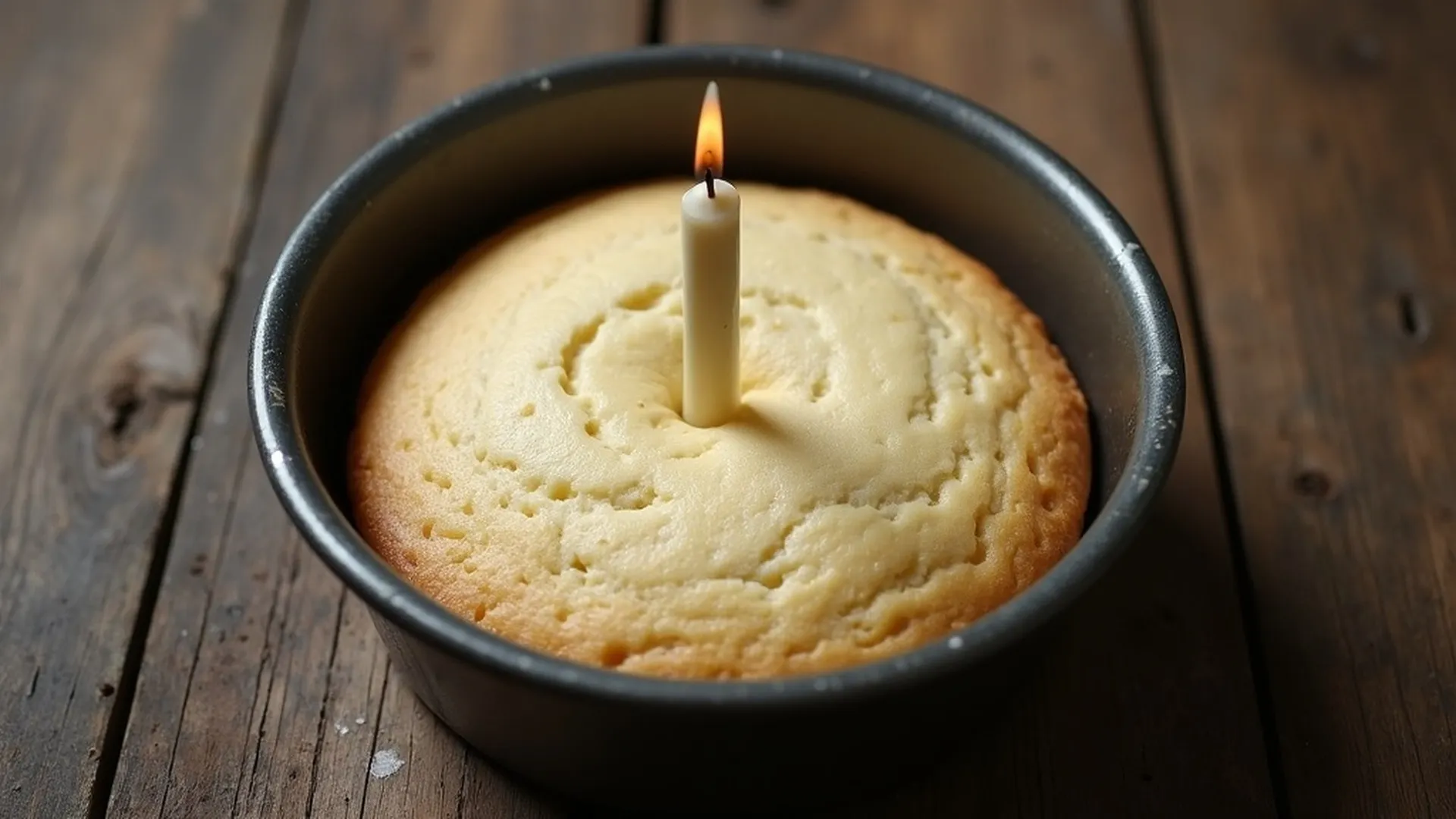
If you skip baking soda in a cake, your cake will not rise properly. It will turn out dense, flat, and sometimes a little gummy because there is nothing in the batter to help it puff up in the oven.
Baking soda is a simple ingredient, but it has an important job. When it mixes with something acidic like yogurt, lemon juice, or brown sugar, it creates tiny bubbles. These bubbles get trapped in the batter and make the cake light and fluffy. Without baking soda, those bubbles never form, so the cake stays heavy.
You might also notice the texture feels tight instead of soft. The crumbs will be small, and the cake may look pale because baking soda helps with browning too. Even the flavor can taste a bit flat since baking soda balances the acidity in the batter.
If you realize you forgot baking soda before baking, you can mix a quick batch again with all the ingredients. If the cake is already in the oven, there is not much you can do. The best tip is to double check your ingredients before you start so your cake rises the way it should.
Why Baking Soda Matters in Cake Recipes
Baking soda matters because it helps your cake rise and turn fluffy instead of flat. When baking soda mixes with something acidic like lemon juice, yogurt, or vinegar, it creates tiny bubbles that lift the cake as it bakes.
These bubbles get trapped in the batter and make the cake soft and light. Without this reaction, most cakes would come out dense and heavy. Baking soda also helps control the color of your cake by making the surface brown nicely in the oven.
It even affects the taste by keeping the sweetness balanced so the cake does not taste too sour. Many beginners forget that baking soda is not just for rising but also for making the whole cake taste and feel better. Once you understand how it works, it becomes easier to bake cakes that look tall, taste great, and have a nice texture.
What Happens if You Skip Baking Soda Completely
If you skip baking soda in a cake, the first thing you will notice is that the cake barely rises. It stays low in the pan because there are no bubbles forming to lift it up. When I first tried baking without it, my cake looked like a thick pancake and I honestly thought my oven broke.
The texture also becomes firm and heavy, almost like bread that did not rise enough. It feels tight when you cut it and there are hardly any air pockets inside. Another thing that happens is the flavor changes. Without baking soda to balance the acidity, some cakes taste a little sour or just plain dull.
The color also stays pale because the cake does not brown as much during baking. Even the top can look uneven or slightly sunken. Most of the time, skipping baking soda leads to a cake that is edible but not enjoyable. It teaches you fast that baking soda is not just an optional ingredient. It is a key part of how a cake rises, tastes, and looks.
How Texture Changes Without Baking Soda
When you leave out baking soda, the texture of the cake changes more than most people expect. Instead of being soft and airy, the cake turns dense and tight because there are no bubbles forming inside the batter. I remember once cutting into a cake I baked without baking soda and it felt almost stiff, like it was pushing back on the knife.
Without those tiny air pockets, the cake cannot stay light, so every bite feels heavier than normal. The crumb also looks very different. Instead of a fluffy pattern, you see small, packed crumbs that look squeezed together.
Sometimes the middle even feels a bit gummy because the batter did not rise enough to bake evenly. Moisture spreads differently too, so parts of the cake might feel wetter or drier than others. Overall, the cake loses that soft melt in your mouth feeling and turns into something more like a thick bread. It is one of the easiest ways to understand how important baking soda is for getting a smooth, fluffy texture.
Does Skipping Baking Soda Change the Flavor?
Yes, skipping baking soda can change the flavor of a cake more than you might expect. Baking soda helps balance the acids in the batter, so without it, some cakes taste a little sharp or sour.
I learned this the hard way when I baked a chocolate cake and forgot the baking soda. The taste was strangely flat, almost bitter, even though I used plenty of sugar. Without baking soda, the sweetness does not stand out as much because the acids take over. The cake also does not brown as nicely, and that golden brown color actually adds a small amount of caramel flavor. When that does not happen, the cake tastes a bit plain.
Some recipes do not change much in flavor when baking soda is missing, but most cakes end up tasting dull or slightly off. It is a small ingredient with a big job, and once you notice the flavor difference, you will never want to skip it again.
Baking Soda vs Baking Powder in Cakes
Baking soda and baking powder might look similar, but they work very differently in a cake. Baking soda needs an acid in the batter to activate, and once it reacts, it creates bubbles that help the cake rise.
Baking powder already has acid mixed in, so it can create bubbles on its own when it gets wet and then again when it hits the heat of the oven. I remember thinking they were the same once and swapped them equally in a recipe, and the cake came out bitter and strangely dry. Baking soda is much stronger, so you only need a little, while baking powder is weaker, so recipes use more of it. If you try to replace baking soda with baking powder without adjusting the amount, the cake might rise too slowly or not at all.
The flavor changes too because baking soda affects the sweetness and the color of the cake. Baking powder does not brown the cake as much, so the top might stay pale. Both ingredients help cakes rise, but each one has its own job, and using the wrong one can completely change the way your cake turns out.
Best Baking Soda Substitutes for Cakes
When you do not have baking soda, there are a few substitutes that can still help your cake rise. The easiest one is baking powder because it already contains an acid and a base, so it can create bubbles on its own. Most people use about three times more baking powder than baking soda, but the texture will still be a little different.
I have also used whipped egg whites as a substitute and it actually works surprisingly well. Beating the egg whites until they form stiff peaks adds air into the batter, which makes the cake lighter. Yogurt and buttermilk can help a cake rise too because they add acidity and moisture, but you still need something like baking powder to activate the lift.
Cream of tartar can also help when mixed with baking powder, though it works better in simple cakes than in rich ones. Some substitutes work only in certain recipes, so it is important not to swap ingredients randomly or the cake might collapse or taste strange. If you understand how each substitute works, you can still bake a cake that turns out soft and fluffy even without baking soda.
How to Fix a Cake Batter When You Forgot the Baking Soda
If you forget to add baking soda to your cake batter, you can still fix it as long as the batter has not gone into the oven yet. The key is to act fast because the ingredients are already starting to react and settle. I have done this plenty of times, and the trick is to gently sprinkle the baking soda over the batter and fold it in slowly so you do not knock out the air.
If your recipe uses something acidic like yogurt or lemon juice, the baking soda will still activate normally once it is mixed. If the batter is already thick, you can mix a tiny bit of warm water with the baking soda first to help it spread more evenly. But if the batter has been sitting for too long, adding the baking soda may not help much because the mixture has already relaxed.
I learned not to overmix at this point because it makes the cake dense, and you can actually make things worse. If you realize the mistake after the cake goes into the oven, there is no real way to fix it. The best you can do is learn from it and double check your ingredients next time. Catching the mistake early gives you the best chance of saving the cake and getting a nice rise.
Recipes That Can Work Without Baking Soda
Some cake recipes can actually turn out fine without baking soda, and knowing which ones helps a lot when you run out. Pound cakes are one of the best examples because they rely more on butter, sugar, and eggs to create lift rather than a chemical reaction. I once made a pound cake with no baking soda at all, and it still came out soft because the creamed butter trapped enough air.
Sponge cakes are another good option since they get their height from whipped eggs instead of leavening ingredients. These cakes rise because of the air you beat into the batter, so missing baking soda does not ruin them. Certain butter cakes with a lot of fat can also survive without baking soda, especially if you mix them well and keep the batter light.
There are also traditional recipes, like angel food cake, that naturally rise through egg whites and do not need any baking soda at all. When you choose recipes that use mechanical aeration, the cake will still bake tall and fluffy even without chemical help. So if you ever run out of baking soda, picking the right recipe can still give you a great cake.
Expert Tips to Avoid Dense Cakes
Avoiding dense cakes is easier when you follow a few simple habits that make a big difference. The first tip is to measure your ingredients carefully because too much flour or too little liquid can make the cake heavy. I learned this after packing flour too tightly in a cup and ending up with a thick, dry cake that barely rose.
Another helpful trick is to mix the batter gently. Overmixing knocks out the air and turns the cake into a solid block instead of something fluffy. Keeping your baking soda fresh is also important because old baking soda does not create enough bubbles. I now check mine every month by mixing a little with vinegar to see if it foams.
Balancing acidity in the recipe helps too because the baking soda needs the right level of acid to activate properly. Even oven temperature plays a big role because if the oven is too cold, the cake will rise slowly and then fall in the middle. Small habits like these can turn an average cake into a soft, tall one that tastes amazing. With practice, you start to catch mistakes before they happen and your cakes stay light instead of dense.
Common Questions About Baking Soda in Cakes
A lot of people have questions about baking soda because it seems like such a small ingredient, but it controls so much in a cake. One question I hear a lot is whether you can still eat a cake without baking soda, and yes you can, but it will be flat and heavy. I have eaten a few of my own baking mistakes and they tasted fine, just not something I would serve to guests. Another common question is if baking powder alone is enough.
Sometimes it works, especially in simple cakes, but in richer batters it usually is not strong enough to lift everything. People also ask if they can add baking soda after the batter has rested. You can if the batter is still fresh, but once it sits too long the reaction will not happen the same way. Another question is why cakes collapse in the middle, and this often happens when there is not enough leavening or the oven temperature is too low. And then there is the confusion about which leavener a recipe needs. The easiest way to know is to check if the recipe has acidic ingredients. If it does, baking soda is usually needed.
These questions come up a lot because baking soda seems simple but works in very specific ways. Once you understand how it reacts, most of these questions become much easier to answer and your cakes start turning out great more often.
Conclusion
Skipping baking soda might seem like a small mistake, but it changes the whole cake more than most people expect. After baking so many test cakes myself, I learned that baking soda is one of the main things that keeps a cake light, fluffy, and full of flavor. When it is missing, the cake turns dense, the color stays pale, and the taste can feel a little off. The good news is that once you understand how it works, you can fix mistakes faster and even choose the right substitutes when you need them.
You can also pick recipes that still turn out great without baking soda at all. Baking is really just a mix of small habits, careful measuring, and knowing how ingredients behave. If you keep practicing and try these tips, your cakes will come out better every time. Feel free to try your own experiments or share your baking stories because learning from each other makes baking even more fun.