
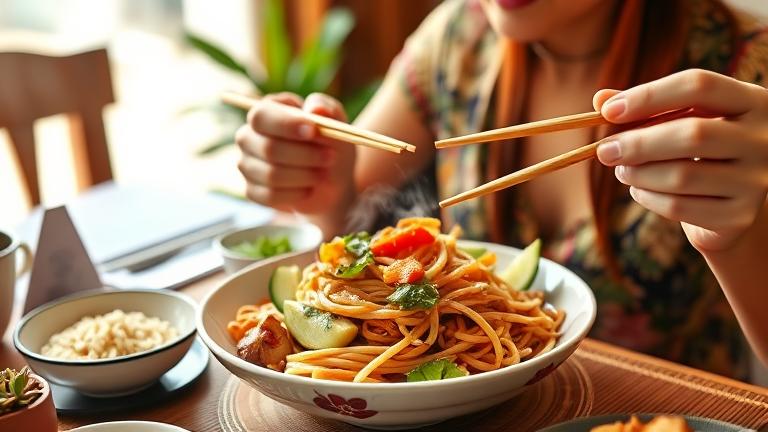
The History and Cultural Significance of Chopsticks in Thailand and Broader Asian Culinary Traditions
Chopsticks have a deep-rooted history and cultural importance across Asia, particularly in China, where they are believed to have originated over 4,000 years ago. Initially, these utensils served as tools for cooking and serving food before becoming the primary means for eating.
Their development was closely linked to ancient Chinese customs, and over time, they gradually spread across various Asian countries through trade, warfare, and cultural exchanges.
How to Eat Thai Food CORRECTLY
This diffusion helped embed chopsticks into the culinary traditions of many regions, including Thailand. In Thailand, chopsticks were introduced primarily through Chinese immigrants and traders who carried their culinary practices with them.
Notably, regions with a significant Chinese community, such as Phuket and Bangkok, adopted these utensils early on.
Chopsticks in Thai Culture and Culinary Practice
In Thailand, chopsticks hold more than just functional value; they symbolize cultural identity and social etiquette. Proper use of chopsticks is often associated with respect and good manners in many Asian societies. Each region develops its unique designs and materials for chopsticks, reflecting local aesthetics and resource availability.
For example, Japanese chopsticks are usually made from lacquered wood or bamboo and are shorter for precise handling. Chinese versions tend to be longer and made from materials like ivory, plastic, or metal.
Moreover, the influence of Western dining customs has led to a blending of utensil use in Thailand. While utensils like forks and spoons are more common for everyday meals, chopsticks are often employed for specific dishes such as noodles and dim sum.
This coexistence highlights the country’s culinary diversity. The adoption of chopsticks links Thailand’s traditional practices with broader Asian culinary trends, emphasizing the importance of preserving cultural heritage while adapting to modern dining styles.
Traditional Thai Utensils and Their Cultural Significance
Traditional Thai utensils reflect the rich tapestry of Thai cultural heritage. While chopsticks are used in particular contexts, the primary utensils in Thailand are the fork and spoon. Dishes like pad thai and dim sum are typically enjoyed with chopsticks, especially in regions influenced by Chinese cuisine.
These utensils are suitable for grabbing slender, soft ingredients, allowing diners to appreciate the dish’s texture and presentation. For example, pad thai’s delicate rice noodles and chewy, sauce-laden strands of drunken noodles are particularly suited for chopstick use.
Conversely, forks are more commonly used for rice, curries, and dishes requiring scooping or stabbing. This combination of utensils enhances the overall dining experience by accommodating various textures and flavors.
Thai Dishes Enjoyed with Chopsticks
Although Thai cuisine often features the fork and spoon, many traditional dishes are still enjoyed with chopsticks. Popular noodle dishes such as Pad Thai and Drunken Noodles are frequently eaten with chopsticks, which aligns with their texture and presentation.
The fine, stir-fried rice noodles in Pad Thai are easily handled with chopsticks, providing a controlled and authentic eating experience. Similarly, the chewy, sauce-coated noodles of Drunken Noodles lend themselves well to chopstick use, highlighting their practicality for such dishes.
Using chopsticks not only facilitates easier handling but also preserves the dish’s traditional appeal. The integration of chopsticks into Thai dining exemplifies the country’s culinary adaptability while respecting its cultural roots.
Mastering the Use of Chopsticks in Thai Cuisine
To enjoy Thai dishes comfortably with chopsticks, mastering proper technique and etiquette is vital. Begin by holding the chopsticks correctly; one should be positioned between the thumb and index finger, with the other resting on the ring finger. This grip ensures stability and control, especially when picking up slippery ingredients. Practice opening and closing the chopsticks smoothly, focusing on coordination and finger movements.
Starting with larger pieces of food and gradually progressing to smaller, more delicate bites can build confidence. Watching instructional videos or practicing with a variety of Thai dishes, such as vegetables and meats, can help refine your skills.
Respectful dining customs are also essential. Avoid pointing with chopsticks or sticking them upright in a bowl of rice, as these actions are considered impolite. Using chopsticks quietly and gently reflects good manners and cultural awareness. Patience and consistent practice are the keys to becoming proficient. Ultimately, mastering chopsticks enhances the authentic experience of enjoying Thai cuisine and shows respect to local customs.
Myths and Realities: Authenticity of Chopsticks in Thai Cuisine
There are common misconceptions about whether chopsticks are genuinely part of Thai culinary traditions. Some believe chopsticks are traditional Thai utensils; however, they are more closely associated with East Asian cultures such as China and Japan. Thailand’s primary utensils historically are the fork and spoon, and these are used for a majority of traditional dishes.
The use of chopsticks has increased mainly due to tourism and the global popularity of Asian cuisine, making their presence in Thai dining settings more common today. Understanding this distinction is crucial for appreciating Thai culinary customs correctly.
While chopsticks are used in specific contexts in modern Thailand, they are not part of the classic Thai dining tradition. In most Thai households and traditional restaurants, the predominant utensils remain the fork and spoon. Their use is rooted in Thailand’s unique cultural practices and culinary history.
It is, therefore, respectful to recognize when and where chopsticks are appropriate, especially to avoid cultural misappropriation or misunderstandings. Shows of awareness and sensitivity are appreciated when dining in Thai or other Asian settings.
Conclusion
Though originating in China and popularized across Asia, chopsticks have become an integral part of various culinary traditions. Their use in Thailand exemplifies cultural exchange and adaptation, particularly for noodle-based dishes and Chinese-influenced meals. Mastering their proper use enhances the authenticity and enjoyment of these culinary experiences. However, understanding their origins and cultural significance is vital to respecting Thai customs.
Proper etiquette and cultural awareness help foster appreciation and appreciation for the diversity of Thailand’s food traditions. As global interest in Asian cuisine grows, chopsticks continue to bridge the distance between ancient customs and contemporary gastronomy, enriching the dining experience for everyone.