
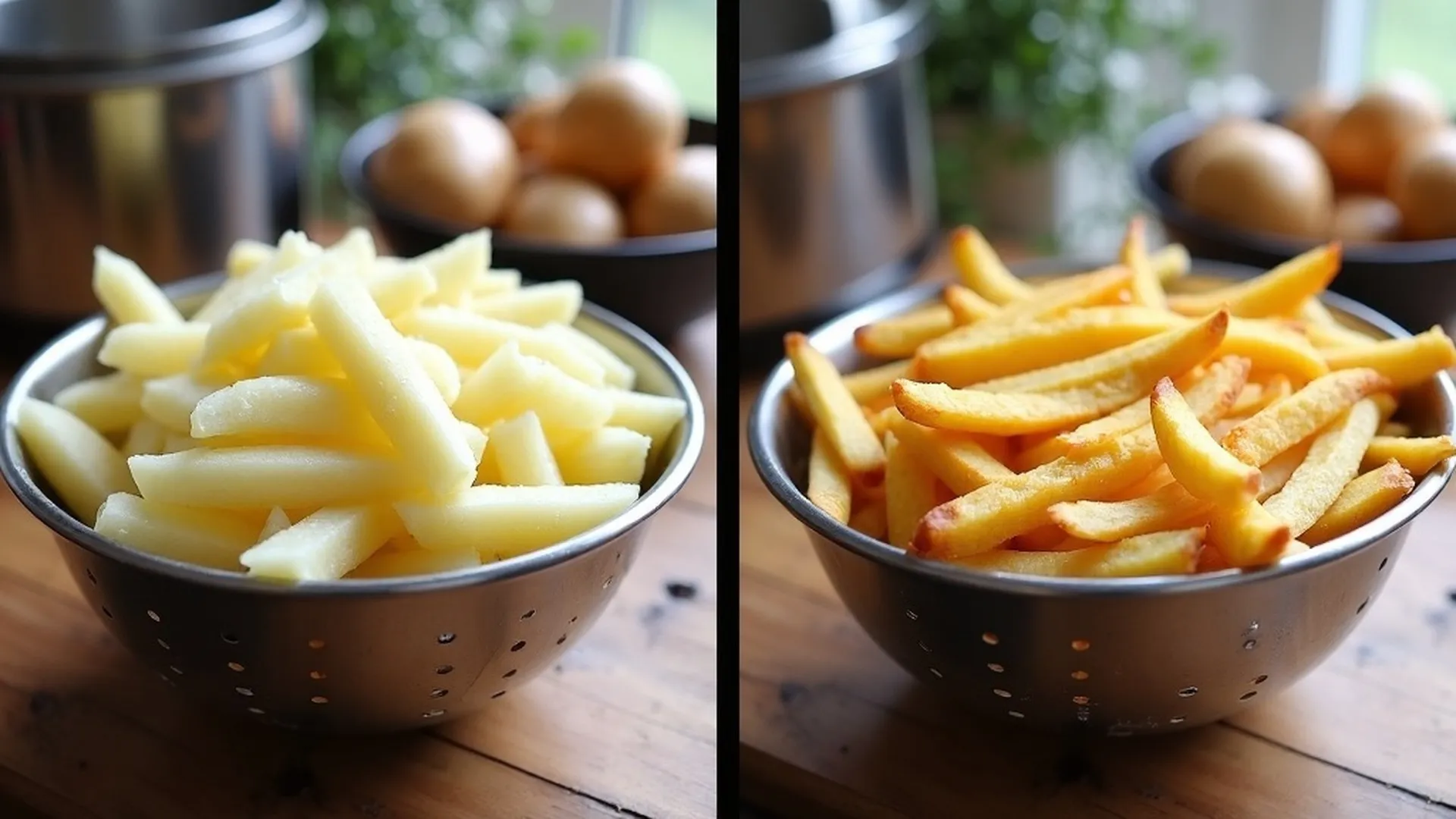
Yes, blanching potatoes before making french fries is a smart move if you want fries that are crispy on the outside and soft on the inside. It is not required, but it makes a big difference in the final result.
Blanching means briefly cooking the cut potatoes in hot water or oil, then cooling them before the final fry or bake. This first step cooks the inside of the potato just enough so it turns fluffy later. It also washes away extra surface starch, which helps prevent fries from sticking together and turning soggy.
When you skip blanching, fries often cook unevenly. The outside may brown too fast while the inside stays hard or dense. Blanching slows that down and gives you more control. It also helps fries keep their shape and color better, especially if you plan to freeze them or cook them later.
To blanch at home, cut your potatoes into fry shapes and rinse them well. Boil them in salted water for about 3 to 5 minutes until slightly tender but not falling apart. Drain and let them cool completely. After that, fry or bake as usual.
If you want restaurant style fries at home, blanching is worth the extra step.
What Blanching Potatoes Actually Means
Blanching potatoes means you partly cook them in hot water before you fry them. It is a quick step, and you are not trying to cook the potatoes all the way. You just want them to soften a little on the inside. When chefs talk about blanching, they are talking about dipping food in boiling water for a short time and then cooling it right away. With potatoes, this helps the fries cook more evenly once they go into the oil. Blanching is different from fully boiling potatoes because you only leave them in the hot water for a few minutes. You want the outside to start cooking, but the inside should still feel firm.
Some people think blanching is an extra step they can skip, but it actually makes a big difference. When you blanch potatoes, you help remove some of the starch on the surface. This is important because extra starch can make fries stick together or turn gummy. Blanching also helps the fries keep their shape. If you put raw potatoes straight into hot oil, they can cook unevenly and sometimes break apart. By blanching first, the fries stay stronger and more steady in the oil.
Another reason blanching works so well is because it gives the potatoes a chance to start drying out. Wet potatoes and hot oil do not mix well. The oil can bubble too hard or make the fries greasy. When you blanch the potatoes, they release some moisture, which helps the fries get crisp when you fry them later. It is a simple step, but it improves the texture a lot.
Blanching is something you see in restaurants all the time. They do it because it saves time during busy hours. They blanch a big batch of potatoes early, cool them, and then finish frying them later when an order comes in. You can do the same thing at home if you want. It makes the cooking process easier, and you get fries that taste more like the ones from your favorite restaurant.
Why Blanching Helps French Fries Get Crispier
Blanching helps french fries get crispier because it changes the way the starch in the potato reacts to heat. When potatoes go into hot water, the starch on the outside starts to soften and turn into a thin layer that later becomes crunchy. This step makes the fries create a stronger outer shell once they hit the oil. Without blanching, the outside of the fry stays more raw, which can lead to soft or uneven spots. By starting the cooking process early, blanching sets up the fries for better browning and a crisp bite.
Another reason blanching works so well is that it helps remove some of the moisture inside the potato. Moisture is the main thing that stops fries from getting crisp. When water heats up inside the potato, it turns to steam and pushes against the outer layer. If there is too much moisture, the fries can steam instead of fry. That is why fries sometimes come out pale or soggy. Blanching pulls out a bit of that extra water so the potatoes are ready for a true fry later. The less water left inside, the crispier the outside becomes.
The next benefit is even cooking. Raw potatoes are dense, and if you fry them without blanching, the outside cooks too fast while the inside stays hard. This can make the fries burn on the outside before the inside is ready. Blanching solves this by giving the inside a head start. When you fry them a second time, everything cooks at the same rate. That is how you get fries that are both crisp and soft in the middle. Restaurants use this method because it gives them perfect fries almost every time.
If you compare blanched fries to unblanched fries side by side, you can see and taste the difference. Blanched fries come out golden, crisp, and sturdy. They hold up well even after they cool a little. Unblanched fries often turn out darker, oilier, or limp. The texture is not the same. Blanching may seem like an extra step, but it is the main reason homemade fries can taste like the ones from a restaurant.
How to Properly Blanch Potatoes for French Fries
Blanching potatoes for french fries is simple once you learn the steps. First, you cut the potatoes into even sticks so they cook at the same speed. Uneven cuts can lead to fries that are half soft and half crunchy, so try your best to keep them close in size. After cutting, rinse the potatoes in cold water. This helps wash away extra starch on the surface, which keeps the fries from sticking together later. When the water runs clear, you are ready to cook.
Next, place a large pot of water on the stove and bring it to a strong boil. You want the water hot enough so the potatoes start cooking right away. When the water is boiling, gently drop in the potato pieces. Blanching usually takes about 4 to 6 minutes depending on the size of the fries. You do not want the potatoes soft. They should be firm but not raw. A good way to check is to poke one with a fork. It should slide in with a little resistance. If the potato feels mushy, it has cooked too long and will fall apart when frying.
Once the potatoes reach the right texture, lift them out of the pot and place them on a sheet pan. This is where cooling and drying become very important. The potatoes need to lose steam so they can dry out on the surface. A wet potato dropped into oil can cause the oil to splatter or make the fries greasy. Many people lay the potatoes in a single layer so the heat can escape. Some cooks even place them in the refrigerator for a short time to help them firm up. Dry potatoes make crisp fries, so giving them time to cool completely pays off.
One mistake people make is rushing the frying step before the potatoes are ready. If the potatoes still feel damp, they will not crisp the way you want. Another mistake is overcrowding the pan or fryer. Too many potatoes cool the oil and make the fries heavy and soggy. Blanching helps a lot, but you still need hot oil and enough room for the fries to float and cook evenly. When you follow these steps, you will see how much better your fries turn out. It becomes easier with practice, and soon you will be able to tell by sight and feel when the potatoes are perfectly blanched.
Do You Always Need to Blanch Potatoes for Fries?
You do not always need to blanch potatoes for fries, but it depends on the result you want. Blanching gives you the best shot at fries that are crisp on the outside and soft on the inside. If you want fries that taste like they came from a restaurant, blanching is the most reliable method. It helps the potatoes cook evenly and makes the final fry go faster. But if you are in a rush or only making a small batch, you can skip blanching and still get decent fries. They just might not have the same crunch or color.
Blanching is most helpful when you are deep frying. Oil cooks the outside of the potato fast, so giving the inside a head start makes a huge difference. When you skip blanching, the outside might turn dark before the inside cooks through. This can lead to fries that look done but feel hard in the middle. If you have ever had fries that taste raw or dense on the inside, that is usually why. Blanching helps prevent that by softening the center first.
There are times when blanching is not needed, especially with an air fryer. Air fryers cook more slowly and use hot air instead of oil. This gives the potatoes extra time to cook through without burning on the outside. Many people get good results by soaking the potatoes in cold water and drying them well before cooking. The texture will not be exactly the same as deep fried fries, but they can still be crisp and tasty. Blanching can improve air fryer fries too, but it is not required.
Frozen fries are another case where blanching is unnecessary because the potatoes are already par cooked. The factory blanches them, dries them, and often even fries them once before freezing. That is why frozen fries cook so quickly at home. If you are using fresh potatoes, the choice to blanch or not depends on how much time you have and how perfect you want the fries to be. Blanching makes a clear difference, but skipping it is fine when you want something fast and simple.
Extra Tips for Perfect Homemade French Fries
Making great homemade french fries takes a little practice, but a few extra tips can make the whole process easier. One of the best tricks is the double fry method. This means you fry the potatoes once at a lower temperature, let them rest, and then fry them again at a higher temperature. The first fry cooks the inside, and the second fry gives the fries their crisp texture. When you double fry, the fries come out golden, light, and crunchy instead of heavy or soggy. Many restaurants use this method because it works almost every time.
The oil you use also matters more than most people realize. Oils with a high smoke point, like peanut oil or canola oil, handle heat well and give cleaner flavor. If the oil is too cool, the fries will soak up the oil and taste greasy. If the oil is too hot, the outside will burn before the inside finishes cooking. A thermometer helps, but if you do not have one, you can test the oil by dropping in a small piece of potato. If it sizzles gently and rises to the top, the oil is ready. The goal is steady bubbling, not wild popping.
Seasoning the fries at the right moment makes a big difference too. Salt sticks best when the fries are freshly cooked and still warm. If you wait too long, the salt falls off and the fries taste plain. You can keep it simple with just salt, or you can try spices like garlic powder, paprika, or even a little chili powder for heat. Just do not add wet toppings until the fries are fully crisp, or they will soften fast. If you want to get fancy, toss the fries in a bowl so every piece gets coated evenly.
If you plan to prep fries ahead of time, storing them the right way helps a lot. Blanched potatoes can be kept in the fridge for a few hours or even overnight. Make sure they are spread out so they stay dry. Some people even freeze them after blanching. Frozen blanched fries get even crispier when fried because freezing removes extra moisture. No matter which method you choose, remember that dry potatoes fry better than wet ones. With these small steps, you can turn simple potatoes into fries that taste like your favorite restaurant version.
Conclusion
Blanching potatoes before making french fries can make a big difference in how your fries turn out. It helps the fries cook evenly, keeps the inside soft, and makes the outside crisp. Even though it adds one extra step, many people find that the results are worth it. Blanching gives you fries that look better, taste better, and stay crisp longer. It is the same method restaurants use because it works so well.
You do not have to blanch every time, but trying it once can show you how much it improves homemade fries. You can test different blanching times, oil temperatures, or potato types until you find your favorite method. Cooking at home is all about learning what works best in your kitchen. If you enjoy experimenting, you might even discover a new way to make fries that you like more than any takeout version.
Now that you know how blanching helps and how to do it the right way, give it a try the next time you make fries. See how the texture changes and decide for yourself if it is worth the effort. Cooking is more fun when you can taste the difference your steps make. Enjoy your fries, and feel free to explore more tricks to make them even better.