
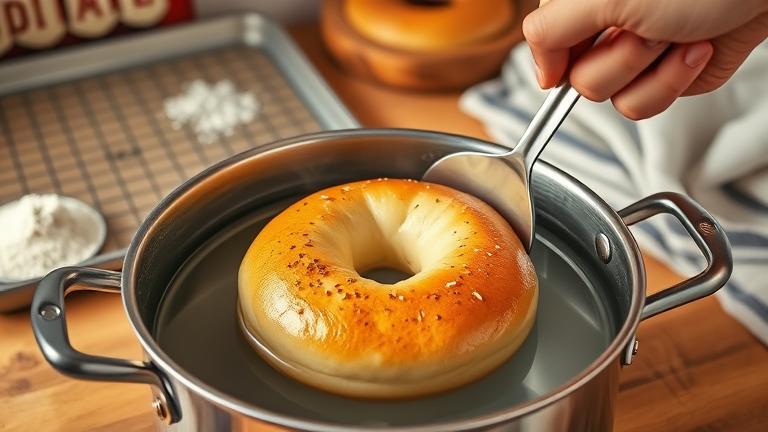
Understanding the Importance of Boiling Bagels
Boiling bagels is a traditional step that originates from Eastern European Jewish communities. Historically, this method was used to give bagels their distinctive chewy texture and shiny crust. The boiling process creates a barrier that prevents the dough from expanding too much during baking, resulting in a dense and chewy interior that is characteristic of authentic bagels.
In addition, boiling helps develop a glossy, crispy crust that sets genuine bagels apart from other types of bread. This step is crucial because it seals in moisture, enhances the texture, and improves the overall appearance of the final product. Without boiling, the bagel’s unique chewy texture and appealing exterior would be compromised, emphasizing the step’s importance in traditional bagel craftsmanship.
Scientific Effects of Boiling on Bagel Dough
The science behind boiling bagels involves heat transfer that alters the molecular structure of the dough. When the bagels are boiled, the high temperature causes the starches in the dough to swell and gelatinize, which is essential in creating their characteristic chewy texture.
This gelatinization process results in a dense, chewy crust that is visually appealing with a shiny surface. The boiling process also influences the crust’s color and sheen, contributing to the bagel’s iconic look and texture. Proper boiling duration is critical to achieving a balance between chewiness and crust development. Over or under-boiling can affect the final quality, making this step vital in authentic bagel baking.
Alternative Methods for Baking Bagels Without Boiling
While traditional bagel making involves boiling, there are modern alternatives that allow bakers to skip this step without sacrificing quality. One such method is *steam baking*, which involves creating steam inside the oven to mimic the effect of boiling by maintaining moisture around the dough during the initial baking stage (Source)
You can generate steam by placing a metal pan filled with water on the oven’s lower rack, which creates humidity and helps develop a crust similar to that of boiled bagels. Another technique involves using a *microwave and oven combination*.
First, briefly steaming the bagels with a damp towel in the microwave, then transferring them to a hot oven, can produce a chewy crust. Additionally, some bakers utilize *parboiling* in flavored liquids like honey water or herbal infusions to add distinct flavors.
On a commercial level, specialized equipment like *bagel molds* and *industrial steamers* facilitate baking without boiling by better controlling moisture and temperature. These approaches expand the possibilities for baking delicious bagels with less equipment or in home settings.
Advantages and Drawbacks of Boiling Food
Boiling provides significant benefits in cooking. It helps kill harmful bacteria and parasites, making seafood, meats, and vegetables safer to eat. Moreover, boiling results in evenly cooked, tender textures that improve the eating experience, especially for tough cuts or fibrous produce.
However, boiling has its disadvantages. Water-soluble nutrients like certain vitamins may leach out, reducing the food’s nutritional value. Overcooking during boiling can also diminish flavor, texture, and visual appeal if not carefully monitored. In some cases, boiling might not be suitable, such as for foods that benefit from caramelization or browning techniques like roasting or sautéing are better suited.
Choosing to omit boiling can help preserve more nutrients and deepen flavors. Alternatives like grilling or roasting are not only more flavorful but also environmentally friendly and quicker. Nonetheless, for foods requiring sterilization, boiling remains the most reliable method to ensure safety.
Expert Tips for Perfect Bagels Every Time
Creating the perfect bagel demands your attention to detail and professional techniques. Start by using high-protein flour to ensure a chewy texture that can withstand boiling and baking. Thorough kneading develops gluten strength, which helps the bagel keep its shape through the cooking process.
Many bakers swear by boiling the bagels for approximately one minute per side in water infused with barley malt syrup or honey, which adds flavor and helps with browning. If you prefer to avoid boiling, baking without this step might produce a less shiny and chewy crust but can still yield tasty results.
Temperature control is crucial. Keep the water at a gentle boil rather than a vigorous one to prevent cracking or uneven textures. Baking at around 425°F (220°C) promotes a crisp crust while keeping the interior soft. Cooling the bagels slightly before slicing helps maintain their structure and enhances the eating experience.
Innovative Bagel Recipes and Flavor Ideas
Explore new dimensions in bagel making by experimenting with creative recipes. Gluten-free options can be crafted using alternative flours like rice, almond, or tapioca, catering to dietary restrictions while maintaining flavor and texture.
Enhance your bagels with herbs, spices, and fruits to create exciting taste combinations. Incorporate garlic, rosemary, or dill into the dough, or top your bagels with cranberry, blueberry, or even jalapeño for a spicy twist. These infusions inspire innovative breakfast options or snacks that delight your taste buds and impress guests.