
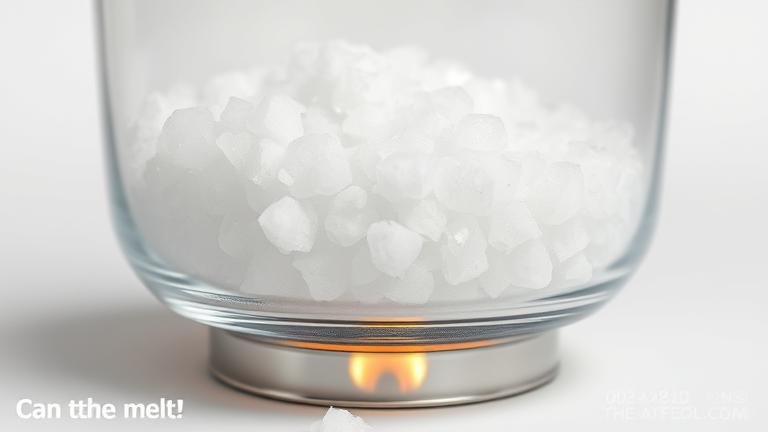
What Is Melting Salt?
Melting salt is a common ingredient used in cooking and food preparation that changes from a solid to a liquid state when heated. You might have seen this happen when salt is sprinkled on hot dishes or used in processes like pickling or curing. But what does it mean for salt to melt, and how does this process work?
In simple terms, melting salt means converting it from its solid form into liquid. This occurs when the salt is heated to a specific temperature called its melting point. For common table salt, which is sodium chloride, this temperature is about 801 degrees Celsius or 1474 degrees Fahrenheit. That’s much higher than typical kitchen temperatures, so regular cooking doesn’t melt salt in the pan. Instead, salt usually dissolves in water or other liquids at much lower temperatures.
The science behind melting salt involves its atomic structure. Salt is made up of sodium and chloride ions arranged in a crystal lattice. When heated, these ions gain energy and vibrate more rapidly. Once enough energy is absorbed, the bonds holding the atoms in place break down, allowing the salt to turn into a liquid. This specific temperature at which this happens is called the melting point. Different salts have different melting points, depending on their chemical makeup.
Although melting salt at home isn’t common, understanding the process helps explain different cooking techniques. For instance, when salt crystals are heated to very high temperatures, they can melt and form a liquid coating called a “salt glaze,” which is used in pottery and baking. In food science, salt’s melting process is important in processes like brining, where salt dissolves in water to help preserve or flavor food.
It’s good to note that most cooking uses salt in its dissolved form, not melted. When you sprinkle salt on food or mix it into a solution, it’s typically dissolving at much lower temperatures than its melting point. Dissolving occurs when salt particles separate into their ions and disperse throughout a liquid, creating a solution. This is different from melting, which involves a phase change from solid to liquid without dissolving.
- Tip: If you want to melt salt for a special recipe or craft, remember it requires extremely high heat. Most everyday cooking doesn’t reach this temperature, so salt remains solid or dissolves in water instead.
- Common mistake: Thinking salt melts easily in the stove or oven. In reality, it needs very high heat usually only achieved in industrial processes or specialized equipment.
Understanding melting salt means knowing about both its physical properties and how it behaves under different conditions. This knowledge can help you use salt more effectively in cooking and food preservation, and it reveals a little of the science behind everyday kitchen ingredients.
Does Salt Truly Melt?
When we hear the word “melt,” many of us think of cheese, chocolate, or ice cream turning into a liquid with heat. But what about salt? Does salt really melt, or does it just dissolve? Understanding how salt reacts when heated can clear up some common misconceptions and help you use it better in your cooking.
First, let’s look at what happens to salt when it gets hot. Salt, mainly sodium chloride, has a melting point of about 801 degrees Celsius, or roughly 1474 degrees Fahrenheit. That means, under normal cooking conditions, salt never actually melts in your pan or oven. You would need an extremely high temperature far beyond regular kitchen heat to turn salt into a liquid.
Instead of melting, salt tends to dissolve or change in other ways. When you add salt to boiling water, for example, it dissolves into the water particles. This process begins at much lower temperatures, even at room temperature, and continues as the water heats up. So, during cooking, salt often dissolves rather than melts. That’s why salting a pasta water makes the salt disappear quickly it’s dissolving into the hot water, not melting into a liquid form.
Now, you might wonder: does salt change when heated? Yes, it does. When salt is heated strongly, it can undergo a process called sublimation, especially if exposed to very high temperatures. Sublimation is when a solid turns directly into a gas without becoming a liquid first. In a laboratory or industrial setting, salt can sublimate and form salty vapors, but this is not usual in everyday cooking. Such high temperatures are needed, not typical stove or oven heat.
But in the kitchen, salt’s main behavior under heat is to dissolve or to undergo a phase change from solid to gas at extreme temperatures. We rarely see it melting into a liquid because the heat required is so intense. That’s why salt is effective at seasoning and preserving, not because it melts, but because it dissolves and interacts with other ingredients.
- Tip: When salting during cooking, imagine salt as dissolving rather than melting. This helps you add the right amount without overdoing it.
- Tip: For homemade caramel or sugar sauces, remember that salt won’t melt into the mixture the way sugar does, but it can dissolve into hot liquids easily.
- Common mistake: Thinking salt can melt smoothly in your skillet you’ll usually just see it slowly dissolving at high heat.
To sum up, salt does not really melt in your kitchen. Instead, it dissolves into liquids or can sublimate at very high temperatures. Knowing this helps you understand how to use salt better in your cooking and avoid misconceptions. So, next time you see salt glistening in a hot pan, remember it’s dissolving or possibly sublimating, but not melting.
How Salt Melts at Different Temperatures
Salt, especially common table salt or sodium chloride, melts at a specific temperature, but this can vary slightly depending on certain factors. Understanding the melting point of salt is helpful for cooking and food preservation, as well as for scientific curiosity.
The melting point of pure sodium chloride is about 801 degrees Celsius (1474 degrees Fahrenheit). This means that under normal conditions, salt will stay solid until it reaches this very high temperature. In the kitchen, you usually won’t see salt melting because cooking temperatures are much lower. However, knowing this melting point helps when working with salt in more advanced culinary techniques or scientific experiments.
Factors Affecting Salt’s Melting Process
- Impurities and Additives: Commercial salt often contains impurities or additives like anti-caking agents. These substances can slightly alter the melting point, usually causing it to be lower or higher than pure salt. For example, additives like iodine or moisture can influence how and when salt melts.
- Pressure: Higher pressure can increase the melting point of salt. Under most everyday cooking conditions, pressure variations are minimal, but in scientific settings, controlling pressure allows precise melting points to be observed.
- Heat Distribution: Even heating ensures salt melts uniformly. If heat is uneven, some salt might start to melt or caramelize before others, especially when working at high temperatures like in melting salt blends or salt-based cookware.
Salt Behavior at Different Temperatures
In typical cooking, salt doesn’t actually melt but dissolves into water or other liquids at much lower temperatures. For instance, table salt dissolves in water at room temperature, but this process speeds up as the water gets hotter. When you salt boiling water for pasta or soup, you’re not melting the salt but dissolving it efficiently into the liquid.
Technically, if you were to heat salt directly in an oven or on a stove to very high temperatures, it would eventually melt around 801°C. It’s important to note that such temperatures are not used in typical kitchens. Instead, they are more relevant in industrial processes like salt refining or manufacturing.
Practical Tips for Working with Salt and Heat
- Always handle salt with care when heating at very high temperatures in industrial settings.
- In cooking, focus on dissolving salt in warm or hot liquids rather than melting it.
- If your recipe calls for melting salt like in salt-cooking or curing follow precise instructions and be aware of the high temperatures involved.
Common Uses of Salt Melting
Salt melting is a popular solution for many practical applications, especially when it comes to managing ice and snow or assisting in industrial processes. It’s a versatile tool that helps make our environment safer and facilitates various manufacturing tasks. In this section, we’ll explore the main ways salt is used for melting purposes and why it’s so effective.
One of the most familiar uses of salt melting is during winter weather. When temperatures drop, ice can become dangerous on roads, sidewalks, and driveways. Salt is spread over these surfaces to lower the freezing point of water, causing the ice to melt and creating safer walking and driving conditions. This process, known as de-icing, is essential in colder climates where ice formation is persistent.
Salt works by disrupting the natural formation of ice crystals. When added to ice, it causes the water molecules to dissolve more easily, weakening the ice’s structure. This effect is most efficient when temperatures are just below freezing, typically between 0°C and -9°C (32°F to 15°F). If it’s extremely cold, salt may need to be supplemented with other melting agents like calcium chloride or magnesium chloride.
Other Common Melting Applications
- Industrial processes: Salt is widely used in manufacturing and chemical production. It’s used to help extract minerals from ore or to control the temperature during certain chemical reactions. Salt’s ability to absorb heat and facilitate melting makes it a useful tool in these high-precision environments.
- Food preservation: While not directly related to melting in the traditional sense, salt’s role in curing and brining foods involves melting salt crystals in a solution, which helps preserve meat and vegetables. This process also enhances flavor and texture.
- Water treatment: In water treatment plants, salt is sometimes used to manage the melting of ice in large-scale operations or to maintain certain water conditions during processing.
Practical Tips for Using Salt for Melting
- Apply salt early before a storm hits to prevent ice from forming or sticking strongly to surfaces.
- Use the right amount of salt too little may be ineffective, while too much can damage concrete or nearby plants.
- Combine salt with gravel or sand for better traction on slippery roads and sidewalks.
- Be mindful of environmentally friendly options, especially in areas near gardens or wildlife habitats, where excess salt can cause harm.
Whether you are de-icing your driveway or involved in large-scale industrial processes, salt melting plays a crucial role. Its ability to lower water’s freezing point allows us to handle cold weather safely and efficiently. Understanding how and when to use salt properly can help you stay safe, save money, and contribute to better environmental practices.
Can You Melt Salt in the Kitchen?
Many home cooks wonder if it’s possible to melt salt in the kitchen and whether it’s safe to do so. The short answer is that melting salt isn’t practical or common in everyday cooking. Unlike sugar or cheese, salt doesn’t turn into a liquid when heated. Instead, it changes form through other processes like dissolving or melting at very high temperatures.
Salt is primarily composed of sodium and chloride, which are stable minerals. When you heat salt, it will eventually reach a temperature called the melting point, but this is very high around 1,413°F (770°C). Most home stovetops simply can’t reach these temperatures safely or efficiently. As a result, melting salt at home is neither practical nor safe without specialized equipment.
What Happens When You Heat Salt?
If you heat salt in a pan, it will gradually get hotter. Initially, you might see small grains start to turn brown or fog up as moisture evaporates. But at extremely high temperatures, salt will melt into a liquid called molten salt. This liquid is hot and dangerous to handle and is usually used in industrial processes, not home cooking.
Besides being impractical, melting salt can be dangerous. Molten salt is extremely hot and can cause severe burns if spilled or touched. It also releases fumes that can irritate the respiratory system. In addition, traditional kitchen equipment isn’t designed to handle these temperatures, increasing the risk of accidents.
Methods That Involve Salt Heating
- Roasting or cooking with salt crusts: You can surround your food with coarse salt and heat it in the oven. The salt absorbs and distributes heat evenly, but you’re not melting the salt just cooking with it.
- Using salt in high-temperature cooking: Salt is often used to season foods before grilling or roasting. Again, it melts slightly at high heat but does not turn into liquid in a way that is noticeable or useful in most cooking.
Is There a Safer Alternative?
If your goal is to create a salty, crispy exterior or a unique flavor, consider using brine or salt pastes. These methods involve dissolving salt in water or mixing it with oils, which can then be applied to foods. This avoids the need to heat salt to dangerous levels.
In conclusion, while salt can technically melt at very high temperatures, doing so in a kitchen isn’t practical or safe. Instead, you can enjoy salt’s flavor-enhancing properties through normal cooking methods without risking safety or equipment damage. Focus on using salt in your recipes as a seasoning or in brines for the best results.
Melting Salt vs. Dissolving in Water
When cooking or working in the kitchen, you might notice that salt can do different things depending on the situation. Sometimes it melts, and other times it dissolves in water. While these terms can sound similar, they describe very different processes. Understanding these differences can help you use salt more effectively in your recipes.
Let’s start with melting. Melting is a process where a solid turns into a liquid because of heat. Think of ice turning into water when you leave it outside on a warm day. Salt, however, does not melt in the traditional sense. Instead, it changes its form quite differently when heated.
When you heat salt like table salt or rock salt at high temperatures, it eventually reaches a point called its melting point. Pure salt, or sodium chloride, melts at around 801 degrees Celsius (1474 degrees Fahrenheit). This is way hotter than your stovetop or oven. So, in everyday cooking, salt usually does not melt in heat alone. Instead, it remains as a solid until it reaches very high temperatures, which are rare in kitchen cooking.
The Process of Dissolving
In contrast, dissolving salt in water is a different process altogether. When you add salt to water, the salt crystals break apart and spread throughout the liquid. This happens because water molecules are constantly moving. They surround the salt particles, pulling apart the salt’s ionic bonds that hold the sodium and chloride ions together. This process is called dissolution.
This is a physical change, not a chemical one. The salt isn’t changing into something new; it’s just spreading evenly within the water, forming a saline solution. You can tell salt has dissolved when the mixture looks clear, and the salt no longer sits at the bottom.
Key Differences in Physical Processes
| Process | Melting | Dissolving |
|---|---|---|
| What happens | Solid turns into liquid due to heat | Solid disperses in a liquid due to solvent action |
| Temperature involved | Requires high temperatures, specific for each substance | Usually occurs at room temperature or warmer |
| Physical state change | Yes, from solid to liquid | No, remains as a solid but dispersed |
| Example in cooking | Melting butter or chocolate | Dissolving salt or sugar in water |
Practical Tips for Home Cooks
- If you want salt to blend evenly in a dish, always add it to liquid ingredients early to give it time to dissolve.
- Remember that salt will not melt at normal cooking temperatures. If you need it to dissolve faster, warm the liquid slightly but avoid boiling to prevent over-salting or evaporation.
- If you’re melting salt for a special recipe, make sure you’re using high enough heat and a suitable type of salt, like rock salt or sea salt crystals.
In summary, melting salt is about heat turning a solid into a liquid at very high temperatures, which rarely happens in typical cooking. Dissolving, on the other hand, involves salt particles spreading evenly through water at much lower temperatures. Knowing this difference helps you use salt wisely, whether you want it to melt or dissolve in your recipes.
Fun Facts About Salt and Melting
Salt is one of those ingredients that everyone keeps in their kitchen, but did you know it has some fascinating tricks up its sleeve? One of the most interesting properties of salt is its ability to lower the melting point of ice and other frozen foods. This makes it a handy tool during winter for melting ice on sidewalks or in cooking to improve textures and flavors.
When you sprinkle salt on icy roads, it doesn’t just melt the ice at the surface. Salt dissolves into the thin layer of water that forms around ice crystals. This process creates a brine that reduces the energy needed for the ice to turn into liquid, effectively lowering its melting point. That’s why saltwater can melt ice at temperatures below zero Celsius or 32 degrees Fahrenheit. In fact, common table salt can depress the freezing point of water by about 1.8 degrees Fahrenheit for every two teaspoons added per quart of water.
But salt’s melting magic isn’t just useful during winter. In cooking, salt can help quickly melt cheese, butter, and even chocolate. Adding a pinch of salt enhances these ingredients’ flavors and connectedly helps them melt more evenly by breaking down their structure. Imagine melting cheese on a pizza or butter in a sauce salt can be your secret weapon for smooth, gooey results.
Here’s a fun science tidbit: different types of salts have different melting effects. For instance, rock salt, which is larger and coarser, takes longer to dissolve but is great for melting ice because it stays on the surface longer. Meanwhile, finer salts, like table salt or sea salt, dissolve faster and are preferred in recipes or direct applications where quick melting matters.
Salt’s melting abilities are also linked to its chemical structure. It’s made of sodium and chloride ions bound together. When heat or water interacts with salt, it breaks these bonds, releasing ions into the solution. That process is why salt can help break down certain foods and improve their texture during cooking.
Additional Surprising Salt Facts
- In ancient times, salt was so valuable it was used as currency, known as “white gold”.
- The phrase “worth one’s salt” comes from old Roman soldiers who were paid in salt.
- Salt has been used for centuries to preserve food, making it a crucial part of historical food storage techniques.
- Salt not only melts ice but can also be used in some natural cleaning routines because of its abrasive properties.
Next time you see salt in your kitchen or on your driveway, remember that its melting properties are not just practical they’re rooted in interesting science and history. Whether helping to melt ice or making your favorite dishes more delicious, salt is truly a versatile and fascinating element.