
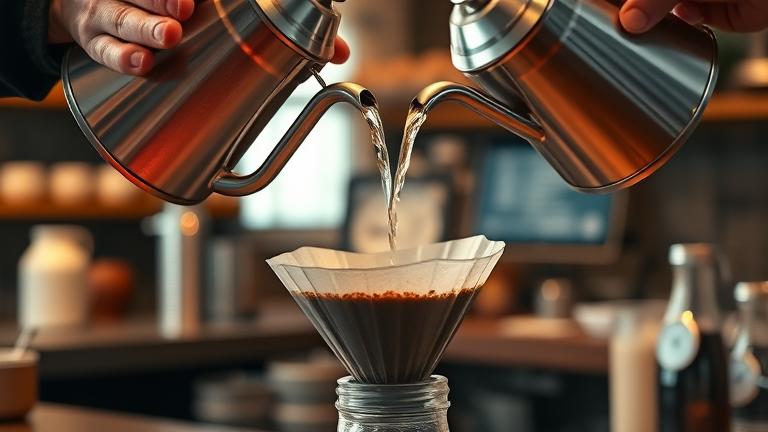
Understanding Water Temperature Basics
Water temperature plays a crucial role in making a perfect cup of pour over coffee. When you brew coffee, the water extracts flavors from the coffee grounds. The right temperature ensures that you get a balanced, flavorful brew without over- or under-extracting.
In general, water that is too hot can make the coffee taste bitter or burnt. Conversely, water that is too cold may result in weak, sour flavors because the extraction isn’t complete. Finding the right temperature helps you unlock the full potential of your coffee beans.
The Science Behind Brewing Temperatures
Scientists have studied how water temperature affects coffee extraction. The ideal range is usually between 195°F (90°C) and 205°F (96°C). Within this temperature window, the water dissolves the coffee’s flavorful compounds effectively.
At temperatures below 195°F, the extraction slows down, and you might end up with a weak or sour taste. Above 205°F, some delicate flavors can burn or become unpleasant. Staying within this range allows you to balance the flavors and enjoy the coffee as intended.
Why Temperature Matters in Pour Over
Pour over brewing relies on hot water slowly passing through coffee grounds. The temperature influences how quickly and thoroughly flavors are extracted. If your water is too hot, it can lead to over-extraction, making the coffee bitter. Too cold, and you risk under-extraction, resulting in a flat or sour taste.
Many coffee enthusiasts recommend using a thermometer or temperature-controlled kettle to get the water just right. This small investment can make a big difference in your brew quality.
Tips for Achieving the Perfect Water Temperature
- Use a kettle with a temperature gauge or a kettle that boils water and then cools for a minute before pouring.
- Allow boiled water to sit for about 30 seconds before pouring if you don’t have a thermometer. This typically brings the water to the ideal range.
- Avoid pouring boiling water directly onto coffee, as it can burn the grounds and cause undesirable flavors.
- Experiment with small adjustments in temperature to see how your taste preferences respond.
Common Mistakes to Avoid
- Using water that is too hot or too cold without measuring—guesswork can lead to inconsistent results.
- Pouring water at different temperatures without noting your adjustments—this makes it hard to replicate your perfect brew.
- Ignoring the importance of temperature in your brewing process—remember, the right temperature is key for flavor extraction.
Mastering water temperature might seem simple, but it’s one of the most important steps in making a great pour over coffee. With a bit of practice and attention, you’ll be able to consistently brew coffee that tastes just right every time.
Why Water Temp Matters in Pour Over Coffee
When making pour over coffee, the temperature of the water you use makes a big difference in the final flavor. It influences how the coffee grounds release their flavors and aromas. Using the right water temperature helps you get a richer, smoother, and more balanced cup every time.
In general, the ideal water temperature for pour over coffee is between 195°F and 205°F. This range is hot enough to extract the coffee’s delicious oils and soluble compounds, but not so hot that it over-extracts bitter flavors. If the water is too cool, the extraction may be weak, resulting in a flat or sour taste. If it’s too hot, the coffee might taste bitter or burnt.
The Science Behind Temperature and Extraction
When hot water hits the coffee grounds, it does two things: dissolves flavors and extracts compounds. The temperature plays a key role here. At the right heat, water pulls out the sweet, fruity, and floral notes, while avoiding harsh bitterness. If the water is too cold, some of these desirable flavors don’t fully develop. On the other hand, excessive heat can cause over-extraction, leading to unpleasant bitterness.
How to Achieve the Perfect Water Temperature
The easiest way is to boil water and then let it sit for about 30 seconds. This cools the water slightly to the ideal range. For more precision, a kettle with temperature control is a great investment. It allows you to set the exact temperature for a consistent brew every time.
- Tip: Use a thermometer to check water temperature if you’re new to pour over brewing.
- Tip: Avoid pouring water that is boiling vigorously, as it can scorch the coffee grounds and create a bitter taste.
Common Mistakes to Avoid
- Using water that’s too hot or too cold. Both will affect flavor and extraction quality.
- Adding water directly from the boiling kettle without measuring or waiting.
- Not adjusting for altitude or kettle variations, which can affect water temperature.
Summary: Why Gentle Control Matters
Mastering water temperature is a simple but powerful way to improve your pour over coffee. It helps unlock the best flavors from your coffee beans and makes each cup more enjoyable. Remember, a temperature between 195°F and 205°F, combined with good technique, is your ticket to a rich, aromatic brew.
Ideal Water Temperature for Perfect Brew
Getting the water temperature right is key to brewing a flavorful and balanced pour over coffee. If the water is too hot or too cold, it can change the taste and overall quality of your coffee. Knowing the ideal temperature ranges helps you unlock the best flavor from your beans every time.
What Temperature Range Should You Aim For?
The perfect water temperature for brewing pour over coffee generally falls between 195°F and 205°F. This range is hot enough to extract the oils, aromas, and flavors from the coffee grounds without scalding them. When water reaches this temperature, it allows the coffee to bloom properly and produces a well-rounded, tasty cup.
Most coffee experts recommend sticking within this range for the best results. If your water is too hot, it may over-extract the coffee, making it bitter or harsh. Too cold, and the coffee may under-extract, resulting in a weak or sour taste. Striking the right balance is key to achieving that perfect brew.
How to Get the Right Temperature
If you’re boiling water on the stove, let it sit for a moment after boiling to cool slightly before pouring over your coffee grounds. Using a kettle with temperature controls can make this even easier, allowing you to set exactly the right heat. Alternatively, a good digital thermometer can help you check the temperature if you’re unsure.
- Boil water, then wait about 30 seconds to a minute to reach the ideal temperature.
- Use a thermometer to measure the water if you want precision.
- If your kettle has adjustable temperature settings, set it between 200°F and 205°F for the best results.
Common Mistakes and Tips
- Don’t pour boiling water directly onto the coffee grounds. Let it slightly cool first for a better extraction.
- Avoid using water that’s too cool, like from the tap in cold weather, as it won’t extract the flavors fully.
- Remember, water temperature can change depending on the ambient temperature and your equipment, so check if possible.
Mastering the ideal water temperature can significantly improve your pour over coffee. With just a little attention to heat, you’ll notice a richer aroma and more balanced flavor in every cup. It’s a simple step that makes a big difference in your coffee game!
How Water Temperature Affects Flavor
When it comes to brewing coffee or tea, water temperature plays a crucial role in shaping the flavor of your drink. The temperature at which you heat your water can enhance or diminish certain tastes, making the difference between a balanced sip and an overly bitter or weak one. Understanding how different water temperatures impact extraction can help you get the most flavorful cup every time.
At its simplest, brewing involves extracting flavors from coffee grounds or tea leaves. This extraction process is sensitive to temperature. Too hot, and you risk over-extracting the compounds that create bitterness and harshness. Too cold, and under-extraction can result in a weak, flat taste with barely any aroma.
The Impact of Hot Water
Using water that’s near boiling, around 200°F (93°C), is common for most coffee brewing methods like French press or pour-over. Hot water quickly dissolves sugars and acids, drawing out the vibrant and complex flavors in your beans or leaves. When done correctly, hot water produces a rich, flavorful cup.
However, if the water is excessively hot or if the brewing time is too long, it can lead to over-extraction. This means more bitter compounds and tannins are released, making your drink taste harsh or astringent. For instance, over-extracted coffee might taste like it has a burnt or rubbery note. To avoid this, follow recommended brewing times and temperatures for your method.
The Effects of Cold and Room Temperature Water
Brewing with colder water, such as in cold brew coffee, results in under-extraction. Cold water takes longer to dissolve the flavors, leading to a milder, smoother taste. Cold brew often tastes less bitter and retains more of the beans’ natural sweetness and subtle aroma.
Using water that’s just warm, around 120°F (49°C), can produce a gentle extraction. It’s gentle enough to highlight delicate flavors without extracting bitterness. This is useful for certain tea types or specialty brews where subtlety is key.
Practical Tips for Precise Water Temperature
- Use a thermometer or kettle with temperature control to ensure accuracy.
- Refer to specific temperature recommendations for each brew type. For example, green tea prefers around 175°F (80°C), while dark roast coffee often does well at 205°F (96°C).
- Adjust your brewing time based on temperature: lower temp might need longer brewing, while hotter extracts quicker.
- Avoid boiling water directly on delicate teas, as it can scorch leaves and produce bitterness.
Summary Table: Water Temperatures and Their Effects
| Temperature | Best For | Flavor Impact |
|---|---|---|
| 175°F (80°C) | Green tea, delicate brews | Mild, fresh, and subtle flavors |
| 185°F – 195°F (85°C – 90°C) | Black tea, light coffee | Balanced extraction, moderate bitterness |
| 200°F – 205°F (93°C – 96°C) | Standard coffee brewing | Rich, full-bodied flavor with some risk of bitterness |
| Boiling 212°F (100°C) | Cold brew preparation, some teas | Potential for over-extraction if brewed too long or on delicate teas |
| Below 160°F (71°C) | Cold brew, delicate infusions | Smooth, mild taste with minimal bitterness |
Understanding how water temperature affects flavor helps you customize your brewing process for perfect taste every time. Experiment with different temps and brewing times, and soon you’ll be making your favorite hot or cold beverages that truly shine.
Tips to Adjust Water Temp for Better Coffee
Getting the perfect cup of coffee often depends on the water temperature you use during brewing. Too hot, and you might end up with bitter, over-extracted flavors. Too cool, and your coffee could end up flat and underwhelming. Luckily, by making some simple adjustments, you can enhance your coffee’s taste and aroma.
Here are some practical tips to help you control and adjust the water temperature for a better brew every time.
1. Know the Ideal Temperature Range
The optimal water temperature for brewing coffee is generally between 195°F and 205°F (90°C to 96°C). Within this range, you achieve a good balance of extraction, drawing out flavors without bitterness. If your water temperature is consistently outside this zone, taste problems often follow.
2. Use a Thermometer for Accuracy
To dial in your water temperature precisely, invest in a good kitchen thermometer. This helps you monitor the water as it heats. Simply place the thermometer in the pot or kettle to check the temperature before pouring over your grounds. Instant-read thermometers are quick and easy to use, making sure you’re within that sweet spot for brewing.
3. Adjust Your Heating Method
If you notice your coffee is often over- or under-extracted, consider how you’re heating your water. Using a stove or kettle without temperature control can lead to unpredictable results. For more consistent temperature control, try a kettle with an adjustable temperature feature. Electric kettles with digital displays let you set the exact temperature with a push of a button and maintain it during brewing.
4. Pre-Heat Your Equipment
Adding cold or room temperature water to your brewing equipment can lower the initial temperature. To prevent this, pre-warm your mug, filter, or French press with hot water before brewing. This simple step helps maintain the optimal brewing temperature throughout the process.
5. Keep the Water at a Stable Temperature
Once heated, keep the water at a steady temperature during brewing. If using a pour-over, pour slowly and steadily to avoid sudden temperature drops. For French presses, pour hot water evenly to distribute heat. Using a kettle with temperature hold functions ensures consistency from start to finish.
6. Avoid Over-Boiling
If you boil water for too long, it can become over-heated and lose some oxygen, which affects flavor. Just bring the water to a boil, then let it sit for about 30 seconds if you want slightly cooler water for brewing. This short wait allows the temperature to stabilize in the ideal range.
7. Practice and Experiment
The best way to find what works for your taste buds is to experiment. Try brewing at different temperatures within the recommended range and note how each affects flavor. Keep a simple coffee journal to remember your favorite adjustments and eventually perfect your method.
Summary Table
| Tip | Details |
|---|---|
| Use a thermometer | Ensure water is in the 195-205°F range for optimal extraction. |
| Choose a temperature-controlled kettle | Maintain steady temperature and avoid fluctuations. |
| Pre-warm equipment | Keep water temperature stable during brewing. |
| Avoid over-boiling | Boil water, then wait 30 seconds for ideal temperature. |
| Experiment | Adjust within recommended range to find your preferred flavor. |
Controlling water temperature might seem simple, but it has a big impact on your coffee’s flavor. With these tips, you can enjoy a richer, more balanced brew every time. Happy brewing!
Common Mistakes with Coffee Water Temp
One of the biggest mistakes home baristas make is not paying attention to the water temperature when brewing coffee. Water temperature plays a crucial role in extracting the best flavors from your coffee beans. Too hot or too cool water can lead to a disappointing cup. Understanding common errors can help you avoid them and improve your coffee experience.
Using Water That’s Too Hot
Many people assume that hotter water always equals better coffee. However, water that’s too hot, generally above 205°F (96°C), can over-extract the coffee. Over-extraction pulls out bitter, burnt flavors, making your brew unpleasant. Plus, dangerously hot water can pose a safety risk, especially if you’re pouring directly from a kettle.
To prevent this mistake, aim for a water temperature between 195°F and 205°F (90°C to 96°C). If using a thermometer, check the temperature before pouring. Many modern coffee makers automatically heat water to the optimal range, but if you’re boiling water and then pouring, let it sit for about 30 seconds after boiling to cool slightly.
Using Water That’s Too Cool
On the flip side, using water that’s not hot enough will result in under-extraction. This produces weak, sour, or sour-tasting coffee because the water hasn’t extracted enough flavor from the beans. If your coffee tastes flat or overly acidic, the water temperature might be to blame.
For most brewing methods, keep water within the 195°F to 205°F range. If you’re using a French press or pour-over, ensure your water is hot enough but not boiling. A simple trick is to bring water to a boil and then let it sit for 30–60 seconds to reach the optimal temperature.
How to Avoid Temperature-Related Mistakes
- Use a reliable thermometer to check your water temperature before brewing.
- If you’re pouring hot water from a kettle, wait a moment after boiling.
- Invest in a coffee maker with temperature controls for more consistent results.
- Adjust your grind size and brew time if your coffee tastes off, as these can also affect flavor extraction.
Summary Table of Water Temp Tips
| Issue | Temperature Range | Result | Tip |
|---|---|---|---|
| Too hot | Above 205°F (96°C) | Bitter, burnt flavors | Let boiling water sit for 30 seconds before pouring |
| Too cool | Below 195°F (90°C) | Weak, sour-tasting coffee | Bring water just to a boil and wait before pouring |
In short, paying close attention to your water temperature ensures your coffee is well balanced and full of flavor. Small adjustments can make a big difference in your daily brew. Accurate temperature control is a simple step that leads to a much more satisfying coffee experience.
FAQs About Pour Over Water Temperature
What is the ideal water temperature for pour over coffee?
The best water temperature for pour over coffee is between 195°F to 205°F (90°C to 96°C). This range helps extract the full flavor from your coffee grounds without scalding them. If the water is too hot, it can make your coffee taste bitter or burnt. If it’s too cold, the extraction will be weak and sour. Using water within this temperature range ensures a balanced, tasty brew.
How can I tell if my water is at the right temperature?
If you have a kettle with a temperature control, set it to the desired range of 195°F to 205°F. If not, you can bring your water to a boil, then let it sit for about 30 seconds. Boiling water is at 212°F (100°C), so waiting a little helps it cool slightly and reach the ideal temperature. Many digital thermometers are inexpensive and easy to use for precise temperature checking.
Why does temperature matter so much in pour over brewing?
Temperature impacts how well the coffee grounds release their flavors. Hot water extracts the soluble compounds from the coffee, which gives you aroma, body, and flavor. Too hot, and you risk over-extracting, resulting in bitterness. Too cold, and the flavors won’t develop fully, leaving your coffee weak and sour. Finding the right temperature helps you achieve a smooth, well-balanced cup.
What are common mistakes related to water temperature?
- Pouring boiling water directly onto the grounds. This can scorch the coffee and make it bitter.
- Using water that’s not hot enough, leading to under-extraction and weak flavor.
- Not letting the water cool slightly after boiling.
- Ignoring the importance of water temperature for different beans or roast levels.
Tips for maintaining proper water temperature
- Use a kettle with a built-in thermostat for precise control.
- Bring water to a boil, then wait 30 seconds before pouring.
- Pre-warm your pour over dripper and mug to prevent temperature drops during brewing.
- If you notice your coffee tasting off, test your water temperature to see if adjustment is needed.
Can I adjust water temperature for different coffee types?
Yes, different beans and roasts can benefit from slight temperature adjustments. Light roasts often need a hotter water between 200°F and 205°F to bring out their delicate flavors. Dark roasts might be fine with slightly cooler water around 195°F, as they are more robust. Experiment to find what tastes best for your preferred coffee style.