
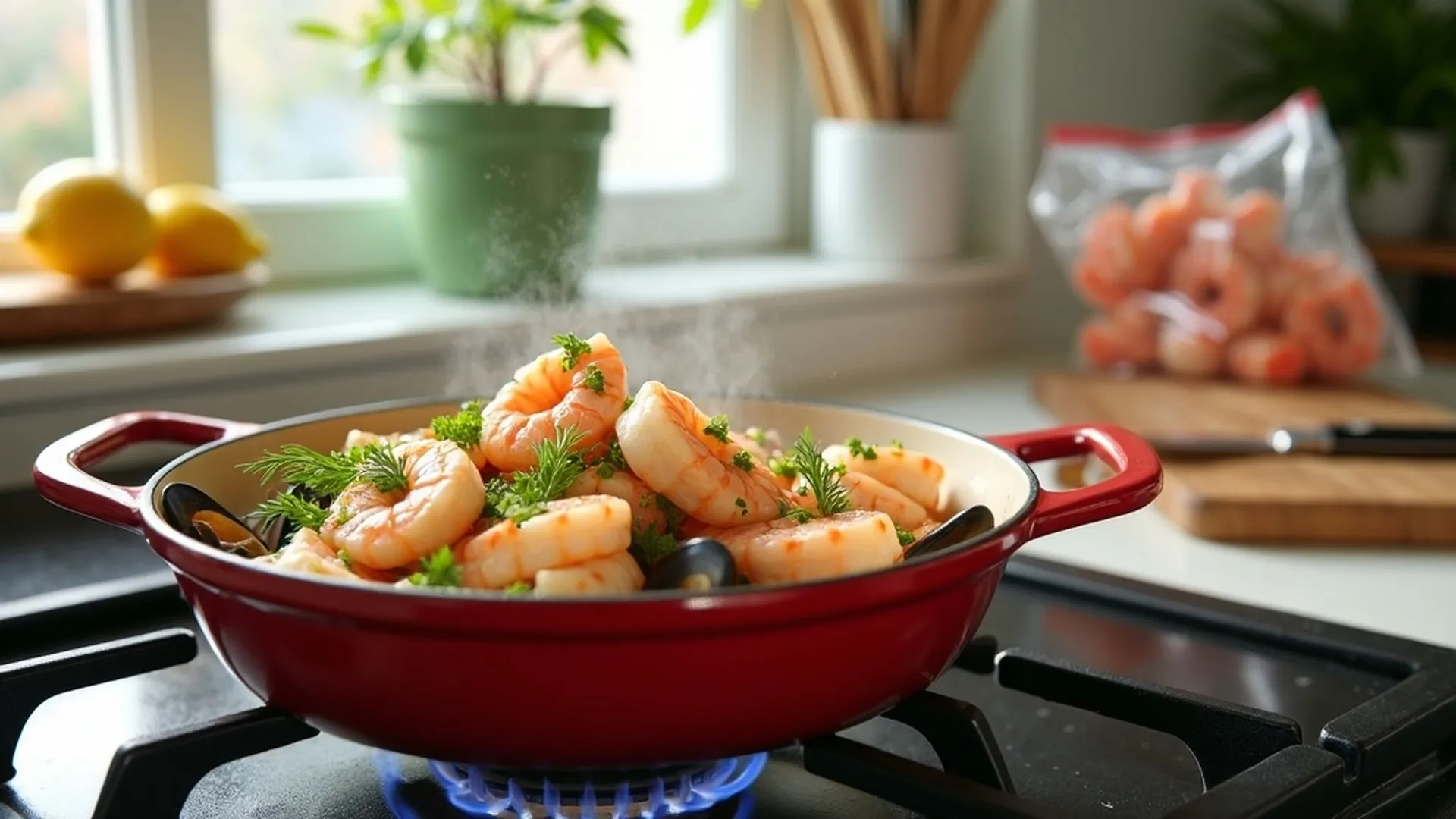
Yes, you can cook frozen seafood without defrosting it first, and it is safe and often very convenient. Many types of seafood are frozen right after being caught, so cooking them straight from frozen helps keep them fresh and tasty.
The key is using the right cooking method. Baking, steaming, poaching, and pan cooking all work well. You just need to add a little extra cooking time, usually a few more minutes than you would for thawed seafood. For example, frozen fish fillets can go straight into a hot pan or oven. Just cook them until the flesh turns opaque and flakes easily with a fork.
Frozen shrimp are also easy to cook without thawing. Rinse off any ice, then drop them into boiling water, a hot pan, or a soup. They are done when they turn pink and curl into a loose C shape.
Try to avoid slow cooking methods like low heat slow cookers. These can leave seafood sitting too long at unsafe temperatures. Also, skip breading frozen seafood since the coating may not stick well.
Cooking seafood from frozen saves time, cuts down on mess, and still gives you a great meal with very little effort.
Is It Safe to Cook Frozen Seafood Without Defrosting?
Yes, it is safe to cook frozen seafood without defrosting, as long as you cook it fully. This surprised me the first time I learned it. I always thought thawing was a must, but food safety experts like the USDA say frozen seafood can go straight into the pan, oven, or air fryer. What really matters is the final temperature, not whether the seafood was thawed first.
Frozen seafood is usually frozen very fast right after it’s caught. That quick freezing helps lock in freshness and slows down bacteria growth. When you cook it straight from frozen, you are actually skipping the risky time when seafood sits out and warms up too much. That can be safer than thawing on the counter, which is something a lot of people still do by mistake.
The key is cooking it all the way through. Fish should turn opaque and flake easily with a fork. Shrimp should be pink and firm, not gray or mushy. If you use a thermometer, most seafood is safe to eat at 145°F. Pre-cooked frozen seafood, like cooked shrimp, just needs to be heated until hot.
Problems only happen when frozen seafood is cooked unevenly. The outside may look done while the inside stays cold. That’s why lower heat and a little extra cooking time matter. As long as you’re patient and cook it fully, frozen seafood is safe and perfectly fine to eat.
Types of Seafood You Can Cook Straight From Frozen
Some seafood works really well when cooked straight from frozen. I learned this the hard way on busy nights when I forgot to thaw anything and had to improvise. Turns out, many common seafood options are made for this exact situation.
Fish fillets are the easiest place to start. Salmon, cod, tilapia, haddock, and pollock all cook well from frozen. These fish are usually frozen in thin, even pieces, which helps them cook through without burning the outside. I’ve baked frozen salmon plenty of times and it still comes out flaky and moist when I give it a little extra time.
Shrimp is another great option. Raw frozen shrimp, with shells on or off, can go straight into a pan, pot, or air fryer. They thaw quickly as they cook, which makes them hard to mess up. I usually rinse off the ice, toss them into a skillet, and they’re ready in minutes.
Scallops and seafood mixes also work, especially for soups, stews, and pasta dishes. Since they cook in liquid or sauce, uneven cooking is less of a problem. The heat surrounds everything evenly.
Thin cuts matter here. Flat fillets and smaller pieces cook better than thick frozen blocks. When seafood is frozen in one big chunk, the outside cooks too fast while the inside stays cold. If it’s thin and spread out, cooking from frozen is simple and reliable.
Seafood That Should Be Thawed First
Not all seafood is a good idea to cook straight from frozen. I learned this after ruining a thick piece of fish that looked cooked on the outside but was still icy in the middle. Some types really do better when you take a little time to thaw them first.
Whole fish should always be thawed before cooking. The inside cavity stays frozen much longer than the outside, which makes even cooking almost impossible. By the time the middle warms up, the outside is usually dry and overdone. Thawing helps the heat reach every part evenly.
Very thick fish fillets are another one to watch out for. Big cuts of tuna, swordfish, or halibut can cook unevenly when frozen solid. The outside firms up fast while the center stays cold. Letting them thaw first gives you better texture and more control.
Delicate seafood like squid, octopus, and some shellfish also benefits from thawing. These can turn rubbery if cooked too fast from frozen. Thawing helps them cook gently instead of tightening up right away.
Breaded or battered frozen seafood is tricky too. When cooked from frozen, the coating can burn before the inside is hot. Thawing helps the breading crisp evenly without getting dark too fast.
If the seafood is thick, whole, or delicate, thawing first saves frustration and gives better results.
Best Cooking Methods for Frozen Seafood
Some cooking methods work much better than others when seafood is frozen. I figured this out after a few soggy and uneven dinners. Once you know which methods to use, cooking frozen seafood gets a lot easier.
Baking is one of the safest options. The steady heat helps frozen fish cook evenly without burning. I usually place the seafood on a lined baking sheet, add a little oil and seasoning, and cook it a bit longer than fresh fish. Covering it loosely at first can help it heat through before browning.
Pan cooking also works, but it takes patience. Start with medium heat instead of high. Let the seafood release moisture as it cooks, then increase the heat near the end to get some color. This works well for shrimp and thin fish fillets.
Air fryers are great for frozen seafood. The hot air cooks quickly and helps remove surface moisture. I’ve had good luck with frozen shrimp and fish fillets by adding a few extra minutes and flipping halfway through.
Steaming and poaching are excellent for frozen seafood too. Since the seafood cooks in moist heat, it thaws and cooks at the same time. This is especially good for fish going into soups or sauces.
Grilling is the hardest method. Frozen seafood sticks easily and cooks unevenly, so I usually avoid grilling unless the seafood is fully thawed first.
How Cooking Time Changes When Seafood Is Frozen
Cooking frozen seafood always takes longer than cooking fresh or thawed seafood. I learned this after pulling fish out too early and realizing the center was still cold. The extra time is normal and easy to plan for once you expect it.
A good rule is to add about 30 to 50 percent more cooking time. For example, if a fresh fish fillet cooks in 10 minutes, the frozen version may need 13 to 15 minutes. The exact time depends on how thick the seafood is and which method you use.
It helps to cook at a slightly lower heat at first. This gives the frozen center time to warm up before the outside dries out. Once the seafood is mostly cooked, you can raise the heat to finish it and add color.
Visual signs matter. Fish should look opaque and flake easily. Shrimp should turn pink and curl into a loose C shape. If shrimp curl tightly, they are likely overcooked.
If you use a thermometer, most seafood is done at 145°F. Checking the thickest part is important. Frozen seafood needs patience, but when you give it enough time, the texture and flavor can still turn out great.
Common Mistakes People Make When Cooking Frozen Seafood
The biggest mistake people make with frozen seafood is rushing it. I’ve done this more times than I’d like to admit. Turning the heat up too high feels like the right move, but it usually backfires. The outside cooks fast, dries out, or burns while the inside stays cold or even icy. Medium heat and patience work much better.
Another common problem is not dealing with the ice glaze. Many frozen seafood packages have a thin layer of ice to protect the fish. If you throw it straight into the pan, that ice melts into water and steams the seafood instead of cooking it. I usually rinse off the ice quickly and pat the seafood dry once the surface softens.
Overcrowding the pan is another issue. When too much frozen seafood goes in at once, the temperature drops and everything releases moisture. Instead of browning, the seafood boils in its own liquid. Cooking in batches gives better texture and flavor.
Seasoning too early can also cause trouble. Salt pulls out moisture, which adds even more water to the pan. I’ve learned to season lightly at first and add more near the end.
Finally, people stop cooking too soon. Frozen seafood needs a little extra time. Cutting into it or checking doneness saves you from serving seafood that looks done but isn’t.
Tips to Make Frozen Seafood Taste Better
Frozen seafood can taste really good if you treat it right. I didn’t believe this at first, but a few small changes made a big difference in my cooking. The goal is to control moisture and add flavor at the right time.
Start by removing any surface ice. A quick rinse under cold water helps get rid of the ice glaze. Once the ice softens, pat the seafood dry with paper towels. Less water means better texture and more flavor later.
Use simple seasonings at the beginning. A little oil, salt, and pepper is enough while it cooks. Strong seasonings or marinades work better near the end. I’ve learned that adding garlic or sauces too early can make them burn or turn bitter.
Cooking frozen seafood in sauce is another great trick. Tomato sauce, butter sauce, or broth helps hide any dryness and adds flavor as the seafood finishes cooking. This works especially well for shrimp and fish going into pasta or rice dishes.
Finish with something fresh. A squeeze of lemon, a sprinkle of herbs, or a drizzle of olive oil right before serving wakes everything up. Frozen seafood doesn’t need to taste dull. With a little care and timing, it can be just as enjoyable as fresh.
Conclusion
Cooking frozen seafood without defrosting is not only possible, it can be a real time saver once you know how to do it right. I used to think thawing was the only safe option, but experience taught me otherwise. The key is understanding which seafood works well from frozen and using cooking methods that allow it to heat through evenly.
Thin fish fillets, shrimp, and seafood mixes are great choices for cooking straight from the freezer. They cook evenly, taste good, and make last minute meals much easier. On the other hand, whole fish, thick cuts, and delicate seafood usually need to be thawed first to avoid uneven cooking and poor texture. Paying attention to this difference saves a lot of frustration.
Patience matters most. Frozen seafood needs lower heat at first and a little extra time. Watching for visual signs like flaky fish or pink shrimp helps, and using a thermometer takes the guesswork out. Simple steps like removing ice glaze, not overcrowding the pan, and seasoning at the right time make a big difference in flavor.
Once you get comfortable cooking seafood from frozen, it opens up quick and reliable meal options. Try it a few times, adjust your timing, and you’ll feel more confident using frozen seafood any night of the week.