
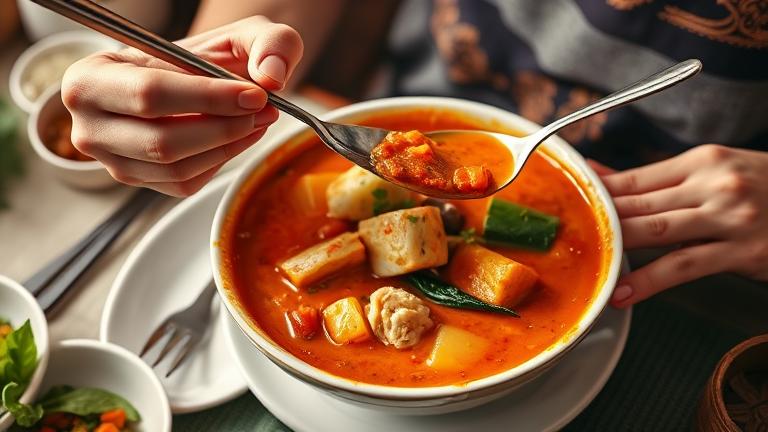
Thai Curry Eating Etiquette and Tips
Enjoying Thai curry is a delightful experience, and doing so with proper manners can make it even more enjoyable. Thai cuisine is rich in tradition, and showing respect for these customs helps you connect with the culture and appreciate the flavors fully. Whether you’re at a restaurant or having a homemade meal, understanding a few key etiquette tips will elevate your dining experience.
First, in Thailand, it’s common to eat Thai curry with a fork and spoon. The fork is used to push food onto the spoon, which is then brought to your mouth. Unlike Western practice, many Thais do not use chopsticks for curry, especially when it involves rice and sauce. The spoon handles the main work, making eating more comfortable and less messy. If you’re at a traditional Thai restaurant, observe how locals eat and follow their lead.
When serving yourself or sharing dishes, it’s polite to use the accompanying serving utensils. Avoid using your personal chopsticks or utensils to pick food directly from shared bowls or plates. Instead, use the serving spoons or tongs provided, which shows respect and maintains cleanliness.
Respect for the Food and Culture
Thai curry is often served with steamed jasmine rice, which is considered a staple of the meal. When enjoying hot curry, it’s customary to scoop a bit of rice onto your plate or bowl first. Then, ladle or scoop the curry over the rice, allowing the flavors to meld. Take small bites, savoring the combination of herbs, spices, and creaminess, which is the heart of Thai curries.
It’s also polite to express appreciation for the meal with a simple smile or nod. If you’re dining with others, engaging in friendly conversation about the food and flavors can show your genuine interest and respect for Thai cuisine.
Tips for an Authentic and Respectful Experience
- Always use a spoon for eating curry, and utilize the fork to assist in pushing food onto the spoon.
- Avoid stabbing or stabbing at the food with your utensils; gentle scooping is preferred.
- If eating spicy Thai curry, take small amounts at first to enjoy the flavor without overwhelming your palate.
- Remember that pointing your utensils or feet toward people or pictures is considered disrespectful in Thailand. Sit politely and keep your utensils on your plate or bowl when not in use.
- When drinking Thai curry soups or sauces, it’s common to softly sip from the spoon rather than slurping loudly.
Common Mistakes to Avoid
- Using your fingers to eat curry, which is generally considered impolite in formal settings.
- Stirring the curry excessively or off the plate, as this can be seen as disruptive. Instead, gently mix or scoop.
- Leaving leftover curry or rice on your plate; finishing your meal shows respect for the effort and ingredients involved.
By following these basic manners and tips, you will enjoy Thai curry in a way that respects the culture and enhances your tasting experience. Remember, the key is to be polite, gentle, and attentive to the customs this not only demonstrates good manners but also allows you to savor the authentic flavors of Thai cuisine.
Best Sides and Accompaniments for Thai Curry
Thai curry is a rich and flavorful dish that combines spicy, sweet, and savory tastes. To make your meal even more satisfying, choosing the right sides and accompaniments is key. The best sides complement the curry’s bold flavors without overpowering them, creating a balanced and enjoyable dining experience.
Popular accompaniments for Thai curry include simple rice options, fresh vegetables, and flavorful condiments. These sides help mellow the spice, add texture, and enhance the overall flavor. Whether you prefer jasmine rice, sticky rice, or a veggie-packed salad, there are plenty of options to suit your taste.
Prime Rice Choices
- Jasmine Rice: This fragrant rice is a classic pairing. Its slightly sticky texture and aromatic aroma complement the vibrant flavors of Thai curry beautifully. Cook jasmine rice according to package instructions, aiming for fluffy grains that soak up the curry sauce.
- Sticky Rice: Commonly served in many Thai dishes, sticky rice is perfect if you want a more substantial side. It has a chewy texture that pairs well with curries, especially when served as a scoop to enjoy every bit of sauce and meat.
- Brown Rice: For a healthier twist, opt for brown rice. It adds a nutty flavor and extra fiber, making your meal more filling. Just note that it takes a little longer to cook than white rice.
Vegetables and Salads
Fresh vegetables and salads add crunch, freshness, and balance to the spicy and creamy elements of Thai curry. Here are some great options:
- Cucumber Salad: A cool cucumber salad with a light lime dressing provides a refreshing contrast to the heat of the curry.
- Steamed Vegetables: Simple steamed broccoli, green beans, or carrots are mild and absorb the curry sauce, making them perfect side dishes.
- Thai-Inspired Salad: Mix thinly sliced cabbage, carrots, and herbs like cilantro and mint. Toss with lime juice and a dash of fish sauce for an authentic taste.
Additional Toppings and Condiments
- Fresh Herbs: Chopped cilantro, Thai basil, or mint sprinkle over the curry to add vibrant aroma and zest.
- Chili Flakes or Sriracha: For those who like extra heat, a dash of chili flakes or sriracha can intensify the spiciness.
- Pickled Vegetables: Tangy pickled vegetables such as radishes or onions can cut through the richness of the curry and add tangy flavor.
Practical Tips for Serving
- Balance flavors: Serve your Thai curry with sides that provide different textures and flavors. A crunchy cucumber salad pairs well with creamy curries.
- Don’t overcomplicate: Keep sides simple so they enhance, not overshadow, the main dish.
- Adjust spice levels: If your curry is very spicy, offering a cooling side like cooled cucumber or coconut yogurt can help balance the heat.
In the end, the best sides and accompaniments for Thai curry depend on your personal preferences. Experiment with different combinations to discover what makes your perfect Thai meal. Whether you go for fragrant rice, crunchy vegetables, or fresh herbs, these sides will elevate your curry experience to a new level of deliciousness.
Utensils and Tools for Enjoying Thai Curry
Enjoying Thai curry at home becomes much easier and more authentic when you have the right utensils and tools. These items not only make eating more convenient but also enhance the overall experience, allowing you to savor the flavors just like in a Thai restaurant. Whether you’re preparing the curry or simply serving it, having the proper tools makes a difference.
Essential utensils for eating Thai curry
- Spoons: A good, sturdy spoon is the most important utensil for enjoying Thai curry. Use a larger spoon, known as a soup spoon, to scoop up both the sauce and rice. Opt for spoons with a wide, rounded bowl to hold more of the flavorful sauce and to make eating easier.
- Chopsticks or forks: While chopsticks are popular in Thai cuisine, many people prefer a fork for scooping up rice and curry. If you enjoy authentic dining, keep a set of chopsticks handy, but a fork often makes it easier for beginners.
- Cutlery with a sturdy handle: For cutting vegetables or meat if needed, a sharp knife and a solid cutting board are essentials. Use them to prepare smaller pieces that are easier to pick up with your spoon or fork.
Tools to enhance your Thai curry experience
- Serving bowls: Choose medium-sized bowls with a wide opening. Traditional Thai ceramic bowls, often decorated with bright patterns, add an authentic touch. The shape makes it easier to scoop up curry and rice together.
- Steam basket or rice cooker: If you’re serving fresh jasmine rice alongside your curry, a rice cooker simplifies cooking fluffy rice effortlessly. Alternatively, a bamboo steamer or a simple pot with a lid works well for steaming rice.
- Small dipping bowls: Small bowls or ramekins are perfect for serving chili flakes, lime wedges, or condiments like fish sauce and sugar. They help keep everything organized during your meal.
Additional helpful tools
- Soup ladle: Useful for serving large portions of curry from a pot. It makes transferring curry to your plate neat and easy.
- Mini tongs or serving spoons: Handy for grabbing pieces of vegetables or meat if you want to serve each component separately or share dishes without using your fingers.
- Chopping tools: A good quality knife, a cutting board, and a veggie peeler are essential for preparing fresh ingredients, so your curry is vibrant and flavorful.
While the array of tools might seem many, start with the basics like a reliable spoon, a sturdy fork, and a good serving bowl. These essentials allow you to enjoy your Thai curry comfortably. As you get more into the cuisine, adding specialized utensils can make your dining experience even more authentic and fun.
FAQs About Eating Thai Curry
Thai curry is a flavorful and vibrant dish loved by many. If you’re new to it or want to enjoy it more, you probably have some questions. Here are some common questions and helpful tips about eating Thai curry.
What should I serve with Thai curry?
Thai curry is often served with steamed rice, which soaks up the rich and spicy sauce nicely. You can choose jasmine rice for its fragrant aroma or sticky rice if you prefer a slightly chewy texture. Some people also like to pair Thai curry with rice noodles or even crusty bread, especially if they want less rice or prefer to mix things up.
How do I know if a Thai curry is too spicy for me?
Thai curries can vary from mild to very spicy, depending on the amount of chili used. To test the heat level, try a small bite first. You can also ask the restaurant or check the menu description for spice information. If it’s too spicy, add a dollop of coconut milk or plain yogurt to tone down the heat. Eating rice alongside the curry can also help balance spiciness.
Can I customize the spice level?
Absolutely! When making Thai curry at home, you control the spice. Add chili paste gradually and taste as you go. If ordering from a restaurant, ask if they can make it milder or spicier according to your preference. Remember, you can add more heat later if needed, but reducing it once it’s in the dish can be tricky.
Is it okay to eat Thai curry with chopsticks?
Yes, you can enjoy Thai curry with chopsticks, especially if you’re eating rice and noodles. Many people use chopsticks for the rice and then scoop up the curry with a spoon. Using a fork and spoon together is also common and practical. Choose what feels most comfortable for you.
What are common mistakes to avoid when eating Thai curry?
- Not pairing it with enough rice, making the meal too spicy or oily.
- Overlooking the heat level be cautious if you’re sensitive to spicy foods.
- Using a spoon only, which can make it harder to scoop rice and curry together.
- Eating too quickly without savoring the flavors. Take your time to enjoy each bite.
Are there any tips for eating Thai curry on the go or at work?
If you want to bring Thai curry to work or eat it on the go, pack the curry in a sealed, microwave-safe container. Include a serving of rice separately if possible, or store rice in a separate container. When ready to eat, reheat the curry until hot and combine with rice. Be sure to stir well to distribute the flavors evenly. Remember, spicy dishes can be tricky to eat at your desk, so have some dairy or bread nearby if you think it might be too hot.
Can I use leftovers safely, and how should I store Thai curry?
Yes, leftovers are common and safe if stored properly. Keep leftover Thai curry in an airtight container in the refrigerator. It’s best to eat within 2-3 days. Reheat thoroughly until it’s steaming hot, and stir well to ensure even warmth. Never leave curry out at room temperature for more than two hours to prevent spoilage.
Tips to Enhance Your Thai Curry Experience
Thai curry is a flavorful and vibrant dish that can truly shine when prepared and enjoyed the right way. Whether you’re a beginner or a seasoned home cook, a few simple tips can make your Thai curry taste more authentic and satisfying. Here are some practical ideas to elevate your Thai curry experience and impress yourself and your guests.
Use Fresh Ingredients
Freshness is key when making Thai curry. Fresh herbs like basil, cilantro, and kaffir lime leaves add bright, aromatic flavors that dried herbs can’t replicate. When selecting vegetables, go for crisp, vibrant produce to bring texture and color to your dish. Fresh ingredients do more than taste better they also enhance the overall aroma and authenticity of your curry.
Choose Quality Curry Pastes
The foundation of a good Thai curry is the curry paste. Opt for store-bought brands known for quality or, even better, try making your own at home. Homemade curry pastes allow you to control the spice level and personalize flavors. Keep in mind that a well-made paste contains a blend of ingredients like chili, garlic, lemongrass, galangal, and shrimp paste.
Balance Flavors for a Perfect Taste
Thai curries are known for their balance of sweetness, saltiness, sourness, and spiciness. Adjust these elements to suit your preferences. For example, add a touch of sugar or coconut cream for sweetness, lime juice or tamarind paste for sourness, fish sauce or soy sauce for saltiness, and chili for heat. Tasting as you go helps you achieve that harmonious flavor profile typical of Thai cuisine.
Control the Heat
Spice level varies greatly depending on personal taste. To avoid overwhelming heat, start with a moderate amount of chili and add more gradually. You can use fresh chili, dried chili flakes, or chili paste. Remember, it’s easier to spice up your curry than to tone down the heat once it’s too spicy. If your curry becomes too hot, a splash of coconut milk or a squeeze of lime can mellow the spice.
Cook with Coconut Milk or Cream
Coconut milk is a signature ingredient in many Thai curries. It adds creaminess, richness, and subtle sweetness, balancing the spices. Use full-fat coconut milk for a lush texture. For a lighter option, choose light coconut milk, but be aware it may lack some of the creaminess. When cooking, bring the coconut milk to a gentle simmer to meld flavors without curdling.
Simmer for Depth of Flavor
Allow your curry to simmer gently after adding the main ingredients. This extra cooking time helps the flavors meld and deepens the overall taste. Avoid rushing this step or turning up the heat too high, which can lead to a greasy or bitter curry. Typically, 10 to 15 minutes of simmering is enough for most Thai curries.
Presentation Matters
Serving your Thai curry in a beautiful bowl with fresh herbs and a wedge of lime makes a difference in enjoyment. Garnish with chopped cilantro, Thai basil, or sliced chili for a pop of color and flavor. Accompany your curry with jasmine rice or sticky rice on the side, which absorbs the sauce perfectly and rounds out the meal.
Finally, don’t be afraid to experiment and adjust ingredients to suit your taste. Making Thai curry is as much about personal preference as it is about tradition. With these tips, you’ll not only improve your cooking but also gain a deeper appreciation for the rich flavors that make Thai curry so beloved around the world.