
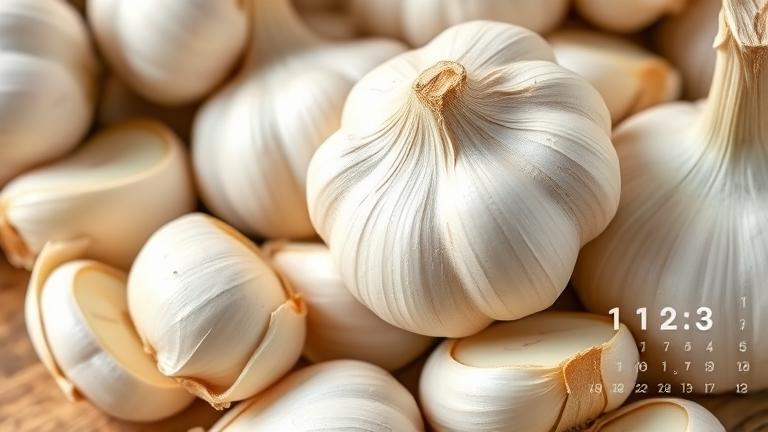
Understanding Garlic Shelf Life
Garlic is a kitchen staple that adds flavor and aroma to many dishes. Knowing how long garlic stays fresh can help you avoid waste and enjoy its best taste. In this section, we will explore the typical shelf life of garlic and the factors that influence its freshness.
Fresh garlic has a lovely, pungent smell and firm cloves. When stored properly, garlic can remain good for several weeks to a few months. However, its freshness depends on how it is stored and the conditions it faces. Understanding these factors helps you decide when it’s time to use or replace your garlic.
How Long Does Garlic Last?
- Unpeeled garlic bulbs usually last for about 3 to 5 months if stored in a cool, dark, and dry place. This is the best way to keep garlic for the long term.
- Peeled garlic cloves tend to last for about 1 week when kept in an airtight container in the refrigerator. If you want to extend their life, you can also freeze peeled cloves, which can last for up to 6 months.
- Minced or chopped garlic should be used within 1-2 days if stored in the fridge. For longer storage, freeze it in small portions using an ice cube tray.
Factors Affecting Garlic Shelf Life
Several elements impact how long garlic stays fresh. The key factors include storage conditions, garlic variety, and handling practices.
- Storage environment: Keep garlic in a cool, dark place with good airflow. Avoid storing it in the fridge’s humid compartments or in plastic bags that trap moisture, which can cause mold and sprouting.
- Humidity and moisture: Moisture encourages sprouting and mold growth. Make sure your garlic is dry before storing and keep it away from damp areas.
- Temperature: Ideally, store garlic at temperatures between 60-65°F (15-18°C). Too warm, and garlic may sprout or spoil quickly; too cold, and it can develop mold or become mushy.
- Freshness at purchase: The fresher the garlic when you buy it, the longer it will last. Look for bulbs that are firm, plump, and dry, with tight skins.
Signs Garlic Has Gone Bad
It’s good to know when garlic is no longer usable. Look out for these signs:
- Sprouting: Green shoots indicate that garlic is sprouting but can still be used if the cloves are firm and the sprouts are small.
- Mold or soft spots: Any visible mold or mushy areas mean the garlic should be discarded.
- Off smell: A sour or rancid odor suggests the garlic has spoiled and should not be used.
Quick Tips for Extending Garlic Freshness
- Store garlic in a mesh or paper bag to promote air circulation.
- Avoid refrigerating unpeeled bulbs unless trying to prolong their life in very humid environments.
- Consider freezing peeled or chopped garlic for longer storage, but note that freezing might change the texture slightly.
How to Store Garlic Properly
Storing garlic correctly is key to keeping it fresh, flavorful, and ready to use whenever you need it. Proper storage prevents spoilage and helps your garlic last longer, saving you time and money. Whether you buy garlic in bulbs or cloves, knowing the best storage methods can make a big difference in maintaining its quality.
Garlic is best stored in a cool, dry, and well-ventilated spot. Avoid places that are humid or exposed to direct sunlight, as moisture and light can cause garlic to sprout or rot. An ideal storage location is a pantry shelf, a dark cabinet, or a mesh basket on your kitchen counter. Just keep in mind that garlic needs air circulation to stay fresh. Airtight containers or plastic bags can trap moisture and promote mold, so it is best to avoid them unless they have holes or vents.
How to Store Whole Bulbs
- Keep whole garlic bulbs intact until you are ready to use them. The outer papery layers protect the cloves and maintain freshness.
- Place bulbs in a mesh bag, paper bag, or a basket that allows air to flow freely.
- Store in a cool room, ideally between 60-65°F (15-18°C). Temperatures too cold can cause sprouting, and warmer spots can lead to spoilage.
- Avoid refrigerating whole bulbs, as the cold and moisture can cause them to sprout or become moldy more quickly.
How to Store Garlic Cloves and Pasted Garlic
If you have peeled garlic cloves or homemade garlic paste, they don’t last as long as whole bulbs. Keep peeled cloves in an airtight container in the refrigerator. Use within a week for the best flavor and freshness. Garlic paste should be stored in a sealed container and used within a few days.
For longer storage, you can freeze garlic cloves. Spread peeled cloves on a baking sheet to freeze individually, then transfer them to a freezer-safe container. Frozen garlic works well for cooking but may change in texture slightly.
Tips and Common Mistakes
- Avoid storing garlic in the fridge if you want it to last several weeks. The cold encourages sprouting and mold.
- Don’t store garlic near bread or moist foods. Garlic’s strong aroma can transfer, and moisture can cause spoilage.
- Check stored garlic regularly for sprouting or mold. Remove any spoiled bulbs immediately to prevent spoilage spreading.
By following these simple storage tips, you can keep your garlic fresh and flavorful for weeks. Proper storage conditions preserve the quality, so you’ll always have great garlic ready to enhance your dishes.
Signs That Garlic Has Spoiled
Garlic is a staple in many kitchens, but knowing when it has gone bad is important for both safety and flavor. Spoiled garlic can cause food to taste off and may even pose health risks. Luckily, spotting spoiled garlic is usually straightforward once you know what to look for. In this section, we’ll explore the common visual and smell indicators that garlic is no longer good to use.
Visual Indicators of Spoiled Garlic
- Discoloration: Fresh garlic cloves are usually white or off-white. If you notice any yellowing, dark spots, or mold patches, it’s a sign that the garlic is starting to spoil. Mold can appear fuzzy and may be green, black, or gray.
- Wrinkled or shriveled cloves: When garlic begins to dry out or age, the cloves become wrinkled or shriveled. This indicates loss of freshness, though it may still be safe to use if there are no other signs of spoilage.
- Sprouting: Green shoots emerging from the garlic bulb or cloves are common as garlic ages. While sprouted garlic is safe to eat, it can have a more bitter taste. If the sprouting is extensive, the garlic might be past its best.
- Soft or mushy texture: When you handle garlic, it should feel firm. Soft or mushy cloves suggest spoilage, especially if combined with other signs.
Olfactory Indicators of Spoiled Garlic
smell is a quick way to detect if garlic has gone bad. Fresh garlic has a strong, pungent aroma that is characteristic and appealing. When garlic spoils, its smell changes noticeably:
- Foul or sour odor: If garlic emits a sour, rotten, or otherwise unpleasant smell, it’s a sign it has spoiled. This indicates bacteria or mold growth that should not be ingested.
- Offensive smell compared to fresh garlic: A dull or stale smell replacing the usual sharpness is a warning sign. If it smells strange or just not right, trust your nose and discard it.
Other Tips for Detecting Spoiled Garlic
- Check the storage conditions: Garlic kept in a humid, warm space is more likely to rot. Store garlic in a cool, dry, well-ventilated place to prolong freshness.
- Be cautious with peeled or chopped garlic: Pre-peeled garlic which shows signs of spoilage should be discarded quickly. It tends to spoil faster once peeled, so use it within a few days.
When in Doubt, Throw It Out
If your garlic shows any of these signs—discoloration, mold, a strange smell, or a soft texture—it’s safest to throw it away. Consuming spoiled garlic can lead to stomach upset or foodborne illnesses. Trust your senses and avoid using garlic that seems off.