
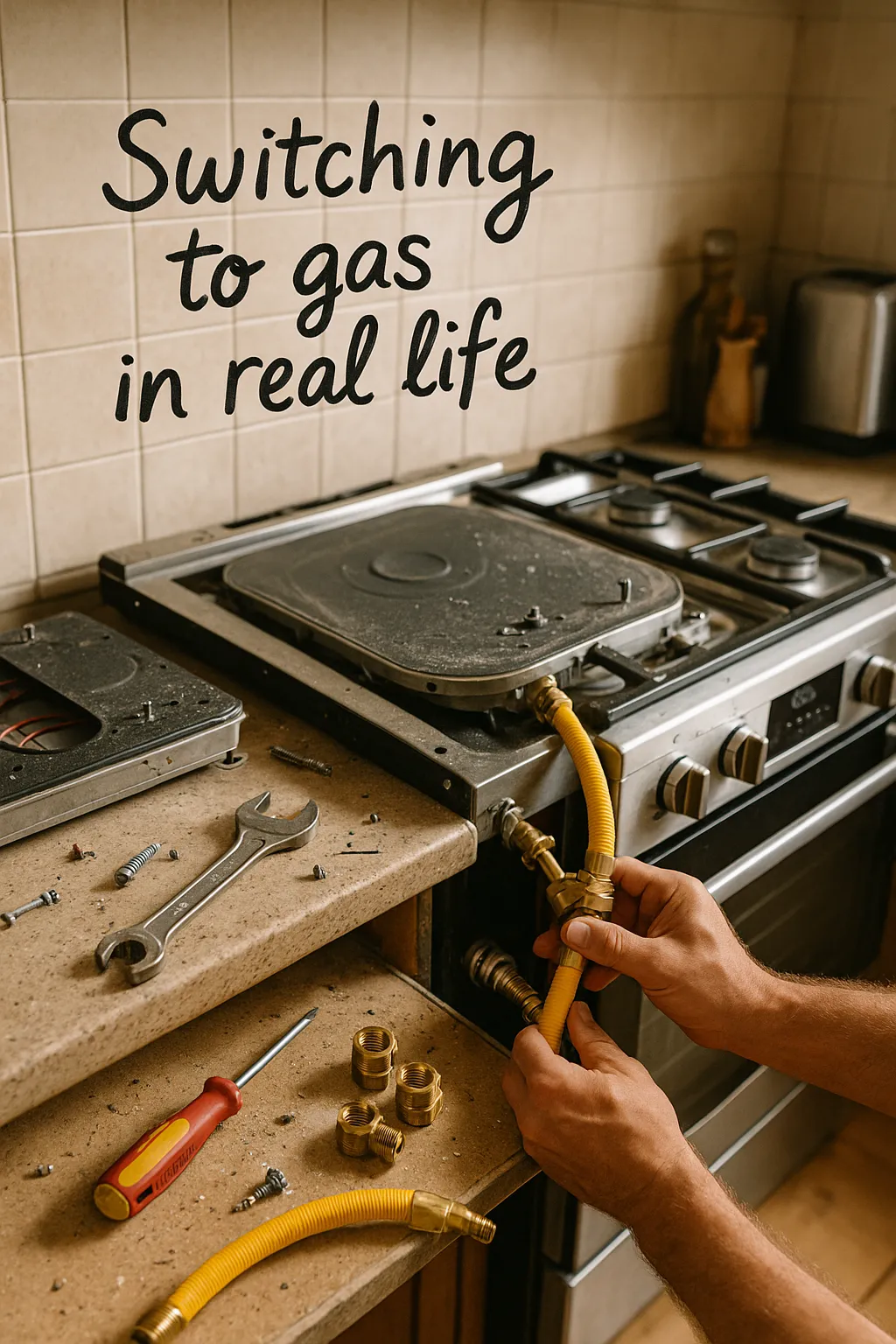
If you want to switch from an electric stove to a gas one, the first step is making sure you have a safe gas line in place. You cannot just swap the stove on your own. A licensed plumber or gas technician has to check your kitchen, run a proper gas line, and make sure everything meets safety codes. This keeps your home safe and your stove working the right way.
Once the gas line is ready, an electrician may need to cap or remove the old electric connection. After that, the installer can bring in the new gas stove, set it in place, and connect it to the gas line. They will also test the burners to make sure there are no leaks. It usually takes a few hours if your kitchen is already set up for gas.
Keep in mind that you might need a permit, depending on where you live. The installer can guide you through that part. After the work is done, you can enjoy better heat control and faster cooking. Just make sure to schedule regular checks so your new gas stove stays safe and works well.
Check if Gas is Available in Your Home
Before you can switch from an electric stove to a gas one, you need to find out if your home even has gas available. This sounds super simple, but you would be surprised how many people buy a gas stove first and only later learn they do not have a gas line at all. I made that mistake once while helping a friend, and we spent the whole afternoon trying to figure out why nothing worked. So trust me, check this part first and save yourself a headache.
The easiest way to start is by looking behind your current stove. If you see only a large electric plug and no metal pipe coming from the wall, then you likely do not have a gas hookup. Do not panic though. Some homes have gas lines for heaters or water heaters but none in the kitchen. That means gas is still possible, but you will need a professional to extend the line into the kitchen. When I first learned this, I remember thinking it would be a quick job, but the worker told me he had to check the gas meter outside to see if it could handle another appliance. That part surprised me, because I never even noticed the gas meter before.
If you are not sure whether natural gas runs through your neighborhood, call your gas company. They can look up your address in seconds. Sometimes the line stops at the street, and your home is not connected yet. Other times the entire area uses electric only. The customer service people are used to these questions, so do not feel shy asking. They will tell you if you need a new service line, and they can schedule someone to come out and check your meter, pressure, and supply.
If your area does not have natural gas at all, you still have one more option. Some people switch to propane instead. Propane comes in tanks, and many rural homes rely on it. It works great for cooking, but it does require different fittings and a different stove setup. I remember visiting a family member who lived outside the city, and their propane tank sat behind the house like a giant metal barrel. It was strange at first, but their gas stove cooked just as well as any natural gas one.
Once you confirm that gas is available, you will know whether your project is easy or more involved. This one step saves time and money because it tells you exactly what you are working with. When you know your gas options, everything else becomes clearer. You will know what kind of stove to buy, what type of installer to call, and how much work the conversion will really need. It is the first step for a reason, and it is the one people regret skipping the most.
Understand the Cost of Converting from Electric to Gas
Before you jump into switching your electric stove to gas, you need a clear idea of what the whole thing will cost. A lot of people only think about the price of the new stove, but that is just one small piece. The real cost comes from the setup around it. I learned this the hard way when I helped a neighbor who assumed the install would take about a hundred bucks. When the final bill came in way higher, he almost fell over. So let’s break it down in a calm and simple way so that does not happen to you.
Most conversions start with the gas line. If you already have a gas line in the kitchen, great, you will save money. If not, a professional has to run a new line to the spot where your stove will sit. This alone can cost anywhere from a couple hundred dollars to over a thousand, depending on how far the pipe needs to go. When I had a gas installer come to my house years ago, he explained that even small distance changes can affect the price. If the line needs to go through floors or tight walls, it takes more time, and time always means more money.
Then there is the electrical part, which surprises people too. Gas stoves still need electricity. Most of them run on a simple 120V plug, but your electric stove uses a 240V outlet. That means an electrician has to come out and change it. It sounds like a tiny job, but it must be done safely and correctly. The electrician I hired spent less than an hour doing it, but even then, the cost added up once the service fee was included. It is one of those things that looks easy but is not worth trying yourself because of the risk.
You also need to think about permits. Almost every city wants a permit for gas line work. It covers safety and makes sure the job is done right. The price depends on where you live, but it is usually between 50 and 300 dollars. When I first learned that I needed a permit, I thought it was just a money grab, but during the inspection, the building officer actually found a tiny issue with the shutoff valve. Fixing it early probably saved me a bigger problem later, so I cannot complain too much.
And finally, add the cost of the stove itself. Gas stoves come in a wide price range. A basic one might be a few hundred dollars, while a fancy model can cost over two thousand. Some people also upgrade their vent hood at the same time, because gas produces more heat and fumes. That part is optional but smart if your kitchen gets smoky or stuffy.
When you put it all together, the total conversion cost usually lands somewhere between 500 and 2500 dollars. Sometimes more if the gas line has to come from far away. The best way to avoid surprises is to get a few quotes first. When you understand the cost from the start, the whole project feels less stressful. It lets you plan, save, and choose the right options without rushing.
Know the Permits and Codes Needed
When you are converting an electric stove to gas, permits and codes are one of those things that people try to ignore until the last minute. I get it. Paperwork is not fun, and no one wants extra steps. But skipping permits can cause big problems later, and I have seen that happen more than once. A friend of mine tried installing a gas line without one, and when he went to sell his house, the inspector flagged it right away. He had to pay to reopen the walls, redo parts of the line, and get everything approved. It turned into a long mess that could have been avoided.
Most cities require a permit for any work that involves running a gas line or hooking up a gas appliance. Even if the job looks small, a licensed installer still has to follow the local code. Codes are the rules that keep gas lines safe. They tell you where shutoff valves must be placed, what kind of pipe is allowed, and how connections should be sealed. It might seem picky, but those rules exist to protect you from gas leaks, fires, or carbon monoxide problems.
The permit itself is usually simple to get. Most of the time, the contractor handles it for you. They know the forms and the steps, and they can get approval faster than a homeowner. The cost is not that high, and it is way cheaper than paying fines or fixing code violations later.
After the work is done, a city inspector will come out to check everything. Their job is to make sure the gas line is safe and up to code. They take a few minutes to inspect connections, valves, and the pressure test. These checks help catch issues early and keep your home safe.
Following permits and codes protects your home, keeps your insurance valid, and ensures everything works the way it should. Once it is done right the first time, you will not have to worry about future problems.
Hire a Licensed Gas Fitter or Plumber
When it comes to converting an electric stove to gas, hiring a licensed gas fitter or plumber is one of the most important steps. A tiny mistake, even one you cannot see, can lead to a leak or a fire. I once watched a neighbor tighten a connector with the wrong tool, and the line shifted enough to cause a slow leak. We had to call someone out right away, and that moment taught me how serious this work really is.
A licensed professional knows the codes, the right fittings, and the proper installation steps. They have tools that test for leaks and check pressure. These are things the average person does not have lying around. When I hired a gas fitter, he carried a little detector that beeped when it found even a tiny amount of gas. That alone made me feel better about paying for the job.
Choosing the right installer is simple. Check their license, ask questions, and get a written estimate. If someone refuses to show their license or avoids your questions, that is a sign to look elsewhere. Most licensed installers will also handle permits for you.
Watching them work shows you why the job requires training. They route the line correctly, secure the fittings, and test everything before leaving. A good installer will not rush and will not skip safety checks.
Hiring a licensed pro gives you peace of mind. The work gets done safely, up to code, and without risky shortcuts.
Install or Extend a Gas Line
Once you know you have gas available and you hired a licensed installer, the next step is getting a gas line into your kitchen. This part looks complicated, but watching someone who knows what they are doing makes it feel manageable. The first time I saw a gas line extension, I expected high drama and sparks, but everything was slow and steady.
The installer finds the best path for the line. It might go through the basement, around cabinets, or through walls. Homes are all different. In one kitchen I helped with, the line had to pass behind a dishwasher and through a tight corner. The installer used flexible pipe to make it work.
Then they shut off the main gas supply and start cutting and fitting the pipe. Every connection must be tight and perfect. A small mistake can cause a leak, which is why this is not a DIY job.
If the gas line is already close to the kitchen, extending it is simple. If it is across the house, it takes longer. One neighbor needed a half day of work just to run the pipe to the right spot.
Once the line is in place, the installer adds a shutoff valve near the stove location. This valve lets you turn off the gas quickly in an emergency.
Before anything is connected, the line gets tested. Some installers pressurize it with air and check the joints. Others use soapy water or gas detectors. Watching that test always makes me feel better because it shows whether the line is truly safe.
When the line passes the test, the hardest part of the job is over.
Add a Gas Connector and Shutoff Valve
After the main line is installed, the next step is adding the gas connector and shutoff valve. These parts are small but very important. The shutoff valve lets you control the gas at the stove. The connector attaches the stove to the gas line without putting stress on the pipe.
The shutoff valve should be easy to reach. I always make sure it is not hidden too far back. In an emergency, seconds matter.
The connector is a flexible metal tube. Not all connectors are the same, and you should never reuse an old one. A licensed installer will choose the right size and type. I have seen old connectors crack, and it is not worth the risk.
The connector must have a smooth path to the stove. No sharp bends or pinches. My installer shaped mine into a soft loop so the stove could move without pulling on anything.
Once the connector is installed, the installer checks everything for leaks. They might use a beeping device or soapy water. No bubbles means no leaks.
These last pieces make the whole system safe and ready for the stove.
Prepare the Electrical Setup for the Gas Stove
Even though gas stoves use flames, they still need electricity. They use it for the igniter, the oven controls, the lights, and the clock. When I switched to gas, I did not expect to deal with electrical work again, but my old stove used a 240V outlet. Gas stoves use a regular 120V outlet.
You cannot just plug a gas stove into a 240V outlet. An electrician must convert it. This is not a job to guess your way through. Electricity is dangerous. The electrician turned off the circuit, tested every wire, and replaced the outlet safely.
Sometimes the outlet needs to be moved so the stove fits all the way back. My installer lowered mine a few inches so the plug did not get crushed.
After the outlet is installed, the electrician tests it and checks the breaker. Once it is confirmed safe, the stove can use it.
Without this step, your gas stove will not work right. The igniter and oven controls depend on the correct power.
Choose the Right Gas Stove for Your Kitchen
Picking a gas stove is exciting, but it can get overwhelming fast. When I bought my first one, I thought they were all the same until I saw the wall of options at the store.
Start with the size. Most kitchens use a 30 inch stove, but measure your space to be sure.
Decide whether you want a regular gas stove or a dual fuel one. Dual fuel stoves use electric ovens and gas burners. They can cook more evenly, especially for baking.
Look at the burner options. You want a mix of high BTU burners for fast boiling and low BTU burners for gentle simmering.
Think about ventilation. Gas produces more heat and fumes, so you need a vent hood that can handle it.
Check how the grates feel. Heavy grates stay in place better, but they are harder to lift for cleaning.
Pick features that matter to you. Smart controls might sound cool, but good burners and easy cleaning matter more in everyday cooking.
When you choose a stove that fits your kitchen and cooking style, everything feels smoother and more enjoyable.
Ensure Proper Ventilation
Ventilation is a bigger deal with gas than with electric. Gas flames create heat, moisture, and fumes that must be removed from the kitchen.
If you already have a hood, check whether it is ducted or ductless. Ducted hoods remove air from the house completely. They work better for gas. Ductless hoods filter air and push it back inside. They are ok but not great.
Look at the CFM rating of your hood. Higher CFM means stronger airflow. Cooking without enough ventilation can make your kitchen humid and smelly.
If you cannot install a ducted hood, a ductless one still helps, but you must keep the filters clean.
The height of the hood matters too. If it is too high, it will not pull air well. If it is too low, it gets in the way.
Good ventilation keeps your kitchen comfortable and your air cleaner.
Final Safety Checks Before Using the Stove
Before using your new gas stove, you must go through safety checks. The installer should check for leaks using a detector or soapy water. No bubbles means no leaks.
Test the shutoff valve to make sure it turns smoothly.
Check the burners. When you turn the knob, the igniter should click and the flame should appear quickly. A proper flame is blue. Yellow flames mean something is wrong.
Test the oven too. It should light smoothly without a strong gas smell.
Make sure the stove fits against the wall without crushing the connector.
If anything feels off, tell the installer before they leave.
When all the checks are done, you can use your stove with confidence.
Conclusion
Switching from electric to gas is more than swapping appliances. It involves checking gas availability, planning costs, getting permits, hiring a pro, running a new gas line, preparing the outlet, choosing the right stove, setting up ventilation, and doing safety checks. Each step matters.
But the reward is worth it. Cooking on gas feels fast, responsive, and satisfying. The first time you turn the knob and see a perfect blue flame, you will know the effort paid off.
If you decide to start this project, take your time, plan carefully, and work with professionals. Your kitchen will feel better and safer, and you will enjoy cooking even more.