
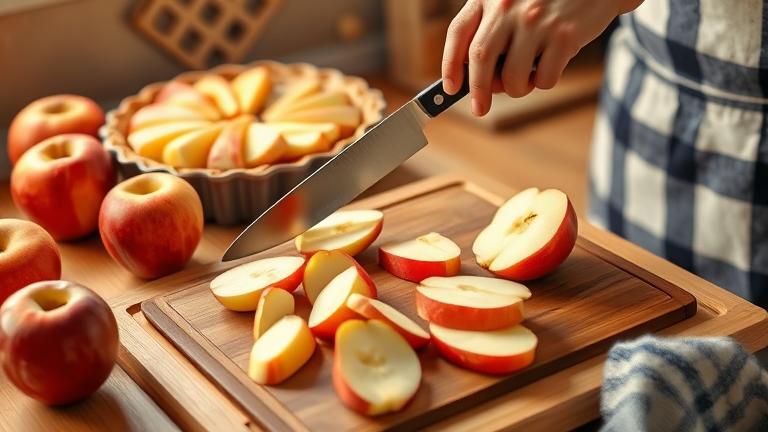
Best techniques for apple slicing
Slicing apples evenly and precisely is an essential skill for making apple pie and other delicious apple dishes. Proper techniques help you cut the apple into uniform pieces, which cook evenly and look appealing. Whether you are a beginner or looking to improve your skills, these tips will help you slice apples with confidence and ease.
First, choose a fresh, firm apple. Firm apples are easier to cut because they hold their shape better and are less likely to tear or squish. Wash the apple thoroughly and remove any stickers or blemishes.
Before slicing, it’s helpful to work on a stable cutting surface. Use a sharp chef’s knife, as a dull blade can slip and cause uneven cuts or accidents. Always cut with control, keeping your fingers curled under your hand to protect them from the blade.
Step-by-step apple slicing technique
- Start by cutting off the apple’s stem end with a straight downward slice. Then, cut off the bottom to create a flat base. This keeps the apple steady on the cutting board.
- Stand the apple upright on the flat end. Slice vertically down the apple, cutting from the top to the bottom to make two halves. Repeat with each half if the apple is large.
- Remove the core from each apple half. You can do this with the tip of your knife or use an apple corer if you have one.
- Place each apple half cut side down on the cutting board for stability. Slice horizontally to create rings or cut into wedges for even pieces. For wedges, make a vertical cut from the top to the bottom, dividing the half into uniform sections.
Tips for perfect apple slices
- Keep your knife sharp. A dull knife can crush the apple and lead to uneven slices.
- Use firm apples. Soft apples tend to tear and create uneven pieces.
- Align your slices to be roughly the same thickness for even cooking or presentation.
- If you prefer peeled apples, use a vegetable peeler before slicing.
- Work slowly and carefully around the core to avoid tearing or slipping.
Common mistakes to avoid
- Using a dull knife, which increases the risk of tearing the apple or cutting yourself.
- Cutting uneven slices, which can cause some pieces to burn faster or stay undercooked.
- Overcrowding the work area, leading to slips or accidents. Keep your workspace tidy.
- Forgetting to remove the core before slicing into smaller pieces the core is tough and not suitable for eating.
Following these techniques will give you neat, even apple slices perfect for pies, crisps, or snacks. With practice, your precision and speed will improve. Remember, patience and a sharp knife are your best friends in apple slicing!
Common mistakes to avoid
When preparing apples for your homemade pie, it’s easy to run into a few common pitfalls. These mistakes can affect the look, texture, and flavor of your final dessert. Knowing what to watch out for helps you achieve perfect, tender slices every time.
One frequent error is peeling too much or too little of the apple skin. Removing too much skin can make the slices mushy and cause the fruit to break apart. Conversely, leaving too much skin can lead to uneven cooking and a less appealing appearance. The key is to peel just enough to remove the tough outer layer, leaving most of the skin on. The skin adds flavor and nutrients and helps hold the slices together during baking.
Another common mistake is slicing the apples unevenly. When slices are different sizes, some will cook faster and become too soft, while others remain firm. This results in a pie with an uneven texture. The solution is to take your time and cut the apple into uniform slices, about 1/4 inch thick. Using a sharp knife or a mandoline slicer can help you achieve consistent thickness easily.
Over-peeling apples is also a mistake many make. When too much skin is removed, the slices tend to become watery and lose flavor. It’s best to peel only the outer layer and keep the rest intact. This enhances the taste and helps the apple slices hold their shape during baking.
Additionally, some people forget to core their apples properly. Leaving the core or seeds in can affect the texture and taste of your pie. Always use an apple corer or cut out the core with a sharp knife before slicing. Removing the seeds and tough middle ensures each slice is tender and enjoyable.
- Choose a firm apple variety like Granny Smith or Fuji for best texture.
- Keep your apple slices as uniform as possible for even cooking.
- Peel only as much as needed to remove the tough layer, leaving the rest for flavor and texture.
- Use a sharp knife or mandoline for precise, even slices.
- Core the apples thoroughly before slicing to avoid tough bits in your pie.
By avoiding these common mistakes, your apple slices will be perfectly prepared, leading to a beautifully baked pie that’s flavorful, tender, and visually appealing. Taking a little extra care during slicing makes a big difference in the final result. Happy baking!
Different cuts for baking perfection
When it comes to baking with apples, how you cut them can make a big difference in the final result. Whether you’re preparing an apple pie, tart, or crumble, choosing the right cut affects the texture, appearance, and even cooking time. Let’s explore some common ways to cut apples and see how each method influences your baked goods.
Slices
Cutting apples into slices is one of the most popular methods. To do this, start by peeling the apple if you prefer a smoother texture. Then, remove the core using a knife or a melon baller. Slice the apple into thin, even pieces, usually about 1/4 to 1/2 inch thick. Sliced apples cook quickly and tend to soften evenly.
This method works great for apple pies where you want the slices to hold their shape or a crisp topping with evenly cooked fruit. Remember, thinner slices will cook faster and become softer, while thicker slices stay a bit firmer. If you like a tender filling, go for thinner slices.
Dicing
Dicing involves cutting apples into small cubes, usually about 1/2 inch or smaller. After peeling and coring the apple, slice it into rounds, then cut each round into strips, and finally into cubes. Diced apples cook even faster than slices and tend to create a chunky, jam-like filling in pies or crisps.
This cut is perfect if you prefer a filling that blends smoothly or a tart with a moist, evenly distributed apple flavor. Keep in mind that smaller pieces may turn mushy if overcooked, so watch your baking time carefully.
Julienne
The julienne cut produces thin, matchstick-like strips, typically about 2 inches long and 1/8 inch wide. To julienne an apple, peel it if desired, then cut into thin slices. Stack a few slices at a time and cut them into lengthwise strips.
This method is ideal for apple salads or layered desserts rather than traditional pies. However, julienned apples can also be used for caramelized toppings or layered in tarts for a decorative effect. Because the strips are thin, they cook quickly and can add a nice texture contrast.
How each cut affects baking
| Cut Type | Texture in the baked product | Cook Time | Best used for |
|---|---|---|---|
| Slices | Even, tender slices with some structure | Moderate, depends on thickness | Pie slices, crisps, tarts |
| Diced | Chunky, soft filling | Faster, especially if small cubes | Chunky fillings, apple sauces |
| Julienne | Thin, crispy strips with a slight crunch | Quick, about 10-15 minutes in oven | Salads, decorative toppings |
Choosing the right cut can elevate your baking. Thinner slices are better if you want gentle, evenly cooked fruit, while diced apples create a hearty, densely packed filling. Julienne strips add a unique texture and visual appeal. Remember, the size and cut affect not only cooking time but also how the apples feel on your palate, so pick the method that best suits your recipe and personal taste.
Essential tools for apple prep
When you’re ready to make a delicious apple pie, having the right tools can make all the difference. Preparing apples for baking involves peeling, coring, and slicing tasks that are easier, quicker, and safer with the proper equipment. Investing in a few key tools will help you enjoy the process and achieve even, beautiful slices for your pie.
Let’s go over the must-have kitchen tools that will streamline your apple prep and ensure perfect results every time. These essentials are simple to use, cost-effective, and can be found at most kitchen stores or online.
Peeler
A good peeler is the first step in prepping apples for pie. Look for a vegetable peeler with a sharp, sturdy blade and a comfortable grip. There are two common types: Y-shaped peelers and straight peelers. Y-shaped models are often easier to handle and give more control, especially if you’re peeling many apples. Peel in long, smooth strokes, starting at the stem end and working down to remove the skin evenly. Removing the skin helps the filling become tender and prevents a tough texture in the pie.
Corer and Slicer
A corer and slicer combo tool speeds up the process of removing the core and slicing apples into even pieces. These tools typically have a circular blade that fits around the apple’s core and blades that slice into the fruit as you twist. Using this tool, you get uniformly sized pieces which cook evenly. If you prefer, you can also use a paring knife to core the apple manually, but a dedicated corer and slicer saves time and minimizes mess.
Sharp Chef’s Knife
Having a sharp, high-quality chef’s knife is essential for slicing apples into the desired thickness. A dull knife is dangerous and makes your work harder. Choose a knife with a comfortable grip and a well-honed blade. When slicing, hold the apple steady with your fingers curled under your knuckles, a technique called the “claw grip,” which keeps your fingers safe. Slicing apples into consistent thickness helps ensure the pie bakes evenly and looks appealing.
Additional Helpful Tools
- Cutting board: Use a stable, non-slip cutting surface for safe and clean prep.
- Food corer tool: An optional device that can pierce and remove the core quickly if you prefer manual coring.
- Measuring spoons and cups: For accurate addition of spices, sugar, and other ingredients.
Practical tips
- Always wash apples thoroughly before peeling or slicing.
- If you’re peeling many apples, keep them in a bowl of water with a splash of lemon to prevent browning.
- Keep your knives sharp for safer, cleaner cuts dull blades slip and increase accident risk.
With these essential tools, apple prep becomes straightforward and even enjoyable. Investing in quality peelers, corers, and knives helps you craft perfect apple slices, making your pie-making experience smooth and fun from start to finish. Happy baking!
Tips to keep slices fresh
If you want your apple slices to stay crisp and colorful until baking, a few simple tricks can make a big difference. Fresh-looking slices not only make your pie more appealing but also taste better. Browning can be frustrating, but with the right tips, you can keep apple slices looking and tasting fresh for longer.
One common problem is browning. Once apples are sliced, they start to oxidize, turning that unappealing brown color. To prevent this, a popular method is to use an acidity agent like lemon juice. Simply squeeze some fresh lemon juice over your slices or toss them gently in a mixture of lemon juice and water. The vitamin C in lemon slows down the oxidation process.
Another easy trick is to soak apple slices in cold water. This not only helps prevent browning but also keeps them crisp. For extra protection, you can add a teaspoon of salt to the water just be sure to rinse the slices lightly before using them. This method keeps the apples fresh without adding any noticeable flavor.
If you plan to store the slices for a longer period before baking, consider using airtight containers or resealable plastic bags. Remove as much air as possible to minimize exposure to oxygen, which speeds up browning. For added protection, line the container with a paper towel to absorb moisture and prevent the slices from sticking to each other.
It’s also helpful to keep apple slices refrigerated until you’re ready to bake. Cooler temperatures slow down the oxidation process and keep the slices firm. If you’re preparing the slices hours ahead, store them in the coldest part of your fridge and avoid leaving them out at room temperature for too long.
- Apply lemon juice or diluted vinegar to slow browning.
- Soak slices in cold water with a pinch of salt for extra freshness.
- Store slices in airtight containers or resealable bags, removing excess air.
- Keep slices refrigerated until baking to maintain crispness and color.
Be careful not to over-soak the slices, especially if they’re already sweet and juicy. Too much liquid can make them soggy once baked. Additionally, avoid adding sugar prematurely, as it can draw out moisture and cause the slices to become soft too soon.
By following these tips, you’ll keep your apple slices looking vibrant and tasting fresh. Your pie will always have that beautiful, appetizing appearance and delicious flavor that everyone loves. Preparing ahead and storing properly makes baking easier and ensures your final result is perfect every time.